
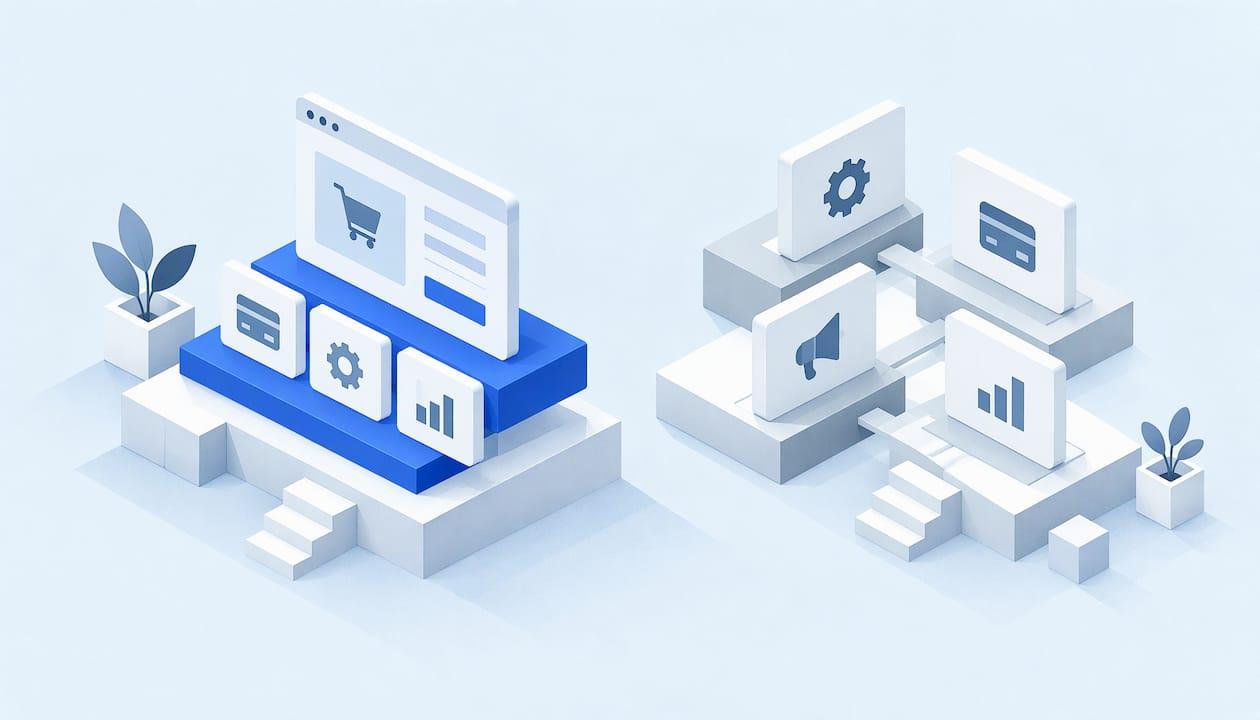
The right PayKickstart alternative depends on what is actually broken. If checkout conversion is the problem, ThriveCart and SamCart are the closest swaps. If you are tired of stitching together a checkout, a funnel builder, a course area and a community, a single platform such as Commas fits better. If failed recurring charges are costing you revenue, a billing specialist like Recurly is worth a look. This guide sorts the options by that decision, written for people who already sell a $1,000 to $10,000 offer.
TL;DR
- ThriveCart is the most direct like-for-like replacement for PayKickstart. SamCart leans on checkout optimization, and Kajabi and ClickFunnels bundle more of the business.
- Recurly and similar tools solve subscription billing, not selling. They suit teams with a large recurring base and an engineer or ops person to wire them in.
- Commas puts checkout, funnels, courses, paid communities, webinars and affiliates in one account, with payments built in.
- Before you switch, list what you pay for today across tools. The cost of a stack is usually the number of logins and syncs, not any single bill.
- Check payment availability for your exact business entity, currencies and industry before you commit to any platform.
Table of Contents
- Why sellers look beyond PayKickstart
- The main alternatives at a glance
- ThriveCart: the closest like-for-like swap
- SamCart: checkout first
- Kajabi and ClickFunnels: broader platforms
- Course and community specialists
- Billing specialists: Recurly and sticky.io
- All-in-one or separate tools: the real trade-off
- Commas: one account for selling and getting paid
- How to choose: a checklist for high-ticket sellers
- Moving off PayKickstart without losing sales
- Try Commas for your next offer
- FAQ
- Sources
Why sellers look beyond PayKickstart
PayKickstart is a checkout and recurring billing tool with affiliate management attached. For many sellers that is enough. The search for an alternative usually starts from one of four situations:
- The stack has sprawled. Checkout lives in one app, the funnel in another, the course in a third, the community in a fourth. Every handoff is a place where buyers drop off and data goes missing.
- The offer got bigger. A $97 product tolerates a plain checkout. A $3,000 coaching program or a $8,000 agency retainer needs payment plans, buy now pay later options, a clean upsell path and a follow-up that does not depend on a spreadsheet.
- Recurring revenue is leaking. Declined cards on monthly plans and installment payments quietly erase revenue.
- Affiliates or partners need a proper home. Tracking, commissions and payouts get complicated when they sit apart from the checkout.
Name which of the four is yours. It decides which alternative to look at first.
The main alternatives at a glance
One comparison of PayKickstart competitors puts ThriveCart, SamCart, Kajabi and ClickFunnels at the top of the list, and describes ThriveCart as the most directly comparable. The same source says SamCart emphasizes AI-assisted checkout, Kajabi is a broader course and membership platform, and ClickFunnels centers on multi-step funnels.
A useful way to read that field comes from a funnel software comparison: separate checkout optimization from business consolidation. ThriveCart and SamCart emphasize order value and checkout conversion. ClickFunnels, Kajabi and Systeme.io emphasize combining funnels with email, courses, CRM or affiliate operations.
| Option | Best for | Where it is strongest | What to confirm on its own site |
|---|---|---|---|
| Commas | Established sellers of $1,000 to $10,000 offers who want one account | Checkout, AI funnels, courses, paid groups, webinars and affiliates together | Plan details with our team, since pricing is not published here |
| ThriveCart | Sellers who want a direct checkout swap | Checkout pages, order bumps, one-click upsells, subscriptions, affiliate center | Current pricing model and payment gateway setup |
| SamCart | Sellers focused on checkout conversion | AI-assisted checkout | Current plans and the limits on each |
| Kajabi | Educators who want course, email and pipelines in one place | Themes, built-in email automation, pipelines | Cost against your revenue and the learning curve |
| ClickFunnels | Marketers who think in multi-step funnels | Funnel sequences | How much you need to add around it |
| Systeme.io | Budget-minded sellers bundling funnels, email and affiliates | All-in-one breadth | Course player depth and native integrations |
| Recurly | Larger subscription businesses with billing complexity | Dunning, retries, invoicing, multi-currency | Minimums and volume-based pricing |
ThriveCart: the closest like-for-like swap
If your PayKickstart setup works and you only want a different tool for the same job, ThriveCart is the natural first comparison. A 2026 funnel software review describes it as covering checkout pages, order bumps, one-click upsells, subscriptions, an affiliate center and course delivery through ThriveCart Academy.
That makes it a good fit when your offer is a single product or a short ladder: a main program, an order bump and one upsell. Where it gets thinner is the surrounding business. A community, webinars and funnel testing usually come from other tools, which brings back the stack problem you were trying to leave.
Our own ThriveCart and SamCart breakdown looks at which checkout fits a $1,000+ offer if you want the detail on those two.
SamCart: checkout first
SamCart's pitch is conversion at the cart. The comparison above notes its AI-assisted checkout, and it sits in the camp that prioritizes order value over business consolidation. It is a reasonable choice if the checkout page is your single biggest leak and the rest of your funnel is already working.
For a high-ticket offer, ask different questions than a $49 ebook seller would. How does it handle split pay and installment plans? What happens when the second payment fails? Can a buyer move from checkout to a course area without a separate login? Those answers matter more than template count.
Kajabi and ClickFunnels: broader platforms
Kajabi is the option educators reach for when the course is the product. A November 2026 course platform comparison describes customizable themes, built-in email automation and pipelines, along with no free tier, a higher cost and a steeper learning curve. If you sell cohorts or a signature course and want email and pipelines inside the same product, that trade is often fair.
ClickFunnels is built around multi-step funnels. It suits marketers who want to design the whole journey from ad to upsell. The question for a high-ticket seller is how much you still bolt on for payments, delivery and community.
We cover both in more depth: Kajabi alternatives for sellers of $1,000 to $10,000 offers and Kartra versus ClickFunnels.
Course and community specialists
Sometimes the real issue is not checkout at all. If completion and engagement are the problem, a course-first or community-first tool addresses it more directly.
- LearnWorlds supports interactive video and SCORM, with a $5 fee per sale on its Starter plan. It is a course-delivery alternative, not a direct checkout substitute.
- Mighty Networks combines courses and community in one feed, with a 2% fee on its Launch plan. Community is its strength.
- Thinkific connects with Zoom, Mailchimp, Shopify and more than 80 other apps through its App Store, but lacks native email funnels.
- Systeme.io bundles course hosting, funnels, email marketing and affiliate management, though a November 2026 comparison notes its course player is more basic and its native integrations fewer than course-first platforms.
These tools do one part of the job well. If you pick one, you will probably still need a checkout and funnel layer next to it.
Billing specialists: Recurly and sticky.io
If your concern is recurring revenue at scale rather than selling, subscription billing platforms are a different category. Recurly handles recurring billing, invoicing, retries, dunning, multi-currency pricing and 20+ payment gateways. According to a 2026 pricing review, its Starter plan costs $249 per month plus 0.9% of billing volume, with the first $40K of monthly billings included at no charge, and it offers a 90-day free trial. The same review says it is best for mid-market SaaS and healthcare subscription businesses.
On iTechGuides' ranking, sticky.io starts at $499 per month with 500+ integrations, while Recurly starts at $249 per month with 9 integrations.

These are strong for large subscription bases. A coach selling a $5,000 program in three installments, or an agency running retainers, rarely needs that depth and does need funnels, delivery and follow-up, which a billing tool does not provide.
All-in-one or separate tools: the real trade-off
Most switching decisions come down to one question. Rework's October 2026 analysis frames it well: an all-in-one platform reduces multiple logins, data models and integration work, but may offer weaker specialist modules. Best-of-breed tools handle edge cases better but push connection and synchronization work onto the business.
A practical way to decide:
- Choose separate tools if you have someone who maintains integrations and one of your needs is unusually specialized, such as SCORM compliance or complex enterprise billing.
- Choose one platform if your team is small, your offer is sold through a funnel, and the buyer journey crosses checkout, delivery and community.
If you are mapping a journey from first touch to purchase, our guides on funnel stages and a course sales funnel help you see which steps your current tools cover. For a primer on marketing funnel basics and how funnels feed search-led demand, that is a good starting point too.
Commas: one account for selling and getting paid
Commas is built for the situation where the stack is the problem. Checkout, funnels, courses, paid communities, webinars and affiliates sit in one dashboard, with payments built in. Commas runs payments through regulated payment partners.
What that means in practice for a $1,000 to $10,000 offer:
- Funnels. Our Vibe Funnels builder uses AI to build and optimize funnels from proven patterns. You can also import an existing funnel rather than rebuild it, and we have a walkthrough for moving a ClickFunnels funnel.
- Payments. One-click payments, subscriptions and buy now pay later options are part of the checkout, and we offer automated tools designed to recover failed subscription payments. See Commas Payments.
- Upsells. Upsell management is built into the funnel. Our guide to automated upsell funnels covers one-click flows and the FTC rules that apply to them.
- Delivery and community. Online courses and paid groups live in the same account as the checkout, so a buyer does not need a second login.
- Affiliates. The Commas Affiliate Center keeps partner tracking next to the sales data.
We are not the cheapest cart on the market and we do not claim to be a pure checkout specialist. We are designed for sellers who want fewer moving parts between the ad and the delivered program.
Our view on switching
Most sellers who leave a checkout tool do not leave because the cart is bad. They leave because the cart is one of five tools that all need to agree about who the buyer is.
We built Commas around that gap. When checkout, funnel, course, community and affiliate data sit in one account, you can see where a $4,000 buyer came from, what they bought next and whether the second payment cleared. That is the visibility we think an established seller needs, and it is why we put payments, funnels and delivery together rather than selling them separately.
Our advice: pick the platform that removes the most handoffs in your own buyer journey, not the one with the longest feature list.
Commas
How to choose: a checklist for high-ticket sellers
Use these criteria to compare any option, including ours.
- Payment plans and failed payments. Can you offer split pay, and what happens when an installment is declined?
- Upsell flow. Does the buyer get one-click upsells after the first purchase, and can you test the order?
- Delivery. Does the course or membership live in the same account, or does it need a connector?
- Community. If you sell access to a group, is it native or another subscription?
- Affiliates and partners. Are commissions tracked where the sale happens?
- Migration. Can you import existing funnels and customers, or will you rebuild from scratch?
- Payment availability. Does the platform cover your legal entity, currencies and industry?
The last point deserves care. A 2026 gateway comparison warns that activation can vary by legal entity, currency, industry, transaction type and settlement account, and that country coverage does not guarantee access to locally preferred payment methods. Confirm those details with the provider before moving live traffic.
Moving off PayKickstart without losing sales
A clean migration follows a sequence:
- Export your customer list, active subscriptions and product catalog.
- Map each offer to its new checkout, including bumps, upsells and payment plans.
- Rebuild or import the funnel pages and keep the same copy until the new setup is stable.
- Run a test purchase for every offer, including a declined card.
- Move traffic in stages, starting with a lower-volume offer.
- Keep affiliates informed and update their links on a set date.
Do not change copy, price and platform in the same week. If conversion moves, you will not know why.
Try Commas for your next offer
If you sell a high-ticket program and want checkout, funnels, delivery and community in one place, explore Commas. We can walk you through how your current funnel would map to a single account, and our agency billing and payments page covers setups for service businesses.
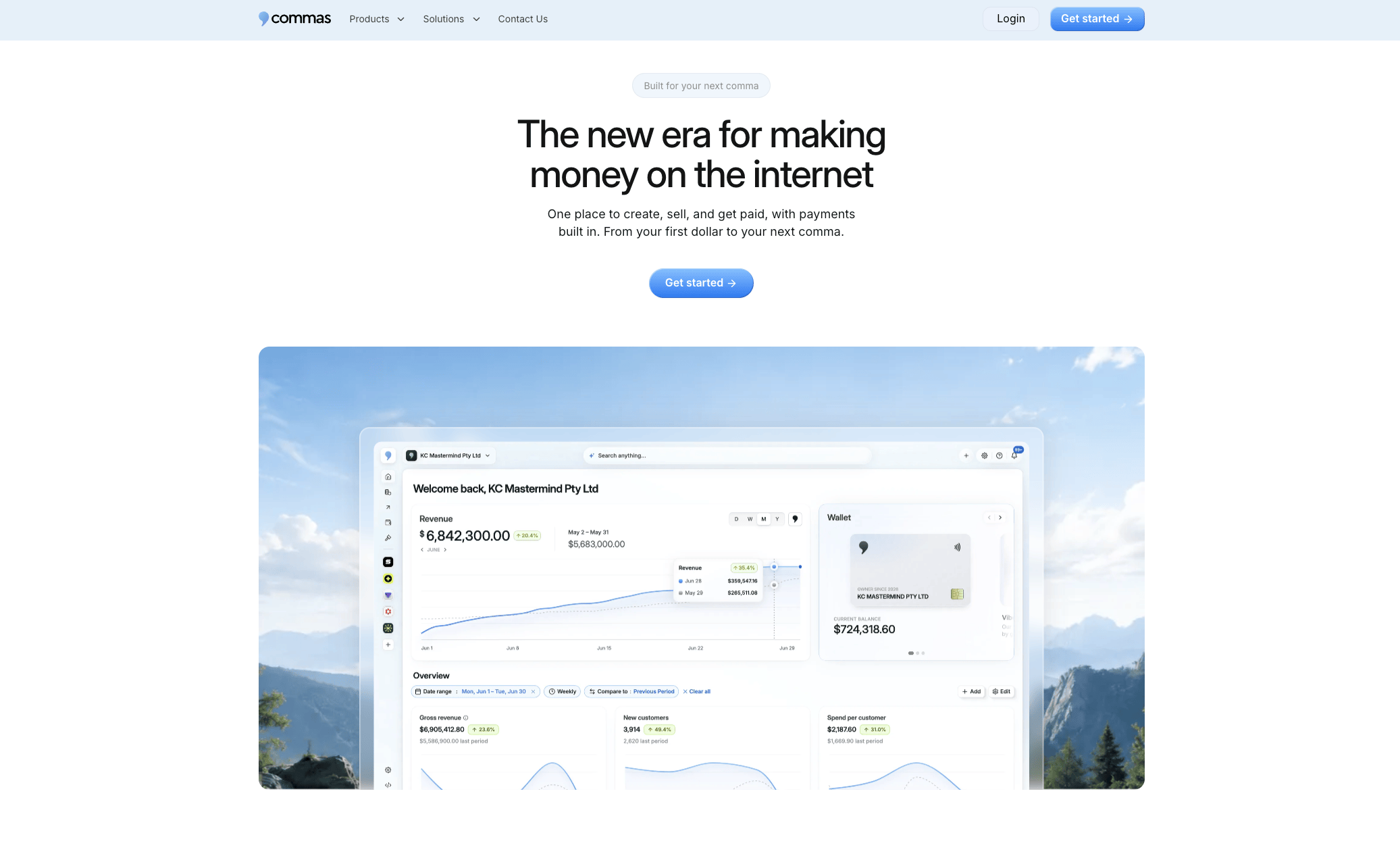
The fastest way to judge fit is to take your best-selling offer and list every tool the buyer touches today. Then see how many of those steps a single account can cover.
FAQ
What is the closest alternative to PayKickstart?
ThriveCart is the closest like-for-like replacement, covering checkout pages, order bumps, one-click upsells, subscriptions and an affiliate center. SamCart is the other direct checkout option. If you want to reduce the number of tools instead of swapping one, look at an all-in-one platform such as Commas.
Which alternative is best for a coach or agency selling a $5,000 offer?
It depends on whether your problem is the cart or the stack. If the checkout is the leak, a checkout specialist can be enough. If your buyer journey also includes funnels, a course area, a community and affiliates, a single platform with payments built in removes handoffs. We built Commas for that second case.
Do I need a separate payment gateway?
Some platforms require you to connect your own gateway, and others include payments. With Commas, payments run through regulated payment partners and are built into checkout. Whichever tool you choose, confirm that it supports your legal entity, currencies and industry.
Is a billing platform like Recurly a replacement for PayKickstart?
Only in part. Recurly focuses on recurring billing, retries, invoicing and dunning for larger subscription businesses. It does not replace funnels, course delivery or community, so most sellers of coaching and courses need something broader.
Sources
- 7 Best PayKickstart Alternatives in 2026 (Compared)
- The 19 best sales funnel software and builders in 2026
- Best Platform to Sell Online Courses in 2026
- 10 Best Online Course Platforms and Learning Marketplaces
- Recurly pricing (2026)
- Sticky.io vs Recurly (2026)
- All-in-One Platform or Best-of-Breed Tools
- Best Payment Gateways for Cross-Border E-commerce
- Marketing funnels and lead generation