

The right Teachable alternative depends on what is limiting your revenue. If you need richer course design, look at LearnWorlds or Thinkific. If you want marketing built in, look at Kajabi. If you run a paid community, look at Mighty Networks. If you sell a $1,000 to $10,000 offer and want checkout, funnels, courses, community, webinars and affiliates in one account, we built Commas for that job. Below is how each option compares, what the fees look like, and how to move without losing customers.
TL;DR
- Teachable is a course host. Sellers with high-ticket offers usually outgrow it when they need funnels, payment recovery, community and affiliates in the same place.
- Kajabi, Thinkific, Podia, LearnWorlds and Mighty Networks each fit one need well: marketing, low fees, simplicity, customization and community.
- Compare the real cost of a sale, not the sticker price. Plan fee, transaction fee and card processing all count.
- Commas puts checkout, funnels, courses, paid groups, webinars and affiliates on one platform, with payments built in.
- Migrating is a project. Inventory content, learners, payments and URLs first, and plan a path for subscriptions that cannot transfer.
Table of Contents
- Why sellers look beyond Teachable
- How the main alternatives compare
- What to compare before you switch
- Perspective: why one account matters at higher ticket prices
- Where Commas fits in the stack
- Try Commas for your next offer
- How to migrate without losing customers
- Which platform fits which seller
- FAQ
- Sources
Why sellers look beyond Teachable
Teachable does one job well: it hosts and delivers courses. The pressure usually shows up elsewhere. A coach selling a $5,000 program needs a sales page, a checkout that handles payment plans, follow-up for failed payments, a place for alumni to stay, and affiliates who bring in referrals. On a course host, each of those becomes another app and another monthly bill.

Pricing is the other trigger. According to Learning Revolution's 2026 breakdown, the free plan is gone and the Starter plan carries a 7.5% transaction fee on top of card processing. A 2026 plan comparison lists Teachable Starter at $39 a month billed monthly, or $29 billed annually, with the same 7.5% fee, which it calls the highest entry-level transaction fee among the four platforms it compares.
On a $2,000 sale, a 7.5% platform fee alone is $150 before the card network takes its cut. We walk through that math in what a $2,000 sale really costs on a course platform.
How the main alternatives compare
The table below summarizes where each platform is strongest. Prices are the entry points reported by the sources linked in each section, and they change often, so confirm them on each vendor's pricing page before you decide.
| Platform | Best for | Entry price reported | Transaction fee at entry |
|---|---|---|---|
| Kajabi | Courses with built-in marketing | $179/month, or $143 billed annually | None |
| Thinkific | Low fees and a free starter plan | $40/month billed annually | 0% on every plan |
| Podia | Simple storefront for courses, downloads, memberships | $42/month billed annually (Mover) | 5% on that tier |
| LearnWorlds | Customization and interactive learning | $24/month billed annually | See vendor |
| Mighty Networks | Paid communities | See vendor | See vendor |
| Udemy | Marketplace discovery | Free to publish | Udemy keeps 63% of organic sales |
| Commas | One platform for selling, getting paid and retaining customers | Not published here | Ask us |
The Kajabi, Thinkific and Podia figures come from the 2026 pricing comparison. LearnWorlds and Udemy figures come from Learning Revolution's October 2026 review.
Commas
Commas is one platform where online businesses sell and get paid. It combines checkout, AI-built funnels, courses, paid communities, webinars and an affiliate system in a single dashboard. Payments are built in and run through regulated payment partners, and the checkout supports one-click payments, buy now pay later and subscriptions.
The design goal is fewer moving parts. A course host sends buyers to someone else's checkout, someone else's funnel tool and someone else's community. Here they share one account, so the buyer's payment, access and community membership live in one place. We also build tools to recover failed subscription payments and improve approvals, which matters when a monthly plan is part of a high-ticket offer.
It suits established sellers: coaches, course creators, agencies, paid communities and service businesses that already make sales and want to improve how they convert and keep them. See the online courses page for how course delivery works.
Kajabi
Kajabi is the usual answer for sellers who want marketing inside the course platform. The same pricing comparison says its entry plan bundles email marketing, a funnel builder and website hosting, and charges no transaction fees. Zapier's course platform roundup positions it for people running a full-time course business.
The tradeoff is the entry price, which is several times higher than Teachable's. It is a strong fit if you want one tool for email, pages and courses and are comfortable with its monthly cost.
Thinkific
Thinkific is the closest like-for-like swap for Teachable. The comparison above lists 0% transaction fees on every plan, and Course Coach's 2026 guide notes a free plan with one course. If you mainly host courses and want to stop paying a percentage of each sale, it is a clean move.
It is a course tool first. Funnels, advanced payment recovery and a rich community layer usually come from add-ons or other apps.
Podia
Podia suits a simple storefront. Zapier says it supports courses, digital downloads, coaching sessions and memberships, with a simple course outline builder and bundled website, community, blog, landing pages and email. Course Coach adds that Podia's limited free plan charges transaction fees.
It works well for a lean catalog. For a multi-step high-ticket funnel with payment plans, you will likely want more control over checkout and follow-up.
LearnWorlds
LearnWorlds is the pick when learning experience and design are the priority. Zapier highlights customizable layouts, AI-assisted course outlines and activities, question banks, quizzes, assessments, certificates and workflow integrations. Learning Revolution describes it as strong for B2B training and certification, with plans from $24 to $249 a month billed annually as of October 2026.
If your product is a certification program, this depth matters. If your product is a coaching-led transformation, it may be more than you need.
Mighty Networks
Mighty Networks is built around paid communities. Zapier's roundup puts it at the community end of the market, which makes sense if members talking to each other is the product, and the course is secondary.
If you want a community inside the same account as your checkout and courses, our Paid Groups and Studios products are built for that.
Udemy and Skillshare
Marketplaces give you an audience you did not have to build. Zapier explains the trade: on Udemy you get built-in student access and revenue sharing, while on Teachable you control branded pages, pricing and your email list. Learning Revolution reports that Udemy keeps 63% of organic sales as of October 2026.
For a $3,000 program sold to a warm audience, a marketplace is rarely the right home. It fits a low-priced entry course that feeds your funnel.
Systeme.io
Systee.io is often named for budget builds. Onfolio's review says its free plan bundles courses with funnels and email tools, which makes it a way to test demand before taking on higher monthly costs. It is a starting point more than a destination for a business already selling at scale.
What to compare before you switch
A feature checklist hides the numbers that matter at your price point. Use these criteria.
- Total cost per sale. Add the plan fee, any transaction fee and card processing. On Teachable, the processing rate listed for Teachable Payments is 2.9% + 30¢ in the US and 3.9% + 30¢ internationally, on top of the Starter fee.
- Payment flexibility. High-ticket buyers ask for installments. Check for payment plans, buy now pay later, subscriptions and what happens when a card fails.
- Funnel tools. Can you build the sales page, upsell, order bump and follow-up in the same account?
- Community and retention. Where do students go after the course ends?
- Affiliates and referrals. Is there a built-in affiliate system, or another app?
- Ownership and exports. Can you export learner data and keep your URLs?
Expert Jeff Cobb, quoted by Learning Revolution, makes the same point: platform choice depends on specific needs, such as an all-in-one marketing suite, a WordPress-based tool like LearnDash, or a marketplace for discovery.
Perspective: why one account matters at higher ticket prices
We built Commas for people who already sell. When your offer costs $1,000 to $10,000, the sale does not end at the course page. It runs through a sales page, a checkout, a payment plan, a delivery area, a community and often an affiliate.
Every extra app in that chain is a place where a buyer drops off or a payment fails with nobody noticing. Putting checkout, funnels, courses, paid groups, webinars and affiliates in one account is our answer. The buyer sees one brand and you see one set of numbers.
We also think funnel building should not require a developer. Our AI funnel builder is designed to apply proven funnel patterns so you spend your time on the offer, and our payments tools are designed to recover failed subscription charges and maximize approvals.
Commas
Where Commas fits in the stack
If your current setup is Teachable plus a funnel tool plus a checkout app plus a community platform, Commas is designed to replace the pile with one account.
- Funnels: Vibe Funnels is our AI funnel builder, with drag-and-drop editing, funnel import and upsell management. For the structure behind a high-converting funnel, read our five-stage course sales funnel.
- Courses and community: Studios puts course delivery and a branded community together.
- Coaching: selling coaching online works with the same checkout.
- Agencies: agency billing and payments covers invoicing and collection for service businesses.
Traffic is a separate problem from where you sell. If organic search is part of your plan, automated SEO content publishing can handle keyword research and publishing so your launch pages are not the only way people find you.
Try Commas for your next offer
If you are comparing platforms because fees, failed payments or scattered tools are costing you sales, we can show you how your current funnel would look on Commas. Start with the Commas homepage or go straight to Commas Payments.
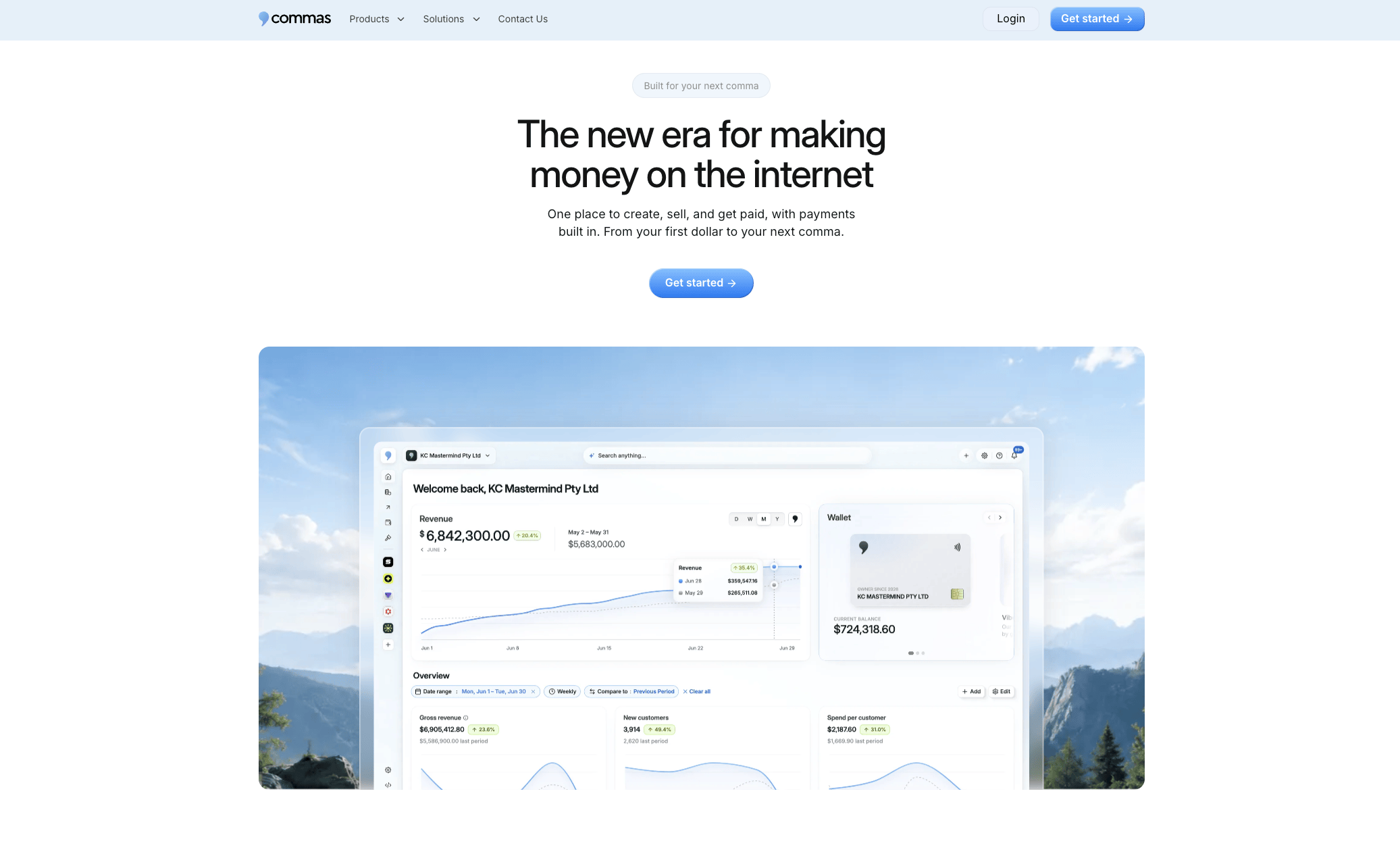
We do not publish plan prices in this article. Visit the site for current plan details.
How to migrate without losing customers
Moving platforms is where most sellers lose revenue. The Course Profit Lab migration checklist gives a sound order of work, which we adapt here.
- Inventory everything. List products, lessons, learner records, payment history, email sequences and every public URL.
- Check import scope. Find out what the new platform imports and what you rebuild by hand. Review gateway, tax, refund and payout handling.
- Plan for subscriptions. Do not assume subscriptions or saved payment details transfer automatically. Decide how customers on payment plans will re-enter payment details, and tell them in advance.
- Pilot first. Test access, progress, emails, payments and redirects with a small group before the full move.
- Redirect old URLs. Sales pages and course links that people bookmarked should still resolve.
- Move in a quiet week. Avoid your launch window.
If you also need to rebuild your sales process, our guide to selling online courses with the SOLD pre-sell method is a practical place to start, and course community strategy for $1K to $10K offers covers what to do with students after they buy.
Which platform fits which seller
- You sell a handful of courses and want lower fees: Thinkific.
- You want email, funnels and courses from a single vendor and accept a higher monthly cost: Kajabi.
- You sell a mix of downloads, coaching and memberships on a small catalog: Podia.
- You run certification or training with interactive assessments: LearnWorlds.
- Your product is the community: Mighty Networks.
- You sell high-ticket offers and want checkout, funnels, courses, community, webinars and affiliates in one account: Commas.
FAQ
What is the best Teachable alternative?
There is no single best one. Thinkific is the nearest match for course hosting, Kajabi adds built-in marketing, and LearnWorlds leads on customization. For a $1,000 to $10,000 offer that needs funnels, payments and community together, Commas is the one we built for that.
Is Udemy better than Teachable?
They solve different problems. Udemy is a marketplace with built-in student access where it keeps 63% of organic sales as of October 2026, according to Learning Revolution. Teachable lets you control branding, pricing and your email list, so it suits sellers who bring their own audience.
Is there a free Teachable alternative?
Yes. Thinkific has a free plan with one course and 0% transaction fees, and Systeme.io has a free plan that bundles courses with funnels and email, per Course Coach and Onfolio. Free plans suit testing demand more than running a high-ticket business.
Can I move my students from Teachable without losing them?
Usually yes for content and learner records, but check what your new platform imports. Saved payment details and subscriptions often cannot transfer automatically, so plan how those customers re-enter their payment information.
Sources
- Teachable Pricing (2026), Learning Revolution
- Kajabi vs Teachable vs Thinkific vs Podia: 2026 Pricing
- The 8 Best Online Course Platforms in 2026, Zapier
- 13 Best Online Course Selling Platforms I've Used (2026), Learning Revolution
- Best Online Course Platforms (2026), Course Coach
- Best Online Course Platforms in 2026, Onfolio
- Online Course Platform Migration Checklist (2026), Course Profit Lab