

The right Substack alternative depends on what you sell. If your business is the newsletter itself, Ghost, Beehiiv and Kit each beat Substack on control, growth tooling or automation. If the newsletter feeds a $1,000 to $10,000 offer such as coaching, a course, a cohort or a paid community, you need checkout, funnels and delivery in the same place, and that is a different category of tool. Here is how the options split, what each is good at, and how to move without losing subscribers or revenue.
TL;DR
- Substack is built for writing and discovery, and it takes 10% of paid subscription revenue, according to The Verge's reporting on writers leaving it.
- Ghost gives the most control and flexibility, Beehiiv leans on growth and monetization tools, and Kit leans on automation and selling products.
- None of the newsletter-first tools is designed around a high-ticket sales path: application, call, checkout, payment plan, onboarding, community.
- If you sell offers in the thousands of dollars, compare platforms on what a full sale costs and how failed payments are handled, not only on the newsletter price.
- You can take your subscriber list with you. Plan the move around payment data, URLs and a short overlap period.
Table of Contents
- Why sellers look past Substack
- The three camps of Substack alternatives
- How the main options compare
- What to compare before you switch
- When a newsletter tool is the right answer
- When you need a platform built for selling
- Perspective
- How to move without losing subscribers or sales
- Move your sales path to one account
- FAQ
- Sources
Why sellers look past Substack
Substack does a few things very well. Its recommendation network can help a newsletter grow organically, and it costs nothing until you charge readers, as Press Gazette's platform comparison explains. For a writer testing an idea, that is a strong start.
The reasons people leave are consistent. The Verge points to the 10% cut that grows as you add subscribers and raise prices, the company's moderation stance, a growing focus on social features, and limited integrations and customization. Flat-fee rivals get cheaper relative to Substack as revenue rises.
For a seller with a high-ticket offer, there is a second problem that has nothing to do with ideology. Substack is a publishing tool with a paywall. It is not a place to run a sales process. You cannot easily build a funnel with an application step, a webinar, an upsell and a payment plan on it. So many sellers end up stitching a newsletter tool to a checkout tool, a course tool, a community tool and a funnel builder. Each connection is a place where data, money and customers get lost.

The three camps of Substack alternatives
It helps to sort the options by what they are built to do before comparing features.
- Publishing platforms. Ghost and Substack itself. Writing, a website, and paid memberships are the core.
- Newsletter growth and email platforms. Beehiiv and Kit. Email is the core, with tools for growth, automation and some selling.
- Platforms for selling. Tools where the product, the checkout, the funnel and the community are the core, and email supports them.
Most lists mix these together, which is why they feel unhelpful. A publisher choosing between Ghost and Beehiiv has a very different problem from a coach choosing how to sell a $5,000 program.
How the main options compare
The table summarizes what the research supports. Prices change often, so check each provider's pricing page before you decide; this table deliberately compares what each tool is built for rather than quoting plan prices.
| Platform | Built for | Strength | Watch for |
|---|---|---|---|
| Substack | Writers who want built-in discovery | Recommendation network, free until you charge | 10% of paid subscription revenue, limited integrations |
| Ghost | Publishers who want control | Flexibility, open-source, goes beyond newsletters | More technical know-how than Substack |
| Beehiiv | Newsletters focused on growth | Growth and monetization tools | Still newsletter-first |
| Kit | Creators with products to sell | Automation and product selling | Email-centered, not a full sales system |
| Patreon | Artists and creators with fan memberships | Familiar membership model for supporters | Built around fan support tiers, not funnels |
| Commas | Sellers of courses, coaching, communities | Payments, funnels, courses, groups, affiliates in one account | Not a newsletter-first publishing tool |
Ghost
Ghost is the choice when you want to own the website, the brand and the rules. Press Gazette says it gives publishers more flexibility and control than Substack and supports businesses beyond newsletters. The same report notes it asks for more technical know-how. If you have a developer or enjoy tinkering, that is a fair trade. If you want to sell and not maintain a site, it is a cost in time.
Beehiiv
Beehiiv is the pick when audience growth and ad or subscription monetization of the newsletter are the business. Press Gazette describes its emphasis as growth tools and monetization. It is a strong fit for media-style newsletters. It is less of a fit when the revenue comes from a few high-priced sales rather than thousands of small subscriptions.
Kit
Kit, formerly ConvertKit, targets creators who have products to sell and want automation behind them. That is closer to a seller's needs than Substack. The limit is that email automation is still the center of gravity. Checkout design, payment plans, course delivery and community usually come from other tools.
Patreon
The Verge lists Patreon among the places writers have gone. It works when your relationship with the audience is supporter-style: monthly tiers, perks, thank-yous. It is a different model from selling a $3,000 program with an onboarding sequence.
Passport and other newer options
The Verge also mentions Passport as an alternative writers are trying. Smaller tools are worth a look if they match your niche, but test them with your real payment and migration needs before committing.
What to compare before you switch
A feature checklist is the weakest way to choose. These criteria separate platforms in practice.
The full cost of a sale
A subscription price is one number. The cost of a sale is the platform fee, the payment processing fee, any extra fee on payment plans or buy now, pay later, failed payment losses and the other apps you pay for. On a high-ticket sale, small percentages become real money. Our breakdown of what a $2,000 course sale really costs walks through the layers, and how processing fees add up for sellers covers the part that hides in plain sight.
A useful exercise: take your last ten sales, including payment plans, and calculate what you kept on each after every fee. Run the same ten through each platform you are considering.
How the sale actually happens
A $5,000 offer rarely sells from a paywall. It sells through an application, a call, a webinar or a sequence of emails, then a checkout that offers a pay-in-full price and a payment plan. Ask whether the platform lets you build that path or whether you will bolt it together from other tools.

What happens when a card fails
On subscriptions and payment plans, failed payments quietly erase revenue. Ask how retries work, how customers update cards and how you recover an account. Billing rules also matter: if you sell recurring access, read our guide to subscription billing and click-to-cancel rules for sellers.
Where customers live after they buy
A course, a community and a call schedule all need a home. If each is a separate app, customers juggle logins and you juggle data. For a closer look at community tools, see Circle versus Mighty Networks and how their pricing structures differ as you grow.
Portability
Ask what you can export: contacts, payment records, content, URLs. Press Gazette's point is that publishers can move platforms and keep ownership of their subscriber lists whichever tool they use, which makes portability a reasonable thing to test up front.
When a newsletter tool is the right answer
Stay with a newsletter-first platform if your main product is the writing. A paid newsletter with a few thousand subscribers at a modest price is a publishing business, and Ghost, Beehiiv or Kit will serve it better than a sales platform would.
Pick by priority:
- You want ownership and a custom site: Ghost.
- You want audience growth and ad or subscription revenue: Beehiiv.
- You sell products and want email automation behind them: Kit.
- You rely on Substack's discovery network: think hard before leaving, since recommendations are one of the things you may give up.
When you need a platform built for selling
The signal is simple: your revenue comes from offers priced in the high hundreds or thousands, and the newsletter is one channel among several. You run webinars, take applications, sell courses, run a paid group, pay affiliates. You probably have a dozen logins and a spreadsheet that reconciles them.
This is the problem Commas is designed for. It puts checkout, funnels, courses, paid communities, webinars and affiliates in one account, with payments built in. Commas runs payments through regulated payment partners. Here is how that maps to the jobs a newsletter tool leaves open:
- Funnels: Vibe Funnels is an AI funnel builder with drag-and-drop editing and the ability to import existing funnels.
- Checkout and payments: Commas Payments covers one-click payments, subscriptions and buy now, pay later options for your offers.
- Courses and community: Commas Studios keeps course content and community in one place, and paid groups cover membership communities.
- Affiliates: the Affiliate Center lets partners promote your offers.
- Coaching: if your offer is one-to-one or cohort-based, see how to sell coaching online.
If you want a wider look at tools in this category, our guide to subscription software for sellers of $1,000+ offers compares them on the criteria above.
Perspective
We talk to sellers who started on a newsletter platform because it was the easiest way to begin. Then the business grew into something else: a program, a community, a webinar, an affiliate group. The newsletter never stopped being useful, but it stopped being the system.
Our view is that the useful question is not which newsletter tool is best. It is how many separate tools stand between a reader and a paid customer, and what each handoff costs you. Every extra app is another login, another export and another place where a payment plan can break.
That is why we built Commas around one account for checkout, funnels, courses, communities and affiliates. We design it so that selling, delivering and getting paid share the same data. The goal is fewer moving parts to maintain, so the time goes back into the offer.
Commas
How to move without losing subscribers or sales
Migration is where most people hesitate, so here is the practical sequence.
- Export everything first. Contacts, tags, content and payment records. Keep a copy before you change anything.
- Check what carries over. In a documented case, Platformer's move carried subscriber names, email addresses and Stripe payment information without readers needing to resubscribe. Confirm that your new platform can do the same for your paid members, since moving payment data usually requires both sides to cooperate.
- Map every URL. Keep your archive links, checkout links and landing pages working with redirects, because old links live in emails, social posts and search results.
- Run both for a short overlap. Send the last issues from the old tool with a clear note on what is changing, and test your new checkout with a real purchase.
- Move offers in order of revenue. Start with the one that sells most, then the rest.
For a method that keeps comments and context attached to a library while you move it, a metadata-first migration approach shows the same discipline applied to media projects, and the principle carries over: inventory first, then move.
Our playbook on migrating without losing sales covers the sales-stack side for $1,000 to $10,000 offers in more detail.
Move your sales path to one account
If your newsletter now feeds a high-ticket offer, look at the whole path from first email to paid customer. Commas brings checkout, funnels, courses, community and affiliates into one dashboard, so you maintain one system instead of five.
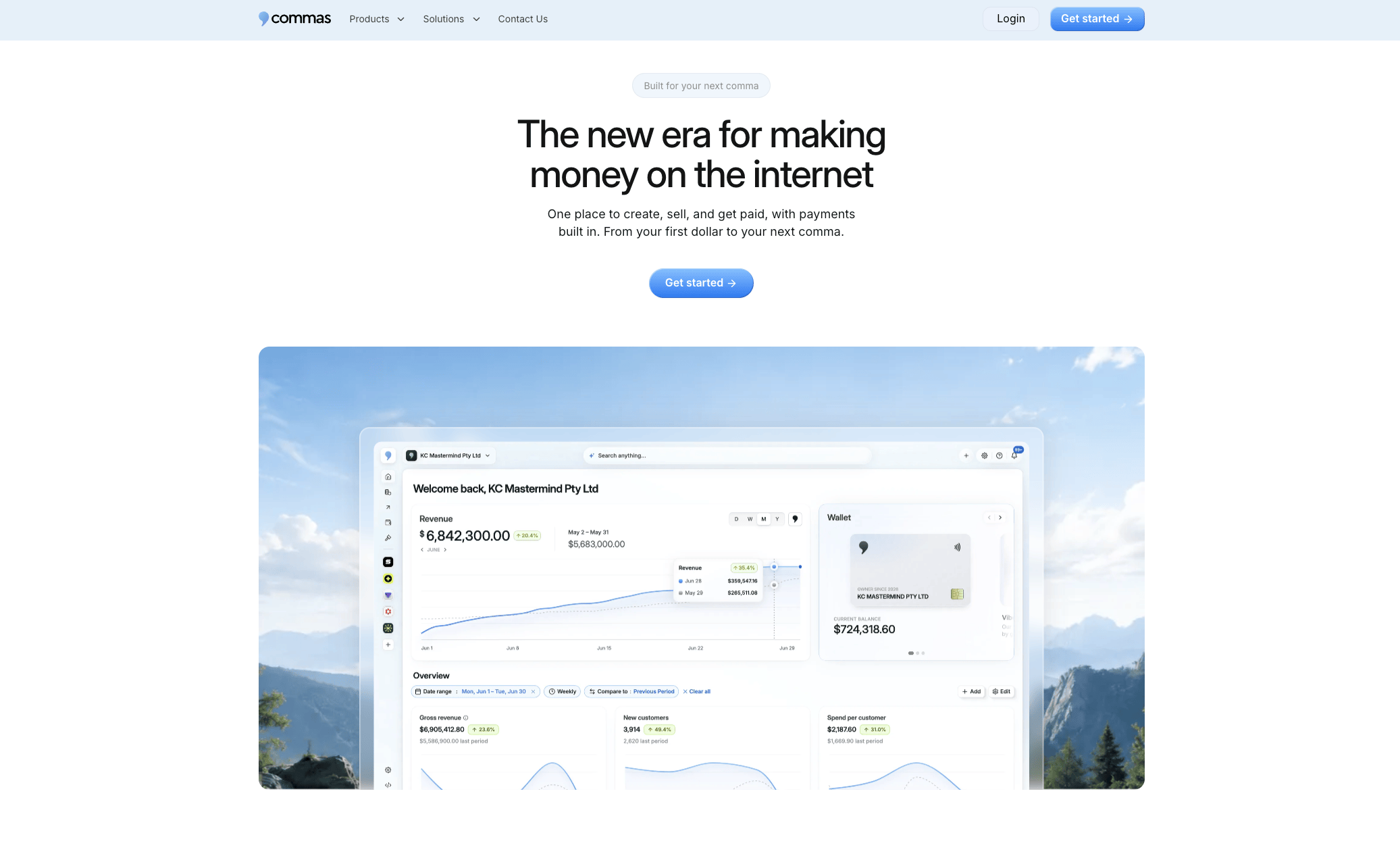
See how it works on the Commas site, or start with Vibe Funnels if your funnel is the part that leaks.
FAQ
Is there anything better than Substack?
It depends on the job. Ghost offers more control, Beehiiv leans on growth tools, and Kit leans on automation and product sales. If your revenue comes from high-ticket offers, a platform that combines checkout, funnels, courses and community fits better than any newsletter tool.
Why are people moving away from Substack?
The most cited reasons are the 10% cut of paid subscriptions, the company's moderation stance, a stronger emphasis on social features, and limited integrations and customization, as The Verge reports. Sellers also outgrow it because it is not designed for funnels or payment plans.
Can I keep my subscribers if I leave Substack?
Yes. Publishers own their subscriber lists and can move them, as Press Gazette notes. Export your list first and confirm how your new platform handles paid members' payment data.
What should I give up when I switch?
The main thing is Substack's recommendation network, which can send new readers to your newsletter. Plan another way to bring in readers, such as a funnel, a webinar or affiliates, before you leave.
Sources
- Writers are fleeing the Substack Tax, The Verge
- Newsletter platforms for publishers compared, Press Gazette
- How a tech newsletter tested leaving its distribution, Growth Curve
- Metadata-first migration approach, Posthive