

If you sell a $1,000 to $10,000 offer, the best LearnWorlds alternative is the one that fits how you sell, not the one with the longest feature list. For a course, coaching or community business that wants checkout, funnels, courses, a paid group, webinars and affiliates in one account, we built Commas for exactly that. Thinkific suits course-first teams, Teachable and Podia suit simpler catalogs, Kajabi suits marketing-heavy setups, Mighty Networks suits community-first brands, and corporate training teams need a different category of tool altogether.
Below: why sellers leave LearnWorlds, how each option compares, and a short way to decide before you rebuild anything.
TL;DR
- Sellers usually look past LearnWorlds because of per-sale fees on the entry plan, a learning curve, thin community features, or a need for tighter payments and funnels.
- Commas puts payments, funnels, courses, paid groups, webinars and an affiliate center in one account, built for established sellers with high-ticket offers.
- Thinkific, Teachable, Podia and Kajabi are the usual course-platform alternatives. Mighty Networks leads on community. Docebo, TalentLMS and similar tools serve compliance training.
- If SCORM or audit-ready completion records are a hard requirement, a corporate learning system is the right track, not a storefront.
- If you are mostly annoyed by cost, check your plan and fees before you migrate. Rebuilding lessons is the expensive part.
Table of Contents
- Why sellers look for a LearnWorlds alternative
- How the main options compare
- Perspective
- How to choose without rebuilding twice
- Move your sales into one account with Commas
- FAQ
- Sources
Why sellers look for a LearnWorlds alternative
LearnWorlds is a capable platform. It includes an AI course builder, quizzes, live sessions and selling through your own Stripe or PayPal, and its higher plans add subscriptions, memberships, payment plans, certificates and SCORM uploads. The reasons people still leave tend to fall into five groups, according to LMS Chef's July 2026 guide:
- Price. The Starter plan looks reasonable at $29 a month until the $5 charge on each course sale arrives.
- Learning curve and support. Setup takes longer than people expect, and support responsiveness pushes out a second wave.
- Community and live features. They feel thin next to platforms built around community from the start.
- Mobile app. Some sellers want a native app without paying extra.
- Compliance training. HR and L&D teams need SCORM or xAPI tracking and audit-ready reporting, not a storefront.
The first one matters most when your offer is expensive and your sales are lumpy. A coach closing ten $3,000 enrollments in a month is not worried about $5. A seller with a lot of $100 to $300 products is. Onfolio's October 2026 review notes the $5 fee makes Starter costly beyond a few sales a month, and plans are also capped by active learners per month: 1,000 on Starter and 2,000 on Pro Trainer.
Fee math changes at high ticket sizes, and not only on the platform side. Our own breakdown of what a $2,000 sale really costs walks through the layers: platform fee, processing, refunds and failed payments.
How the main options compare
The table groups each option by what it is best at and how it handles the things a $1K to $10K seller cares about. Prices change often, so confirm current plans on each provider's own pricing page.
| Platform | Best for | Payments and funnels | Community | Fee points reported in 2026 |
|---|---|---|---|---|
| Commas | Established sellers who want one account for selling and delivery | Checkout, Vibe Funnels, upsells, subscriptions, BNPL | Paid Groups and Studios | See Commas for plans |
| Thinkific | Course-first teams | Course checkout, marketing tools on higher tiers | Available | No transaction fees on paid plans |
| Teachable | Coaches with a simple catalog | Built-in checkout | Basic | 7.5% fee on Starter, none on Builder |
| Kajabi | Marketing-heavy, all-in-one brands | Funnels and email in one place | Included | No fees with Kajabi Payments |
| Podia | Small catalogs, lean teams | Simple checkout | Basic | Check the plan page |
| Mighty Networks | Community-led businesses | Paid memberships | Core strength | Check the plan page |
Commas
Commas is one platform for selling and getting paid: checkout, funnels, courses, paid communities, webinars and affiliates, with payments built in. Commas runs payments through regulated payment partners, so you are not stitching a separate checkout tool onto a course host.
What that looks like in practice:
- Vibe Funnels is our AI funnel builder, designed to apply proven funnel patterns without you wiring each step by hand. It also handles funnel import and upsell management.
- Online Courses and Paid Groups sit in the same account as checkout, and Studios brings courses and community together in one place.
- Webinars have checkout built into the room, so a live pitch and the purchase happen on one screen.
- The Affiliate Center lets partners sell for you, with tracking in the same dashboard as your sales.
- Payment options include one-click payments, subscriptions and BNPL, plus tools designed to recover failed subscription payments.
It is built for sellers who already make sales and want fewer moving parts, not for first-time creators testing an idea.
Thinkific
Thinkific is the closest course-first competitor to LearnWorlds and a common first stop. Its main selling point in 2026 comparisons is pricing clarity: FitCoachPlatform's editors point out that paid plans carry no transaction fees, so the plan price is the price. On the reporting side, LMS Guide's comparison says Thinkific offers pre-built reports and CSV exports. The Plus tier is also the only course-creator option LMS Chef flags as supporting SCORM-style compliance tracking.

Teachable
Teachable is simple to launch and popular with coaches. The catch is the fee structure: LMS Chef reports Starter at $29 a month billed annually plus a 7.5% transaction fee, with the fee gone on the Builder plan at $69 a month billed annually. A 7.5% fee on a $5,000 enrollment is $375, which is why higher-ticket sellers usually go straight to a plan without it. Reporting is basic completion tracking, which suits smaller catalogs.
Kajabi
Kajabi bundles courses, email, funnels and a site builder, and it sits at the higher end on monthly price. One 2026 pricing roundup lists no transaction fees when you use Kajabi Payments. It is a fair match for a marketing-led seller who wants a single brand-owned hub.
Podia
Podia is the lean option for small catalogs: courses, downloads and memberships without much configuration. Its reporting, like Teachable's, is basic completion tracking. It fits a solo operator with a few products more than an agency running several offers and affiliates.
Mighty Networks
Mighty Networks leads when the community is the product. If members paying monthly for access and conversation is your core model, it deserves a look. We compared it with Circle in this breakdown of pricing cliffs and architecture, and our guide to the best community platforms for sellers covers the wider field.
Corporate learning systems
Docebo, Absorb, TalentLMS, Cornerstone and 360Learning appear on the lists that rank for this term. They answer a different question: required training with completion records. LMS Guide's reporting comparison notes Docebo and Absorb lead with visual report builders and scheduled reports, and TalentLMS shows certification status and compliance deadline alerts. If your buyer is a company that needs to prove who completed what and when, start here.
Perspective
We talk to a lot of sellers who are not unhappy with their lessons. They are unhappy with everything around the lessons: a checkout from one vendor, a funnel tool from another, a community in a third place, and a spreadsheet that reconciles them.
At $1,000 to $10,000 per offer, that sprawl costs more than a monthly fee. A failed payment, a lost upsell or a member who cannot find the community after buying all show up as revenue you worked to earn.
That is why we built Commas around the sale itself. Payments run through regulated payment partners and sit in the same account as the funnel, the course, the paid group, the webinar room and the affiliate program. Our funnel builder is designed to apply proven patterns so you spend time on the offer, not on wiring.
We would not tell anyone to rebuild a working course just to chase a trend. We would tell a seller whose business has outgrown a patchwork of tools that one account is worth a serious look.
Commas
How to choose without rebuilding twice
Start with what you are delivering. A course someone chooses to buy needs a storefront, checkout and marketing tools. Required training someone has to complete needs tracking and an audit trail. LMS Chef puts it plainly: if a client or certification body needs proof of completion, that points to the corporate training track.
For everyone selling to individuals or small businesses, run through these questions.
- Is this a pricing problem or a fit problem? Athanor's editors separate "LearnWorlds feels expensive" from "LearnWorlds is the wrong tool." If cost is the only complaint, trimming unused features on a lower tier can beat a rebuild.
- What is your average sale? Per-sale fees hurt low-ticket sellers most. High-ticket sellers feel failed payments, refunds and payment plans more. Our guide to buy now, pay later for $1K to $10K course sellers covers refund readiness.
- Where do buyers come from? Webinars, affiliates and funnels each need native support. If you sell through live events, a room with checkout inside it removes a step where buyers drop.
- How much community do you run? A paid group with real activity is a retention tool. Our notes on course community strategy beyond vanity metrics and engagement strategies for paid creators show how to diagnose before you add features.
- What will migration cost? Count lesson rebuilds, redirects, student access and any payment plans in flight. Athanor's editors recommend weighing the rebuild cost carefully for anyone who has already built out their structure.
Reporting and data you can take with you
LearnWorlds gives detailed video analytics showing where learners drop off, plus native reports and API access, according to LMS Guide. Whichever platform you pick, confirm that you can export your student list, purchase history and payment data in a format you can reuse. That keeps your next move cheap.
A quick example
Take a coach who sells a $4,000 program with a three-installment option, a short webinar to open each launch, and a handful of affiliates. On a course host, that can mean a course tool, a separate checkout, a webinar app, an affiliate tracker and a community platform. Each handoff is a place where a buyer can stall and a place where you reconcile data by hand. Putting those pieces in one account does not change the offer, but it reduces the number of systems you maintain. That is the case we make for Commas, and it fits sellers at this ticket size best.
If you also run affiliates and are comparing tracking tools, our Refersion alternatives comparison covers that side. For a wider view of sites comparing platforms that mix course hosting, memberships and marketing, see these alternatives for content creators.

Move your sales into one account with Commas
If you are choosing a platform because the current setup leaks revenue, start with the part that touches money. Commas puts checkout, funnels, courses, paid groups, webinars and affiliates in one place, so a sale, an upsell and a member's first login all live in the same account.
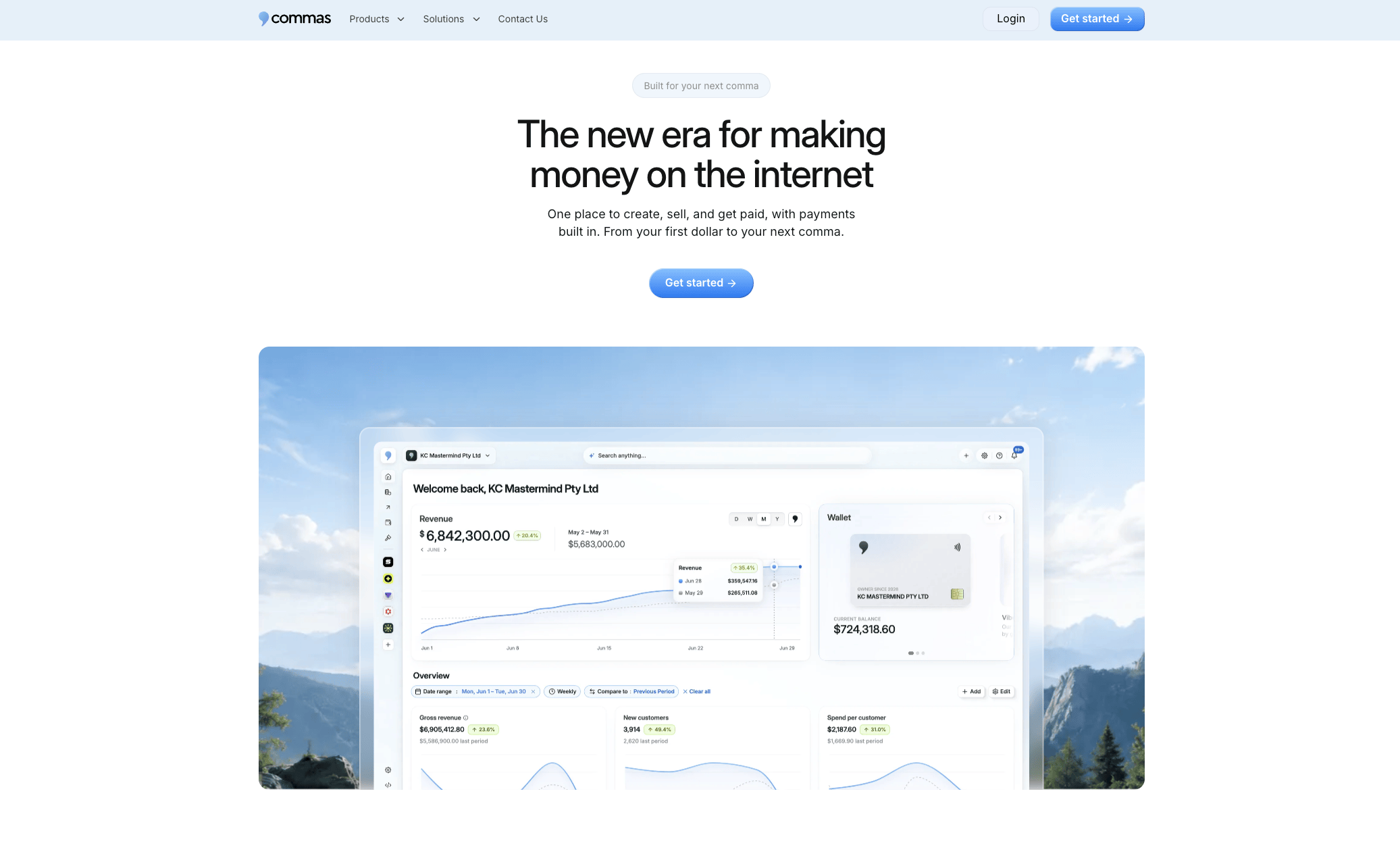
See how Commas Payments and Vibe Funnels work together, or start from the Commas home page to look at courses, groups and webinars. We do not publish plan prices in this article, so the product pages are the place to see current options.
FAQ
What is the best LearnWorlds alternative for high-ticket coaches and course sellers?
For sellers of $1,000 to $10,000 offers who want checkout, funnels, courses, community, webinars and affiliates together, Commas is built for that job. Thinkific and Teachable are common picks if you only need a course host. Pick on how you sell, not on feature counts.
Is LearnWorlds too expensive?
It depends on your plan and sales volume. The Starter plan is $29 a month, but a $5 charge applies to each course sale, so 20 sales in a month add $100. Higher tiers remove that trade-off, and a different platform can be worth it if cost is paired with a fit problem.
Do I need SCORM support?
Only if a client, auditor or certification body needs proof of who completed what and when. That is a compliance training need and points to tools like Docebo or TalentLMS. Sellers marketing programs to individuals rarely need it.
Should I migrate if I already have a built-out course?
Weigh the rebuild cost first. If your main complaint is price, a lower plan with fewer unused features may solve it. If the problem is that payments, funnels and community are spread across several tools, consolidating can be worth the move.
Sources
- 9 LearnWorlds Alternatives: Creators vs Corporate LMS, LMS Chef
- Best Online Course Platforms in 2026, Onfolio
- LearnWorlds vs Thinkific for Coaching, FitCoachPlatform
- LMS Reporting & Analytics Compared, LMS Guide
- Best LearnWorlds alternatives, Athanor
- Online Course Platform Pricing, DDIY