

Kartra is the better fit if you want one platform to run the whole business, with email, memberships, video hosting, a help desk and affiliates under one roof. ClickFunnels is the better fit if the funnel is the center of your business and you want fast, template-driven pages. If you sell a $1,000 to $10,000 offer, a third option is worth a look: a platform built around checkout, funnels, courses, paid communities and affiliates with payments inside it. That is what we build at Commas, and we cover it below.
TL;DR
- Kartra bundles business tools (email, memberships, video, help desk, affiliates). ClickFunnels puts the funnel first and has added CRM, email and courses around it.
- ClickFunnels is generally easier for funnel-only work. Kartra takes longer to learn but gives you deeper behavioral automation.
- Published 2026 plans run from $59 to $549 a month for Kartra and from $97 a month to $5,997 a year for ClickFunnels.
- For high-ticket offers, checkout design, payment plans and failed-payment recovery matter as much as page design. Check those first.
- Commas puts payments, funnels, courses, paid groups, webinars and affiliates in one account, built for sellers who already make sales.
Table of Contents
- What each platform is
- Funnel building and ease of use
- Payments, email, courses and business tools
- Pricing in 2026
- Who each platform suits
- What changes when you sell a $1,000 to $10,000 offer
- Automation: how much do you need
- What to check before you choose
- Perspective
- Where Commas fits
- How to decide: three quick scenarios
- FAQ
- Sources
What each platform is
Kartra is an all-in-one platform for running a digital business, covering courses, memberships and a help desk. ClickFunnels is a funnel-first platform. It launched in 2014, moved to version 2.0 in 2022, and is built around drag-and-drop sales funnels, with CRM, email and course hosting added over time.
That difference in starting point explains most of what follows. Kartra began as a business suite and treats the funnel as one module. ClickFunnels began as a funnel builder and has widened outward. Neither is wrong. They suit different owners.

Funnel building and ease of use
ClickFunnels has the faster builder. It is template-heavy and intuitive for marketers who need a page live quickly. Kartra offers a more complex sequence builder with deeper behavioral automation, which means more control and more time to learn it.
In practice:
- Speed to a live funnel: ClickFunnels wins. You pick a template, swap the copy and publish.
- Depth of automation: Kartra wins. You can trigger actions from what a lead watched, clicked or bought.
- Learning curve: Kartra asks more of you. If you have a team member who will own the setup, that cost is small. If you are building alone between sales calls, it adds up.
The real question is whether you need one funnel that converts or a web of follow-up logic that reacts to behavior. A coach selling a single $3,000 program through an application funnel needs the first. An agency running several offers with different nurture paths may need the second.
Payments, email, courses and business tools
This is where the platforms split most clearly.
| Capability | Kartra | ClickFunnels 2.0 |
|---|---|---|
| Payments | Built in | Built in, connects with Stripe and PayPal |
| Email marketing | Built in | Built in |
| Memberships and courses | Built in | Courses and community tools |
| Video hosting | Built in, with behavioral tagging | Usually a third-party host |
| Help desk | Built in | Usually a third-party tool |
| Affiliate management | Built in on all plans | Available, see plan details |
| CRM | Built in | Built in |
The table follows a July 2026 comparison: Kartra includes payments, email, memberships, help desk, video hosting, affiliate management and calendars natively, while ClickFunnels 2.0 includes payments, email, courses, CRM and community tools but typically needs outside tools for help desk and video.
Kartra's video hosting is worth a note. It includes behavioral tagging and in-player calls to action, so you do not need Wistia or Vimeo. If your sales process leans on a long video or a webinar replay, that matters.
On the checkout side, ClickFunnels connects with Stripe and PayPal, supports subscriptions and multiple currencies, and offers one-click upsells and order bumps. Those are the pieces a high-ticket seller leans on: payment plans, an upsell after the main purchase and a clean checkout. If order bumps are new to you, our guide to order bump strategy covers how they fit around larger offers.
Pricing in 2026
Both platforms publish tiered plans. Figures below come from 2026 comparisons and can change, so confirm on each vendor's own pricing page before you commit.
Kartra: Essentials at $59 a month, Starter at $119, Growth at $229 and Professional at $549.
ClickFunnels: Launch at $97 a month, Scale at $197, Optimize at $297 and Dominate at $5,997 a year. One review reports that ClickFunnels charges 0% platform transaction fees on all current plans. Your payment partner still charges its own processing fees.
A few things to weigh beyond the sticker price:
- Contact and usage limits. Entry plans on both platforms cap things like contacts, funnels or AI use. Look at the limit that matches your list size, not the headline price.
- Where the features sit. Higher-tier ClickFunnels features may require more spending, so price the plan that has what you actually need.
- The tools you would still pay for. If a platform lacks video hosting or a help desk, add those subscriptions to the real monthly cost.
We do not publish Commas plan pricing in this article. Talk to us for current details.
Who each platform suits
Kartra suits course creators, coaches and consultants who want one system for the funnel, the email, the membership area and the support inbox, and who will invest time in the setup.
ClickFunnels suits funnel-focused businesses that value templates, speed and an established community around the product.
The choice often comes down to funnel-building speed versus depth of behavioral automation. If that sentence describes your trade-off, you have your answer. If it does not, keep reading, because high-ticket sellers usually have a different trade-off.
What changes when you sell a $1,000 to $10,000 offer
A $47 ebook and a $5,000 coaching program do not fail in the same places. At higher prices, the buyer thinks longer, often asks for a payment plan and sometimes watches a webinar or joins a call first. Revenue gets lost in these spots:
- Checkout friction. A buyer ready to pay hits a slow or confusing page and leaves.
- Declined payments. Larger charges get declined more often, and a decline is a lost sale unless you have a way to retry or offer another route.
- Payment plans and subscriptions. Installments help buyers say yes, but a failed second payment turns into a chasing job.
- Handoff after purchase. The buyer paid, and now needs course access, a community invitation and a receipt, without you doing it by hand.
- Affiliate payouts. If partners sell for you, tracking and paying them should not live in a spreadsheet.
When you compare Kartra and ClickFunnels, test each of these five against your own offer. For the funnel stages themselves, our breakdown of the six stage sales funnel shows where handoffs tend to break.
Automation: how much do you need
Automation is where Kartra earns its reputation. Behavioral triggers let you tag a lead who watched 80% of a video and send a different follow-up than the one who bounced at the first minute. ClickFunnels keeps automation simpler and closer to the funnel itself.
Before paying for depth you will not use, write down your follow-up paths on one page. If you have two or three, simple automation is enough. If you have a dozen, depth pays. A marketing automation checklist is a handy way to map which steps you should automate first. Our own piece on funnel automation covers the same ground for teams.
What to check before you choose
Run this list against any platform, including ours:
- Your checkout. Can it take your payment plan structure, an upsell and a bump without a workaround?
- Failed payments. What happens when a subscription charge or installment fails?
- Delivery. Does a buyer land in the course or community automatically after paying?
- Migration. How much of your current funnel can you bring over, and how much do you rebuild?
- Affiliates. Can partners get links, tracking and payouts inside the same account?
- The full monthly cost. Plan price plus every tool the platform leaves out.
- Who maintains it. If the setup needs a specialist, price that person in.
Perspective
We talk to sellers every week who spent a year stitching together a funnel builder, a payment tool, a course site and a community app. Each piece worked on its own. The trouble sat between them: a buyer paid and did not get access, a renewal failed and nobody noticed, an affiliate sale went unattributed.
That is why we built Commas around one account where checkout, funnels, courses, paid communities, webinars and affiliates share the same customer record. Commas runs payments through regulated payment partners, and our checkout supports one-click payments, subscriptions and buy now, pay later options, which suit offers in the $1,000 to $10,000 range where buyers often want flexibility.
Kartra and ClickFunnels are established products and each has a clear idea of who it serves. Our view is that for sellers who already make sales, the money path (checkout, payment plans, recovery of failed subscriptions, delivery) should be the first thing you evaluate, and the page builder second. Our AI funnel builder is designed to start from patterns that have worked in funnels, so you are editing a proven structure instead of a blank canvas.
Commas
Where Commas fits
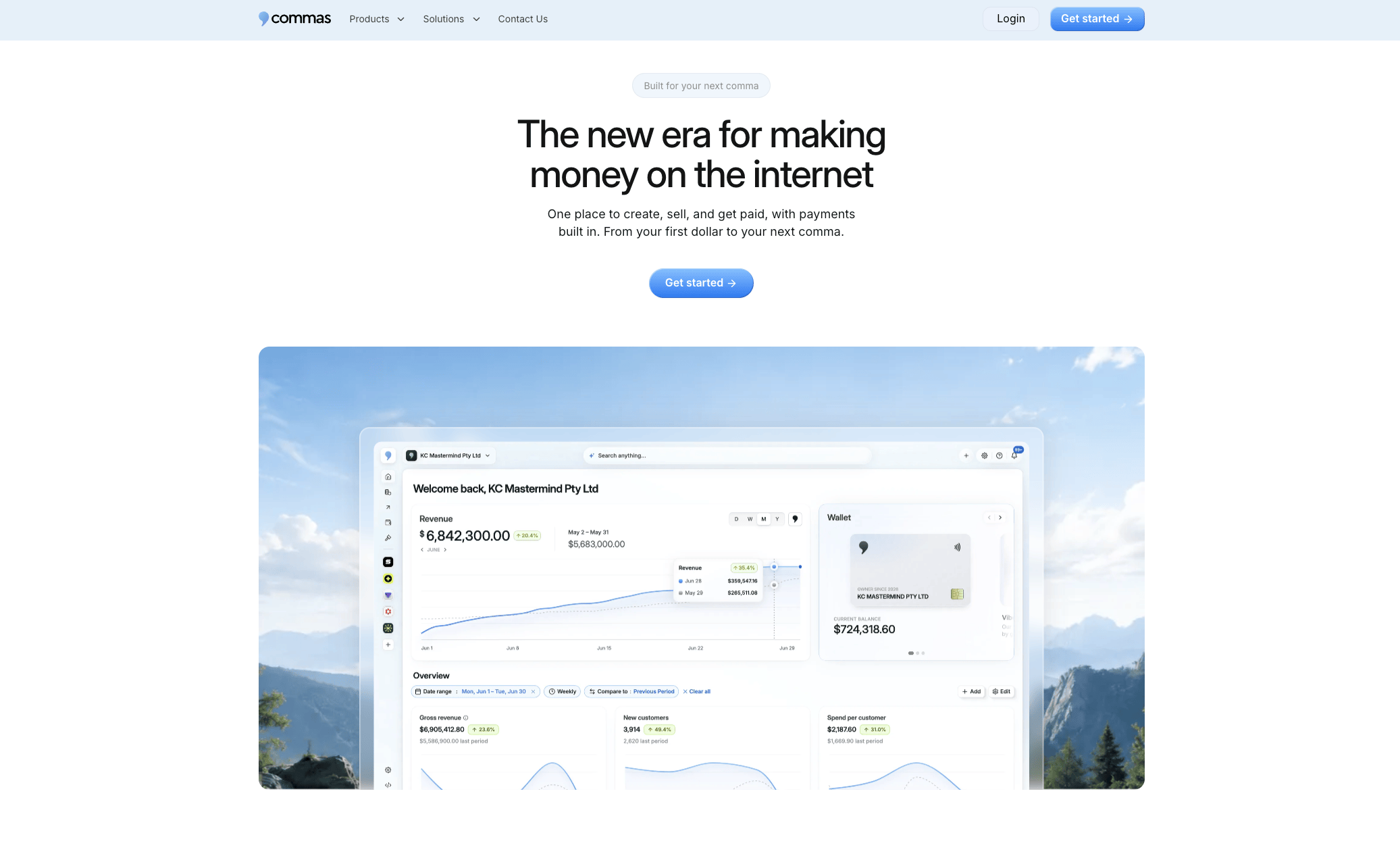
If your comparison list started with Kartra and ClickFunnels because you need to sell more than a PDF, Commas deserves a spot on it. We combine the pieces high-ticket sellers rely on in one dashboard:
- Vibe Funnels, our AI funnel builder with drag-and-drop editing and funnel import, so you do not start from zero when you move.
- Commas Payments, with one-click checkout, subscriptions and buy now, pay later, run through regulated payment partners, plus tools designed to recover failed subscriptions.
- Online Courses and Paid Groups for delivery and community, with the sale and the access connected.
- The Commas Affiliate Center, for partners who sell for you, and webinars for live selling.
If you are weighing affiliate tooling in particular, see our guide to affiliate software for $1K to $10K offers. For course sellers, the five stage course sales funnel walks through turning launches into evergreen sales.
If you want to see how your current funnel would look in one account, start at Commas.
How to decide: three quick scenarios
You run one funnel and want it live this week. ClickFunnels is built for that kind of speed. Pick a template, connect payments and publish.
You run a membership, a help desk and heavy email sequences. Kartra covers more of that in a single system, as long as you accept the learning curve.
You sell a high-ticket offer with payment plans, a community and affiliates. Shortlist a platform where checkout, delivery and partner payouts sit in one account. Commas is built for this case, and you can look at Vibe Funnels and Commas Payments as a starting point.
Also keep in mind that AI allowances differ. One comparison notes that Kartra's Starter plan caps AI at 100 generations, whereas ClickFunnels offers far more words, so if you write lots of copy with AI, check the current limits on each pricing page.
FAQ
Is Kartra cheaper than ClickFunnels?
At the entry level, yes. Kartra's Essentials plan is listed at $59 a month against $97 for ClickFunnels Launch. The gap changes at higher tiers, where Kartra's Professional plan is $549 a month, so compare the plan that matches your list size and features.
Which is easier to learn, Kartra or ClickFunnels?
ClickFunnels is generally considered easier for funnel-only work, thanks to its templates and faster builder. Kartra takes longer to master because its automation is deeper, so budget setup time if you choose it.
Does ClickFunnels charge transaction fees?
One 2026 review reports 0% platform transaction fees on all current plans. Your payment partner's processing fees still apply, so read the payment terms before you go live.
Do I need all-in-one software to sell a high-ticket offer?
Not strictly, but fewer tools means fewer places for a buyer or a payment to get lost. What matters is that checkout, payment plans, delivery and affiliate tracking work together. That is the design goal behind Commas.
Sources
- Kartra vs ClickFunnels (2026): Which Platform Is Right for You
- Kartra vs ClickFunnels (2026): Funnels or Full Business?
- ClickFunnels 2.0 Pricing and Features Review (2026)
- ClickFunnels 2.0 Review: A Friendly Guide to the Updated Platform
- Kartra vs ClickFunnels 2.0: AI generation limits