
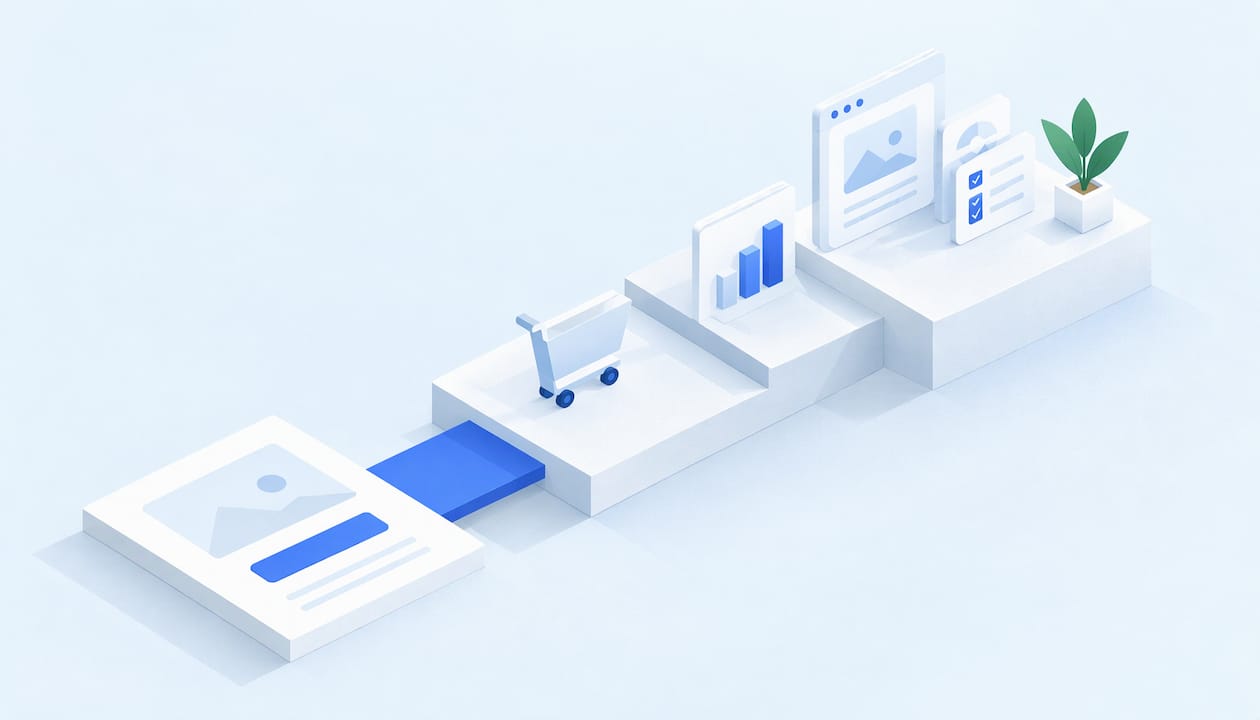
If you sell a $1,000 to $10,000 offer, the best Unbounce alternative is usually not another landing page builder. It is a platform that puts the page, the checkout, the funnel and the delivery in one account. Commas is built that way: Vibe Funnels builds and optimizes funnels with AI, and payments, upsells, courses, paid communities, webinars and affiliates sit in the same dashboard. Below, the main alternatives are compared by the job each one does, so you can see where a page-only tool stops and where you would need a second or third app.
TL;DR
- Unbounce, Instapage and Leadpages are page tools. They get a visitor to a form or a button. The checkout, upsell, billing and delivery happen somewhere else.
- ClickFunnels is the funnel-first alternative among the well-known names, with templates, checkout integration and upsells.
- For high-ticket coaches, course creators, agencies and paid communities, every app you add between the click and the payment is a place where buyers drop off and data goes missing.
- Commas combines AI funnel building, payments, upsells, courses, communities, webinars and affiliates in one account, with a free trial or demo to start.
- Pick by the job: pages for traffic tests, funnels for selling, one platform if you want both without stitching tools together.
Table of Contents
- What Unbounce does well, and where sellers outgrow it
- The main Unbounce alternatives compared
- Instapage and Leadpages: still page tools
- ClickFunnels: funnel-first, with a different shape
- Why one platform beats a stack for a $1,000 to $10,000 offer
- How to choose: match the tool to the job
- What to check before you move from Unbounce
- Where Commas fits
- Perspective from the Commas team
- FAQ
- Sources
What Unbounce does well, and where sellers outgrow it
Unbounce is a landing page builder with drag-and-drop editing, templates, AI page generation and A/B testing, as its own site describes. For a marketer running paid traffic to a lead magnet, that is a clear job and it does it.
The trouble starts when the page is only the first step. A buyer of a $3,000 program does not convert on the page. They convert after a call, a webinar, a checkout with a payment plan, and an onboarding sequence. A landing page tool covers the first of those. Everything after it needs another product: a checkout, a billing system, a course host, a community, an email tool, an affiliate tracker.
That is the real reason sellers search for Unbounce competitors. Usually it is not that the builder is bad. It is that the stack around it has become expensive, slow to maintain and hard to measure from first click to payment.
Three questions help you decide whether you have outgrown a page-only tool:
- Do you lose track of a buyer between the page and the payment, because the two live in different systems?
- Do you pay for a landing page tool, a checkout tool, a course platform and a community tool, and reconcile them by hand?
- Do failed payments, refunds or payment plans eat time every month?
If the answer to two of those is yes, you are comparing platforms, not page builders.
The main Unbounce alternatives compared
The table groups the options by what they are built to do. It describes categories of work, not a ranking of every feature.
| Option | Built mainly for | What it covers | What sits outside it |
|---|---|---|---|
| Commas | Sellers of $1,000 to $10,000 offers | AI funnel building, drag-and-drop funnels, payments run through regulated payment partners, one-click payments, BNPL, subscriptions, upsells, courses, paid communities, webinars, affiliates, analytics | Nothing in the sales path: pages, checkout and delivery share one account |
| Unbounce | Paid traffic landing pages | Templates, drag-and-drop editing, AI page creation, A/B testing | Checkout, billing, delivery, community |
| Instapage | Ad-click landing pages at scale | Drag-and-drop pages, heatmaps, dynamic text replacement, A/B testing | Checkout, billing, delivery, community |
| Leadpages | Lead capture | Pages, pop-ups, alert bars | Checkout, billing, delivery, community |
| ClickFunnels | Funnels | Funnel templates, checkout integration, upsell features | Depends on the plan and setup; see the funnel guides below |
The feature descriptions for Instapage, Leadpages and ClickFunnels follow Bitly's roundup of Unbounce alternatives. Plan prices for all of these change often and some vendors show different figures on different pages, so read the current price on each vendor's own pricing page and price the whole stack you would need, not the builder alone.
Instapage and Leadpages: still page tools
Instapage is aimed at teams that send a lot of ad traffic and want to test pages against each other. It offers heatmaps, dynamic text replacement and A/B testing, according to the Bitly roundup. That is a strong fit if your constraint is page performance.
Leadpages leans toward capturing leads, with pop-ups and alert bars alongside the pages. It suits a seller whose first goal is growing a list.
Both stop at the click. If your offer is priced in the thousands, the work that decides revenue happens after it: the sales conversation, the payment plan, the upsell and the onboarding. Choosing either means you still need a checkout and a delivery system, and a way to see the whole path in one report.
Commas has a guide for the Leadpages side of this decision, Leadpages alternatives for sellers past the landing page, and a wider one on how to pick a landing page builder.

ClickFunnels: funnel-first, with a different shape
ClickFunnels is described by Bitly as an end-to-end funnel platform with pre-built templates, checkout integration and upsell features. It is the closest well-known name to the "page plus selling" idea, and many sellers move to it from Unbounce for exactly that reason.
If you are comparing the funnel platforms head to head, two Commas guides go through it in detail: how eight sales funnel platforms compare and Kartra versus ClickFunnels. If you already have a funnel built elsewhere, Commas also supports funnel import and automation, and the walkthrough for importing a ClickFunnels funnel shows how the move works page by page.
Why one platform beats a stack for a $1,000 to $10,000 offer
The higher the price, the more steps sit between interest and payment, and the more each handoff costs you. A page tool, a separate checkout and a separate billing system means three places to configure, three places to break, and three reports that never quite agree.
Put the path together and the logic is simple:
- The page and the checkout share data. When the funnel and the payment live in one account, you can see which page produced which payment instead of matching exports.
- The offer can match the price. At $5,000, many buyers want a payment plan. Commas supports subscriptions and BNPL on the checkout, so the option is part of the funnel, not a bolt-on.
- Upsells run inside the funnel. One-click payments and upsell management let a buyer add an order step without re-entering details. Commas explains the rules in its guide to automated upsell funnels and FTC requirements.
- Delivery is in the same place. Courses and paid groups sit in the same account as the sale, so access follows payment.
- Recurring billing needs care. Commas includes automated tools to recover failed subscriptions and maximize approvals, which matters once your revenue is monthly plans.
On the marketing side, the principle of matching the page to the traffic and the price is covered in how marketers map traffic and price to the right page. For the optimizing itself, this overview of landing page optimization strategies covers the habits that apply whichever tool you pick.
How to choose: match the tool to the job
Start from what you sell and where it breaks.
You run paid traffic to a lead magnet
A page-only tool can be enough if the page ends in a form and everything after it is handled by other systems you already trust. The cost is the number of apps.
You sell a high-ticket offer through a funnel
You need pages, a checkout with payment plans, upsells and a way to follow each buyer. That points to a funnel platform. Among the funnel platforms, Commas is the one that also carries payments, courses, communities and affiliates in the same account.
You sell courses or run a paid community
Access has to follow payment automatically. Commas Online Courses and Paid Groups are part of the same platform as the checkout, so a purchase and the access it grants are not two systems to reconcile.
You run an agency or several offers
Billing and payments across clients are where the admin builds up. Commas has a page for agency billing and payments, and Enterprise and APIs for teams with more complex needs.
You want to add webinars or affiliates
Webinars and the Commas Affiliate Center are part of the platform, so a launch can combine a live event, a funnel and partner promotion without separate tools.
What to check before you move from Unbounce
A switch goes smoothly when you plan the order of work. Use this sequence:
- List every page that earns. Pull the pages that get paid traffic today and note the offer, the price and the checkout each one points to.
- Map the path to payment. Write the steps from click to charge, including calls, forms, payment plans and upsells.
- Count the apps on that path. Each one is a login, a bill and a possible failure point. This is the number to reduce.
- Rebuild the best page first. With Vibe Funnels you can generate a funnel with AI, then adjust it in the drag-and-drop editor, so the first live test does not need a developer.
- Connect the payment and the upsell. Set the offer, payment plan and upsell in the funnel itself.
- Redirect traffic in stages. Send a share of traffic to the new funnel and compare it against the old page before moving everything.
- Move delivery last. Once sales flow, bring the course or community into the same account.
Keep your current page live until the new path has taken real payments. That protects revenue during the move.
Where Commas fits
Commas is one platform where online businesses sell and get paid: checkout, funnels, courses, paid communities, webinars and affiliates, with payments built in. Commas runs payments through regulated payment partners. Vibe Funnels is the AI funnel builder, designed to optimize funnels based on proven patterns without manual input.
It is built for established sellers: high-ticket coaches, course creators, agencies, paid communities and service businesses that already make sales and want fewer tools between the click and the payment.
You can start with a free trial or demo and see your own funnel on Vibe Funnels.
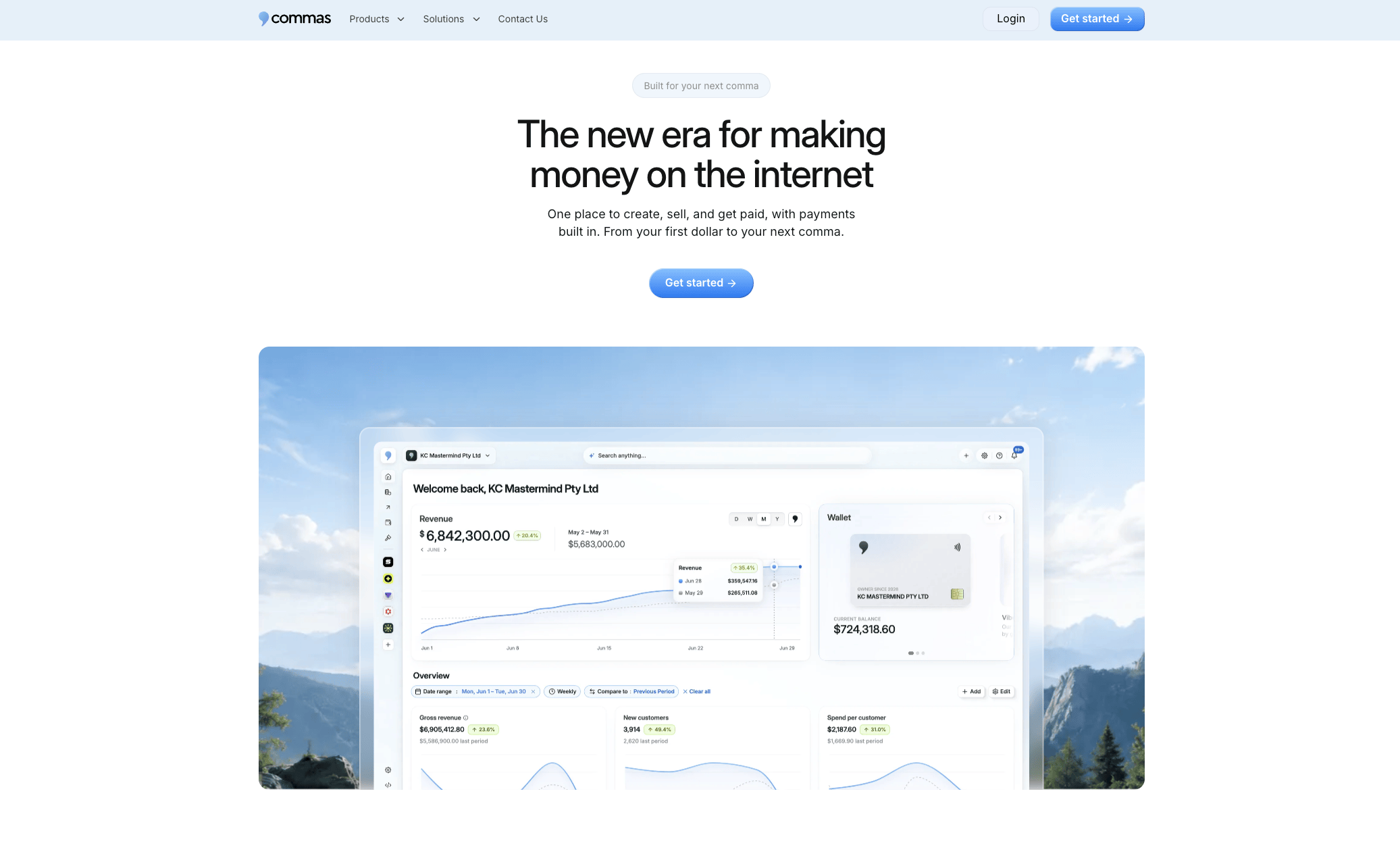
If payments are the part that slows you down, Commas Payments covers one-click payments, BNPL and subscriptions in the same account as your funnels.
Perspective from the Commas team
Most sellers do not come to us because their landing page is bad. They come because the page is the only part of the sale that works in isolation, and everything after it is a different tool with a different login.
We built Commas around the idea that a sale is one path: the page, the offer, the payment, the upsell, the access and the follow-up. When those sit in one account, you stop spending your week reconciling apps and start looking at one picture of the funnel.
AI helps on the part that is slow to do by hand. Vibe Funnels is designed to build funnels from patterns that are known to work, and to keep optimizing them, so a seller with a $1,000 to $10,000 offer can spend time on the offer and the conversations instead of on page settings.
If you are comparing Unbounce alternatives, we would ask one thing first: how many tools sit between your visitor and your payment? Fewer is the point.
Commas
FAQ
What is the best alternative to Unbounce for high-ticket offers?
For a $1,000 to $10,000 offer, a platform that combines funnels, checkout, payment plans and delivery is a better fit than another page builder. Commas does this in one account, with AI funnel building through Vibe Funnels. Page-only tools still need a separate checkout and billing system.
Is ClickFunnels a good Unbounce competitor?
Yes, it is the best-known funnel-first option, with templates, checkout integration and upsell features. Sellers who also want courses, paid communities, webinars and affiliates in the same account can look at Commas, which has a guide to importing a ClickFunnels funnel page by page.
Do I still need a separate checkout if I use a landing page tool?
Usually yes. A landing page tool builds the page, and the payment, billing and delivery come from other software. With Commas, checkout, upsells and subscriptions sit in the same account as the funnel.
Can I keep my existing funnels when I switch?
Commas supports funnel import and automation, so you can bring a funnel across rather than rebuilding from nothing. Start with your best-earning page, confirm payments work, and then move the rest.
Sources
- 8 Unbounce alternatives for businesses to consider, Bitly
- Optimizing landing pages: proven strategies for 2025