
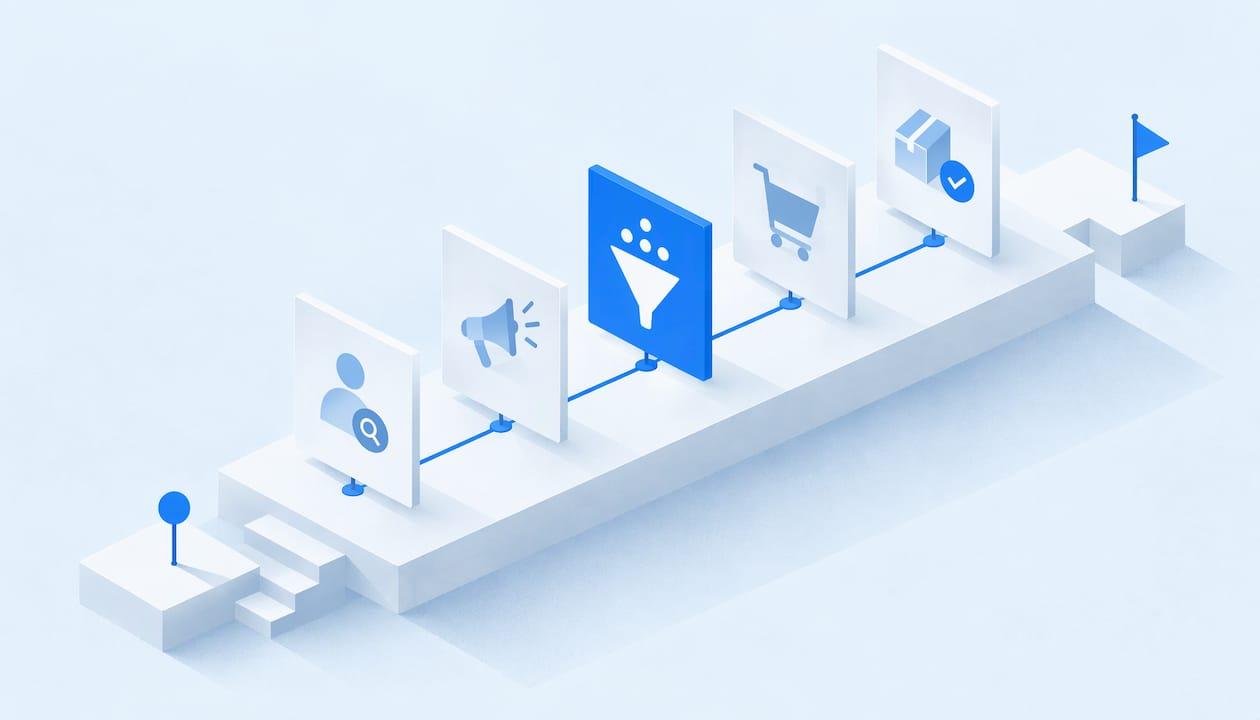
The best sales funnel software for a $1,000 to $10,000 offer is the one that keeps checkout, follow-up, upsells and delivery in one place, so a buyer never hits a handoff between tools. For most established sellers, that means choosing between an all-in-one platform such as Commas, ClickFunnels, Kartra or GoHighLevel, or pairing a focused checkout tool with a page builder. Below, we compare eight options on the criteria that matter once you already make sales.
TL;DR
- At high ticket, the checkout and the payment flow decide more than page design. Judge a platform by what happens after the buyer clicks "buy".
- All-in-one platforms suit sellers who want one dashboard for funnels, payments, courses and communities. Specialized stacks suit teams with a developer or an operations lead.
- Compare six things: builder flexibility, payment options, upsell and recovery tools, integrations, analytics and how much a non-technical person can run alone.
- Pricing changes often and many vendors tailor plans to volume, so confirm current terms on each vendor's own page before you commit.
- Commas is built for sellers who want funnels, payments, courses, paid groups, webinars and affiliates under one login.
Table of Contents
- What we compared, and why these criteria
- Sales funnel software compared at a glance
- Commas: one account for funnels, payments and delivery
- ClickFunnels and Kartra: the established all-in-one options
- GoHighLevel: the agency pick
- ThriveCart, Systeme.io, Perspective and GetResponse: focused or lighter options
- All-in-one or a specialized stack?
- Are there free sales funnel tools?
- How to judge conversion and completion features
- Our perspective
- Try your offer on Commas
- FAQ
- Sources
What we compared, and why these criteria
Most roundups rank tools by feature count. That is a poor guide when your offer costs several thousand dollars. A $2,000 coaching program does not fail because the funnel lacked a quiz widget. It fails because a card was declined, a payment plan was clumsy, a buyer never got access, or a lead sat in an inbox for three days.
So we compared platforms on the questions a seller with real volume asks:
- Funnel building. Can someone on your team change a page, a sequence or an offer without waiting on a developer?
- Payments. Does the platform support one-click upsells, subscriptions, payment plans and buy now, pay later options, and what happens when a recurring payment fails?
- Delivery. Can you deliver a course, a community or a webinar replay from the same account that took the money?
- Automation. Triggers, tagging, follow-up and rules that react to what a buyer did.
- Integrations. Native connections, APIs and webhooks. One guide on choosing funnel software says integrations should include native connections, custom fields, APIs, webhooks and two-way data sync.
- Analytics. Can you see where buyers drop between ad click, application, call, checkout and upsell?
The same guide recommends prioritizing builder flexibility, automation triggers, integration strength, analytics depth and team usability, and favoring tools that let non-technical teams manage journeys without constant developer help. We agree with that list and add the payment and delivery items, because they are where high-ticket revenue leaks.
Sales funnel software compared at a glance
The table summarizes how each platform positions itself. It does not include prices, because plans, trial terms and limits change often. Check each vendor's pricing page for current numbers.
| Platform | Best suited to | Where it stands out | What to check before buying |
|---|---|---|---|
| Commas | Coaches, course creators, agencies and paid communities selling $1,000 to $10,000 offers | Funnels, payments, courses, communities, webinars and affiliates in one account, with AI funnel building | Current plan terms on the Commas site |
| ClickFunnels | Sellers who want a long-established funnel builder with pages, email and courses | Broad template library and a large user base | How much of your delivery and payment needs it covers natively |
| GoHighLevel | Agencies running funnels for several clients | White-label and multi-client management | Setup effort and how much you will configure yourself |
| Kartra | Small businesses wanting one tool for pages, email and checkout | All-in-one scope with automation | Whether its builder and design range fit your brand |
| ThriveCart | Sellers focused on checkout, order bumps and upsells | Checkout-centered selling | You will need separate tools for pages, email and community |
| Systeme.io | Newer sellers with simple funnels | Simple, broad toolset for early-stage funnels | Depth of customization at higher volume |
| Perspective | Lead generation with interactive, mobile-first funnels | Quiz and survey style funnels | Payment and delivery are not its center |
| GetResponse | Email-led sellers who want funnels attached to a marketing platform | Email marketing foundation | Whether its funnel features match high-ticket flows |
One caution on ranking pages you will see elsewhere: several "best of" lists are published by software vendors or affiliates with a stake in the order. Use any list, including this one, to build a shortlist, then test the two or three finalists with your real offer.
Commas: one account for funnels, payments and delivery
Commas is built for online businesses that already sell: high-ticket coaches, course creators, agencies, paid communities and service businesses. Checkout, funnels, courses, paid groups, webinars and affiliates live under one login, and payments run through regulated payment partners rather than a bolt-on app.
What that means in practice:
- AI funnel building. Vibe Funnels builds and tunes funnels from proven patterns, with drag-and-drop editing when you want to change something by hand. Our design goal is to reduce manual setup, not to promise a particular lift.
- Payments built in. Commas Payments covers one-click payments, subscriptions and buy now, pay later options, plus tools aimed at recovering failed subscription payments.
- Upsells. One-click upsell sequences can sit directly after checkout. Our guide to automated upsell funnels covers how to set them up and which FTC rules apply to one-click offers.
- Delivery. Online courses and paid groups sit in the same account as the sale, so access follows payment without a manual step.
- Growth. The Commas Affiliate Center lets partners promote your offer and get tracked inside the same system.
- Moving over. If you run funnels elsewhere, funnel import is part of the platform. Our walkthrough on importing a ClickFunnels funnel shows the page-by-page approach.
It fits best if you are tired of stitching a page builder, a checkout, an email tool, a course host and a community app together. It is less of a fit if you only need a single landing page.
ClickFunnels and Kartra: the established all-in-one options
ClickFunnels is the name most people know in this category. It describes itself as a place to market, sell and deliver products without a tech team, with funnels, a store, CRM, email and courses in one product. Many roundups lead with it for that reason, and a large user base means plenty of templates, tutorials and freelancers who know it.
Kartra takes a similar all-in-one approach aimed at small businesses, combining pages, email automation and checkout with some AI features. When you compare either one against Commas, put your actual offer through the test: a three-step payment plan, an upsell, a failed-payment retry, a course unlock and a community invite. See how many of those happen natively and how many need another app.

GoHighLevel: the agency pick
GoHighLevel is widely recognized as a fit for agencies that need white-label solutions and the ability to manage several client funnels from one place. If you build funnels for clients and resell the software under your brand, that structure matters more than any single builder feature.
If you run your own offer, the equation changes. You pay for flexibility you may not use and take on more setup. Agencies that bill clients through their platforms should also look at how agency billing and payments work on Commas.
ThriveCart, Systeme.io, Perspective and GetResponse: focused or lighter options
ThriveCart is a checkout-first tool. Sellers who use it often describe it as the center of their stack for order bumps, tripwires and upsells. That is a strong approach when you already have a site, email platform and course host you like. The tradeoff is that you manage those connections yourself.
Systeme.io is commonly recommended for people starting out because it bundles pages, email and courses simply. Established sellers with brand and design demands sometimes outgrow its customization.
Perspective specializes in interactive, mobile-first funnels, like quizzes and surveys, which can be a useful front end for lead qualification. It is a top-of-funnel tool, so you will pair it with a checkout and delivery system.
GetResponse grows out of email marketing. If your sales run mainly through email sequences and webinars, it can be a sensible base.

All-in-one or a specialized stack?
This is the real decision, and it depends on who runs the business day to day.
Choose all-in-one when:
- One person owns marketing, sales and operations, and nobody has time to debug a webhook.
- Your offer includes recurring billing, payment plans or a community, where a failed sync means a lost sale or a locked-out customer.
- You want a single report that connects the ad click to the paid invoice.
Choose a specialized stack when:
- You already have a developer or operations lead who enjoys tool selection.
- One part of your funnel, such as a custom-designed website, needs to be best in class and cannot compromise.
- You have contracts or data requirements that tie you to specific tools.
A middle path is common: keep your website where it is and run only the sale, checkout and delivery in the funnel platform. If you go that route, make sure the integration supports two-way sync, not just a one-way push of new contacts.
Are there free sales funnel tools?
Yes, some vendors offer free plans or trials, and plenty of sellers begin with a form tool and a payment link. For a $1,000 to $10,000 offer, the limits tend to show up in the same places: branding on pages, caps on contacts or sales, missing upsell and payment plan features, and no recovery of failed payments. Read the limits on each vendor's pricing page before you build anything you would have to rebuild later, and measure the free route against what one lost sale costs you. At your ticket size, a single abandoned checkout often costs more than a month of software.
How to judge conversion and completion features
Any vendor will say its funnels convert. Test it instead.
- Map your real funnel on paper first. Ad or content, lead capture, application or qualification, call or webinar, checkout, upsell, onboarding. Our guide to the stages of a sales funnel lays out the KPIs at each handoff.
- Build one funnel in the trial. Use your real offer, real copy and a real payment flow. Note how many minutes each change takes.
- Check qualification. On high-ticket offers, a call with someone who cannot buy is a cost. Tools such as Qualifier help you know who can buy before the call.
- Test the failure paths. Decline a card on purpose. See what the buyer sees and what you see.
- Inspect the analytics. Can you see drop-off between each step, by source, without exporting to a spreadsheet?
- For educators, look past the sale. Completion depends on delivery: drip schedules, reminders, community access and clear next steps. Check that the course tool, the payment status and the community live in the same account. Our piece on a course sales funnel shows how launches turn into evergreen.
What to ask about AI features
AI is now a standard line on feature pages. One 2026 guide argues that features like predictive lead scoring and AI-generated copy matter and that platforms lacking them are falling behind. Whether or not you agree, ask a narrower question: does the AI save your team a task you do every week, such as drafting a page, mapping a sequence or choosing an upsell order? For a broader look at how AI content fits into funnels across channels, see this piece on multi-channel funnels with AI content. Our own guides on a 30 day AI sales funnel plan and funnel automation for marketing teams show what we mean by practical use.
Our perspective
Every funnel platform can draw a page. The harder work starts when a buyer is about to spend several thousand dollars: the card has to go through, the payment plan has to make sense to them, the upsell has to be one click, and access has to open the moment they pay.
That is why we built Commas as one account for the sale and what follows it. When checkout, funnels, courses, paid groups, webinars and affiliates share one system, the data stays consistent and your team stops chasing sync errors between apps. Payments run through regulated payment partners, and the platform includes tools aimed at recovering failed subscription payments.
We also think AI belongs in the build step. Vibe Funnels starts from patterns that already work and lets you edit them, so a small team can stand up and adjust a funnel without a developer. We do not promise a specific result, because offers, audiences and traffic differ. We do aim to remove the manual work that slows good tests down.
If you sell a $1,000 to $10,000 offer, judge any platform, ours included, by running your own offer through it before you commit.
Commas
Try your offer on Commas
If you want to see how your funnel, checkout and delivery behave in one account, start with Vibe Funnels and build the funnel you run today. Bring your real offer and payment plan so the test means something.
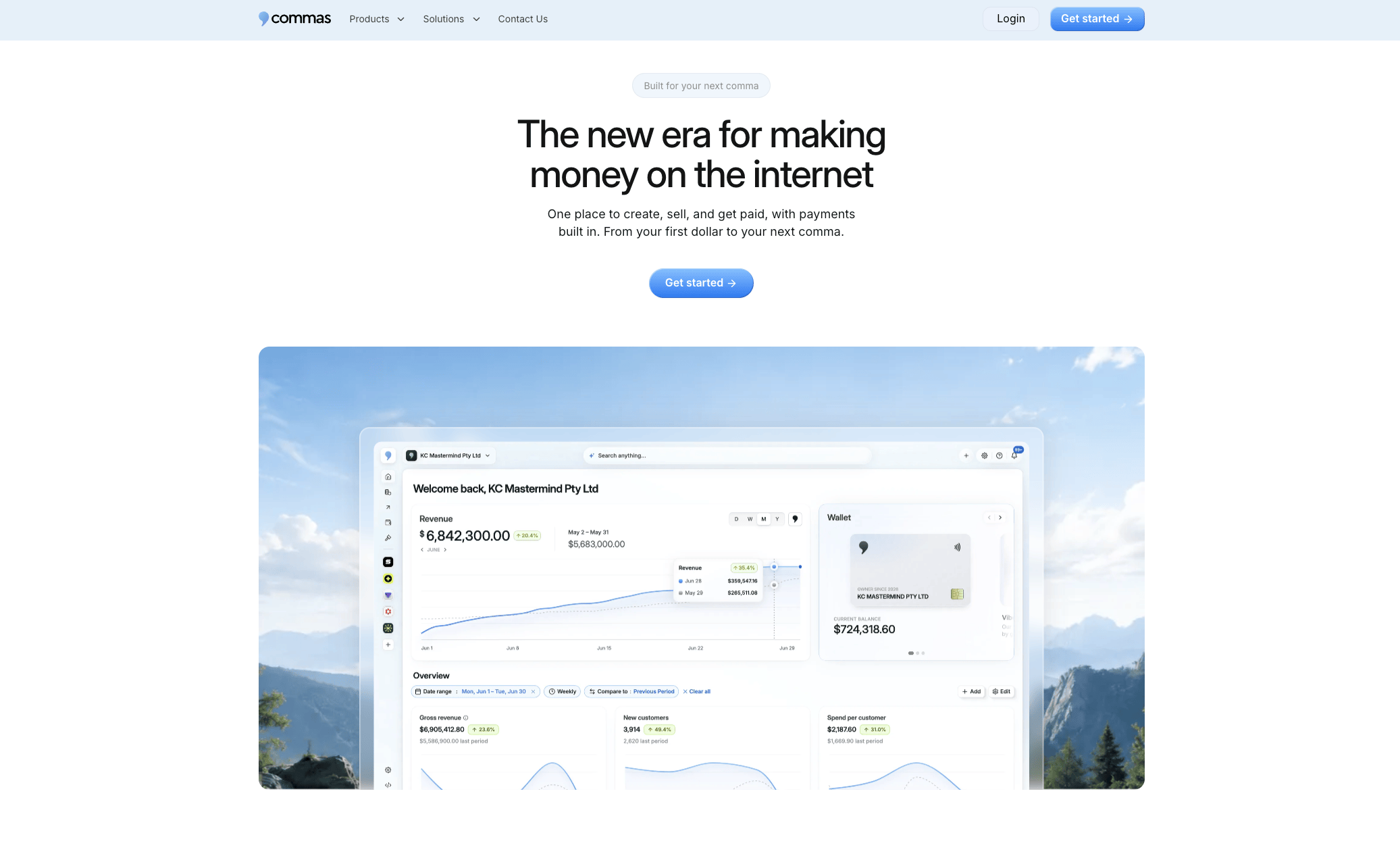
When you are ready to look at the money side, Commas Payments explains the checkout and subscription tools, and Commas Studios and Webinars cover the content and live-event side. You can also visit Commas to start a trial or request a demo.
FAQ
What is the best sales funnel software?
It depends on what you sell and who runs the funnel. For established sellers with $1,000 to $10,000 offers, an all-in-one platform that includes payments, upsells, courses and community usually causes fewer handoff problems. Agencies often look at GoHighLevel, while checkout-focused sellers look at ThriveCart. Shortlist two or three and test with your real offer.
What is the best alternative to ClickFunnels?
The right alternative depends on what you want to change. If you want funnels, payments, courses and communities in one account, look at Commas or Kartra. If you run client work, GoHighLevel is the usual comparison. If you only want better checkout, a dedicated tool like ThriveCart may do the job. Commas also supports importing a ClickFunnels funnel page by page.
Is there a free sales funnel?
Some vendors offer free plans or trials, and you can assemble a basic funnel from free tools. Limits usually include vendor branding, caps on contacts or sales, and missing upsell, payment plan and failed-payment features. Read the limits on the vendor's pricing page and weigh them against the cost of one lost high-ticket sale.
Are sales funnels worth it?
For offers that need education, qualification or several touchpoints before purchase, a defined funnel gives you a measurable path from first click to payment. Each step shows where buyers drop off, so you can fix one thing at a time. No platform guarantees a result, so measure your own numbers.
Sources
- How to choose the best sales funnel software in 2026
- Best sales funnel software in 2025: top tools for every budget and business
- 8 best sales funnel software tools for 2026
- Multi-channel funnels and AI content