
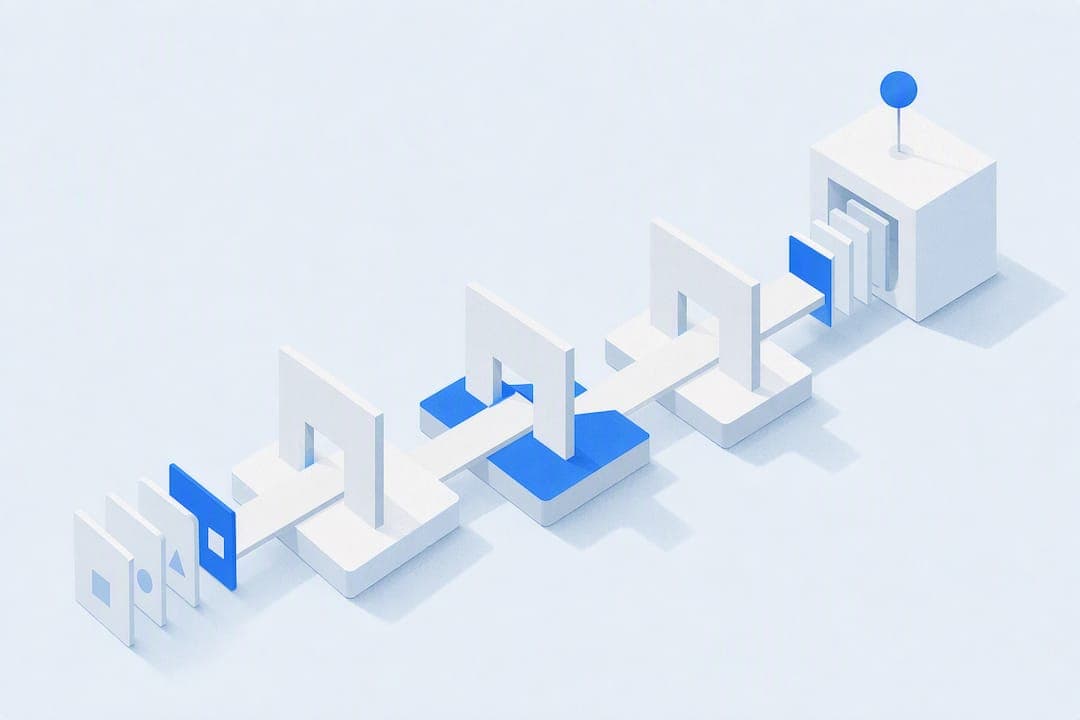
A personalized sales funnel adapts what a prospect sees, at every stage, based on who they are and how they behave, instead of pushing every visitor through the same generic path. The payoff is measurable: higher conversion at each stage, shorter sales cycles, and leads that arrive at the sales call already qualified. Creators, small business owners, and growth marketers with limited ad budgets benefit most, because personalization concentrates spend on the prospects most likely to buy.
TL;DR:
- Personalized funnels should regularly update the ideal customer profile to reflect market shifts and improve targeting accuracy.
- Dynamic content and AI-driven personalization enable real-time reactions to visitor data, reducing administrative overhead and increasing relevance.
- Middle-funnel personalization should focus on tailored assets for different stakeholders, as 67% of B2B buyers prefer a self-serve experience.
- At the bottom of the funnel, tailored proposals with specific case studies, procurement assets, and clear SLAs accelerate deal closure.
- Launching a test with one high-value segment, a short qualifier, and a single personalized asset offers a low-risk way to measure personalization impact.
Table of Contents
- What Is a Personalized Sales Funnel, and How Does It Work?
- Top-of-Funnel Personalization: Three Tactics That Qualify Leads Faster
- Middle-of-Funnel Personalization: Nurture Sequences That Match the Buyer's Role
- Bottom-of-Funnel Personalization: Closing With Tailored Proposals
- Making Personalization Reliable: Tech, Data, and Process
- What Metrics Actually Prove Your Funnel Is Working
- How to Launch a Personalized Funnel in One Quarter
- What to Prioritize First, and Where Teams Overinvest
- Build Your Personalized Funnel Without Stitching Five Tools Together
- Sources
- FAQ
What Is a Personalized Sales Funnel, and How Does It Work?
A personalized sales funnel routes each visitor through a distinct experience shaped by their answers, their behavior, and data collected the moment they enter. Instead of one landing page and one email sequence for everyone, the funnel branches based on who showed up.
The architecture has five moving parts, and each one feeds data to the next:
- Entry and qualification: a quiz, form, or interactive ad captures role, budget, or goal before the prospect sees anything else.
- Segmentation: that data sorts the prospect into a track (by industry, company size, or use case).
- Dynamic content: pages, videos, or emails swap headlines, case studies, and offers based on the segment.
- Tailored offer: pricing, bundles, or demo type match what that segment actually needs.
- Follow-up: a nurture sequence keeps the specific thread going instead of resetting to a generic drip.
AI plays a growing role in step three and four. Rather than a marketer manually building ten landing page variants, a personalization engine takes the qualifier data (goals, budget, stated challenge) and generates the matching page or email copy on the fly. That's the practical difference between "personalization" as a marketing buzzword from five years ago and how it works now: the system reacts to inputs in real time rather than relying on pre-built segments someone updates once a quarter.
Quizzes and video personalization earn their place here because they solve a specific problem: cold traffic has no context. A qualifier question ("What's your team size?") does in three seconds what a sales rep used to spend fifteen minutes uncovering on a discovery call. Commas' qualifier tool is built around exactly this move: capture buyer profile data before the funnel even shows a page, so nothing downstream is guesswork.
Top-of-Funnel Personalization: Three Tactics That Qualify Leads Faster
Most wasted ad spend happens at the top of the funnel, not the bottom. You're paying for traffic that never had a chance to convert because it was never the right fit in the first place. Three tactics fix that before a dollar is wasted.
- Refresh your ideal customer profile regularly. Markets shift, and an outdated ICP may misdirect budget toward less relevant industries or company sizes today.
- Target industry-specific keywords and creative. Generic messaging ("Grow your business") converts worse than a headline built for a named vertical ("Built for online coaching businesses"). The Similarweb 2026 tactics guide points to ICP refinement paired with digital intelligence as one of the highest-impact levers for 2026 funnel performance.
- Use intelligent entry points to qualify on arrival. Quizzes, interactive ads, and account-based marketing creative can sort a visitor into the right track before they see a single generic page.
Behavioral and intent signals decide where the next dollar goes. If a segment shows high quiz completion but low demo booking, that's a signal to adjust the offer, not the ad creative. Building buyer personas around these signals, rather than assumptions, is covered well in this guide to creating buyer personas, which breaks down how role and intent data should actually shape targeting decisions.
Pro Tip: Run your ICP refresh as a 30-minute meeting, not a full strategy off-site. Pull your last quarter's closed-won deals, note the three traits they share, and check if your ad targeting still matches. If it doesn't, that gap is probably costing you more than any creative tweak would.
Middle-of-Funnel Personalization: Nurture Sequences That Match the Buyer's Role
The middle of the funnel is where most personalization efforts quietly die. A prospect fills out a quiz, gets one personalized email, and then falls into the same generic newsletter as everyone else. That's a missed opportunity, because this is exactly the stage where behavior data is richest.
Behavior-triggered branching solves this. If a prospect opens three emails about pricing and none about integrations, the next message should be about pricing, not a generic feature roundup. Dynamic content blocks make this possible without building ten separate email sequences by hand.
Buying committees make this even more important. A single deal often involves a CFO worried about cost, a CTO worried about integration risk, and an end user worried about how much retraining they'll need. Sending all three the same content wastes the click. Practitioners increasingly build separate content tracks for each stakeholder, so CFOs receive ROI tables, CTOs get integration documentation, and end users see training outcomes and time saved, according to Gartner's research.
Self-serve assets matter more here than most marketers assume:
- ROI calculators let a CFO run their own numbers without waiting on a sales call.
- Implementation roadmaps show a CTO exactly what onboarding looks like before they ask.
- Comparison one-pagers give an end user something to forward internally without a rep involved.
Gartner's research backs this up directly: 67% of B2B buyers now prefer a rep-free buying experience, and 61% prefer a self-serve path altogether. A funnel that forces every mid-stage prospect to book a call before seeing pricing is fighting that preference, not working with it.
Bottom-of-Funnel Personalization: Closing With Tailored Proposals
By the time a prospect reaches the bottom of the funnel, generic content stops working entirely. This is where deals stall, and personalization here isn't about creativity. It's about removing friction from a decision the prospect already wants to make.
Tailored pricing presentations do more work than a generic rate card. A proposal that references the prospect's stated team size, use case, and the specific problem they raised in the qualifier feels like it was built for them because it was.
Procurement teams have their own checklist, and stalling here kills deals that were otherwise won:
- Security documentation and compliance details, ready before legal asks for them.
- Clear SLAs stated upfront rather than negotiated late.
- An implementation timeline specific to the buyer's team size, not a generic 90-day template.
Matched social proof closes the loop. A case study from a company in the same industry and roughly the same size carries far more weight than a logo wall of unrelated brands. If your buyer sells online courses, showing them a testimonial from an enterprise SaaS company misses the point entirely, even if the results were strong.
Self-serve procurement assets pay off here too. According to Apollo's 2026 funnel optimization research, companies that provide ROI calculators, implementation roadmaps, and procurement templates unblock stalled deals faster than teams relying on manual follow-up alone. The goal at this stage isn't more sales touches. It's fewer reasons for the buyer to wait.
Making Personalization Reliable: Tech, Data, and Process
Personalization breaks down fast without the right foundation. A quiz that captures great data but feeds it into a manual spreadsheet won't scale past a handful of leads a week. Here's what actually needs to be in place.
The core tech stack has five pieces, and most teams already have two or three of them:
- A quiz or qualifier tool to capture entry data.
- A personalization engine that turns that data into tailored content.
- Email automation that supports behavior-triggered branching.
- Video personalization tools for dynamic openings or offers.
- Analytics and CRM integration so none of the data gets stranded in a silo.
Commas' Vibe Funnels builder covers the middle three of these in one dashboard, which matters because the biggest personalization failures usually happen at the handoff between tools, not within any single one.
First-party data is the fuel here, and it needs a home. Capture role, company size, stated goal, and stated budget range at minimum. Store it in a way that ties back to the individual record in your CRM, not a disconnected spreadsheet, so a sales rep sees the same context the funnel used.
Human oversight is not optional. AI-generated personalization can produce a headline or email variant that's technically accurate but tone-deaf, or worse, factually wrong about a feature. Advanced personalization pipelines feed dynamic inputs like goals and budget into an LLM-based content generator, but responsible teams keep a moderation step before anything reaches a prospect, according to research on AI system oversight. Skipping that step to save time is how a funnel ends up sending a $10,000 enterprise pitch to a solo freelancer who checked the wrong box.
Pro Tip: Set a weekly 15-minute review of AI-generated funnel content, even after launch. Spot-check five outputs per segment. Most errors are subtle (a wrong price tier, an outdated feature name) and easy to catch, but expensive to leave live for a month.
What Metrics Actually Prove Your Funnel Is Working
Tracking the wrong metrics is almost as bad as tracking none. A personalized funnel needs stage-specific numbers, because a lift at the top of the funnel can mask a leak somewhere in the middle.
Track these at minimum:
- Visit to lead rate, to measure whether your entry point (quiz, form, qualifier) is converting cold traffic.
- Lead to opportunity rate, to check whether personalization is actually improving lead quality, not just volume.
- Stage velocity, meaning how long prospects sit in each stage before moving forward.
- Demo-to-close rate, to catch whether tailored proposals are actually closing better than generic ones.
- Average deal size, since better-matched offers often sell a higher tier without extra convincing.
Practitioner reports on AI-powered personalization show notable conversion rate improvements and increased deal sizes when personalization runs consistently across the funnel, according to industry summaries from 2026. Treat such figures as directional benchmarks, not guarantees. Your baseline matters more than any industry average.
The highest-leverage experiments to run are narrower than most teams assume. Testing different qualification questions often moves the needle more than testing headline copy. A/B testing dynamic video openings against static video, and testing personalized subject lines against generic ones, both consistently move stage conversion according to HubSpot's funnel optimization guidance.
Set a review cadence and stick to it: weekly for stage velocity and lead volume, monthly for deal size and close rate trends. Attribute lift by comparing cohorts that entered through the personalized path against a control group that saw the generic version, not by comparing this month to last month in isolation.
How to Launch a Personalized Funnel in One Quarter
You don't need a full rebuild to prove personalization works. A focused, single-segment test in one quarter gives you a real answer without risking your entire pipeline.
- Pick one high-value segment and audit your ICP against it. Choose the segment with the clearest shared problem, not the biggest theoretical market.
- Build an intelligent entry point. A short qualifier with three to five questions is enough to segment prospects and route them correctly.
- Create one personalized asset and a matching follow-up. A single dynamic landing page or personalized video, paired with an email sequence written specifically for that segment, is enough for a valid test.
- Run a controlled A/B test. Split traffic between the personalized path and your existing generic funnel, then measure conversion rate and stage velocity, not just clicks.
Resist the urge to personalize five segments at once in your first quarter. A narrow, well-measured test beats a broad, unmeasured launch every time, because you'll actually know what worked and can scale that specific piece with confidence.
What to Prioritize First, and Where Teams Overinvest
Most teams get the trade-off backward. They pour weeks into building a highly customized demo experience for every lead, when the bigger lift usually comes from fixing qualification at the top of the funnel first. A prospect who was never a good fit won't convert no matter how personalized the demo gets.
Favor self-serve assets and better qualification before you invest in intensive demo customization. That order matters because qualification data feeds everything downstream. A quiz that sorts prospects correctly makes every later stage cheaper and more accurate.
Quarterly ICP reviews beat a single, elaborate personalization launch. Markets move, and a funnel personalized against last year's buyer looks impressive but converts poorly. Small, incremental adjustments made every quarter compound faster than a big rebuild made once a year and never revisited.
Automation should handle the repetitive work: content generation, segmentation logic, follow-up timing. Human oversight should sit at the checkpoints where a mistake actually costs you a customer, like the exact number on a pricing page or the claim in a case study. Skip the human check there, and you're trading a short-term speed gain for a long-term trust problem.
— FanBasis
Build Your Personalized Funnel Without Stitching Five Tools Together
Most of the tactics in this guide (intelligent entry points, dynamic content, tailored offers, embedded checkout) usually require stitching together a quiz tool, an email platform, a page builder, and a separate payment processor. Some platforms combine these features in one account, so the qualifier data that segments a lead flows straight into the funnel, the checkout, and the follow-up without an export or an API script in between.

A practical starter experiment: build a qualifier that asks three questions about goal, budget, and timeline, route the answers into a personalized webinar funnel with checkout built into the room, and let Commas' AI adjust the funnel based on patterns it's already seen work for similar creators. Pair it with the Qualifier to make sure only the right prospects ever see the pitch, and connect payments so the close happens in the same session instead of a follow-up email three days later. If you're also running affiliates, the Affiliate Center plugs into the same funnel without extra setup.
Start a free trial and run this exact test on one segment this month.
Sources
- Gartner sales survey finds 67% of B2B buyers prefer a rep-free experience
- 9 Sales Funnel Optimization Tactics for 2026 | Similarweb
- What Is Sales Funnel Optimization? Strategy, Implementation, ROI (2026) | Apollo
FAQ
How Can I Create My Own Sales Funnel?
Start by mapping your ICP, building a short qualifier to capture role and intent, then create one personalized landing page or video and a matching follow-up sequence before testing against your existing funnel. Tools like Vibe Funnels let you build and personalize the entire path in one dashboard rather than assembling separate tools.
What Are the 5 Stages of a Sales Funnel?
The five stages are entry and qualification, segmentation, dynamic content delivery, a tailored offer, and follow-up nurture. Each stage feeds data forward, so what a prospect reveals at entry shapes what they see all the way through close.
What Is the 10-3-1 Rule in Sales?
The 10-3-1 rule is a prospecting guideline suggesting a rep needs roughly 10 leads to generate 3 real opportunities, which typically produce 1 closed deal; ratios vary widely by industry and funnel quality, so treat it as a rough planning heuristic rather than a fixed benchmark.
Is a Sales Funnel Still Relevant Today?
Yes, though the shape has shifted toward self-serve. With 61% of B2B buyers preferring a self-serve buying path, funnels now need to support independent research and decision-making, not just move a lead toward a rep-led call.