

If you sell a $1,000 to $10,000 offer, Patreon is the wrong shape for your business. It is built for recurring fan support, and you need checkout, funnels, delivery and a community in one place. Among the Patreon alternatives below, Commas is the one built for that job. It puts payments, funnels, courses, paid groups, webinars and affiliates in a single account. Tip jars, newsletters and community-only tools each cover one piece of the job.
This guide compares the options people most often consider, shows what each one is built for, and explains how to pick based on what you sell.
TL;DR
- Patreon fits ongoing supporter tiers. High-ticket coaching, cohort programs and agency retainers need a checkout, a funnel and delivery that Patreon does not center on.
- Ko-fi, Buy Me a Coffee and Substack are strong for tips, simple support and paid newsletters. They are not funnel or high-ticket tools.
- Skool, Circle and Mighty Networks lead with community. Kajabi and Podia lead with courses.
- Commas is our pick for established sellers: checkout, funnels, courses, paid groups, webinars and affiliates run from one dashboard, with payments built in.
- Compare tools by what you keep per sale, how much you can customize the buying path, and how hard it is to move your members later.
Table of Contents
- Why sellers outgrow Patreon
- How to choose: five questions that matter at $1,000+
- The main options, compared
- Match the tool to what you sell
- Moving off Patreon without losing members
- Content rules to check before you move
- See how Commas fits your offer
- FAQ
- Sources
Why sellers outgrow Patreon
Patreon works well when the product is access to a person: monthly tiers, behind-the-scenes posts, supporter perks. The model gets awkward when the product is an outcome.
A $3,000 coaching program does not sell through a tier page. It sells through a sequence: a landing page or webinar, an application or call, a checkout with a payment plan, then onboarding. Patreon gives you the membership box at the end of that sequence and little of the sequence itself.

Cost is the other trigger. Based on a 2026 fee calculator, new Patreon pages pay a 10% platform fee plus payment processing of 2.9% + $0.30 per payment, while older pages keep legacy rates. On a $5 pledge that is painful. On a $2,000 sale the fixed part shrinks but the percentage still adds up across a year of revenue. Fees depend on your plan and join date, so confirm them on Patreon's own fee page before you decide.
The third trigger is ownership. Moving a paid audience is hard. One 2026 comparison says Patreon subscribers can be exported but have to re-subscribe, and it estimates a 30 to 50% loss of paid subscribers without an aggressive migration campaign. The same piece notes that owning your Stripe account gives you more control over billing records in a move, while platforms that bundle the billing relationship create more dependence. Treat that as a reason to choose your next platform carefully, because you want to move once.
How to choose: five questions that matter at $1,000+
Skip the feature checklists that count every integration. Ask these instead.
- What is the unit of sale? A subscription, a one-time program, a payment plan or a bundle. High-ticket offers usually need payment plans or buy-now-pay-later, and a checkout that can handle upsells.
- Where does the buyer come from? If you drive traffic to a page, you need funnel control: landing page, checkout, upsell, follow-up.
- Where does delivery live? Course lessons, a private group, live calls, or all three.
- What happens when a card fails? On recurring plans, failed payments are a quiet revenue leak. Look for recovery tools.
- How hard is leaving? Ask what you can export and who owns the customer billing relationship.
One more point on fees. The same Kompozy comparison says percentage fees can suit low revenue, while flat monthly fees get more attractive as revenue grows. Sellers at $1,000+ per sale pass the break-even point quickly, so run your own numbers on monthly volume.
The main options, compared
Here is how the common choices line up for an established seller. Product descriptions come from a 2026 roundup of Patreon alternatives unless noted.
| Platform | Built for | Funnels and checkout control | Fit for $1,000+ offers |
|---|---|---|---|
| Commas | Courses, paid groups, webinars, affiliates and checkout in one account | Drag-and-drop funnels, upsells, payment plans, BNPL | Strongest fit |
| Ko-fi | Tips, commissions, memberships, small storefront | Light | Weak |
| Buy Me a Coffee | Simple one-off support | Light | Weak |
| Substack | Paid newsletters | Newsletter-led | Narrow |
| Gumroad | Digital product sales | Product page checkout | Moderate for downloads |
| Podia | Courses, downloads, memberships, coaching | Moderate | Moderate |
| Skool | Community with classroom and calendar | Community-led | Moderate |
| Circle and Mighty Networks | Community, with courses and events | Community-led | Moderate |
| Kajabi | Established course businesses, email automation, funnels | Strong | Good, higher setup load |
Commas
Commas is one platform where online businesses sell and get paid. You build funnels with a drag-and-drop builder, take payments through the same account, deliver courses, run paid groups, host webinars and manage affiliates. Commas runs payments through regulated payment partners, and the checkout supports one-click payments, subscriptions and buy now, pay later.
For a $2,000 program, that combination matters. A buyer can go from an ad to a funnel page, to a checkout with a payment plan, to an upsell, to a community, without leaving the system or waiting on a webhook between three tools. Vibe Funnels uses AI to build and optimize funnels based on proven patterns, so you start from a structure that has already been tested rather than a blank page. Commas also includes automated tools to recover failed subscription payments and maximize approvals.
If you want the course side, see Online Courses. If you run an affiliate or partner program, the Commas Affiliate Center is part of the same account.

Ko-fi and Buy Me a Coffee
Ko-fi combines tips, memberships, commissions and a small storefront, with payments going to your PayPal or Stripe account. Buy Me a Coffee is built around simple one-off support. Both are friendly to artists and hobbyists. A high-ticket seller will hit their limits quickly: there is no funnel, no upsell path and no structured program delivery.
Substack
Substack is newsletter-first: posts go by email to free or paid subscribers, with audio, video and livestream options. It fits a publication, while Patreon suits ongoing supporter relationships. If your product is a paid newsletter, it is a clean choice. If your product is a program or a service, read our guide on Substack alternatives for sellers of high-ticket offers.
Gumroad
Gumroad centers product sales, which makes it a good fit for downloads, templates and small digital goods. Selling a $3,000 cohort through a product page leaves you without funnels, webinars or an affiliate center. If you already run a Gumroad store and want more traffic to it, there is tooling for SEO for Gumroad stores. For a closer look at how stores compare, see our breakdown of Gumroad vs Shopify for selling digital offers.
Podia and Kajabi
Podia bundles courses, downloads, memberships and coaching. Kajabi targets established course businesses and adds email automation and sales funnels. Both are credible for course sellers. Kajabi in particular asks for more setup time before you are live, which matters if you are moving a business with an existing audience. Commas covers the same course delivery and adds paid groups, webinars and affiliates in the same account.
Skool, Circle and Mighty Networks
These are community-first. Skool combines community feeds, gamification, leaderboards, classroom courses, video, live calls and a calendar. Its Hobby plan runs $9 a month plus 10% + $0.30 per transaction, and Pro runs $99 a month plus 2.9% + $0.30 (3.9% above $900), with processing included, according to that October 2026 comparison. Check Skool's own pricing page before you commit, since plans change.
Circle and Mighty Networks emphasize community with courses and events. Both do that job well when the group is the product. When the group is only one stage after a sales funnel, you end up connecting a separate funnel and checkout tool to it. We compare the two in Circle vs Mighty Networks for creators and cover more choices in best community platforms for sellers.
Newsletter and developer tools
Ghost, beehiiv and Kit suit newsletter businesses. GitHub Sponsors and Open Collective serve open-source maintainers and projects needing public budgets. They are real Patreon alternatives, but not for a coach or agency selling a high-ticket program.
Match the tool to what you sell
High-ticket coaching or consulting. You need an application or call funnel, a checkout with payment plans, and an onboarding path. Commas is built around that chain. Community-only tools leave the front half to you.
Cohort-based courses. You need lessons, a place for students to talk, and live sessions. Commas handles courses, paid groups and webinars in one account, so completion data and community activity sit beside sales data. Educators who care about completion rates benefit from keeping delivery and engagement together.
Agencies and service businesses. Billing is the issue: invoices, retainers, failed cards. See agency billing and payments for how Commas approaches it.
Paid communities. If the group is the whole product, Commas Paid Groups include native payments and BNPL, and you can pair them with a funnel when you want a higher-ticket entry point.
Newsletter writers and artists on small tiers. Substack, Ko-fi and Buy Me a Coffee are simple and fit those jobs. You are likely reading this because your offer has outgrown that tier, though.
Moving off Patreon without losing members
A move is a sales project, not a file export. Here is a routine that protects revenue.
- Count what you have. List active members, tier, monthly value and how long they have been subscribed.
- Build the destination first. Set up checkout, welcome email, and member access before you announce anything.
- Decide the offer for existing members. Some sellers give a founding rate, others keep prices flat. Either way, tell members what changes and what does not.
- Announce in waves. Because members must re-subscribe, send a sequence across several weeks rather than one email. Include a clear link to the new checkout.
- Run both for a short overlap. Keep Patreon live while members move, then close it to new signups.
- Watch failed payments. New subscriptions on new cards fail at a higher rate in the first cycles. Recovery tooling saves some of that revenue. Commas includes automated recovery for failed subscriptions.
For the billing rules around recurring plans, including cancellation requirements in the US, read our guide to subscription payments for creators. It is worth doing before you launch the new checkout.
Content rules to check before you move
Platform content policies differ, and a policy that fits one business may not fit another. Patreon allows adult content on pages marked Adult/18+ under rules that, according to one 2026 summary, were last revised in March 2026. If your content touches regulated or age-restricted areas, read the acceptable use terms of every platform and of its payment partners before you migrate, so you do not rebuild twice.
Our view: sell in one place
We built Commas around a simple observation about the internet economy: when a seller runs a funnel in one tool, payments in another, a course in a third and a community in a fourth, revenue leaks at every handoff. Each tool has its own login, its own customer record and its own failure points.
That is why we put checkout, funnels, courses, paid groups, webinars and affiliates into one account, with payments built in through regulated payment partners. Our AI funnel builder is designed to start you from patterns that work rather than from a blank canvas, and our recovery tools for failed subscriptions are designed to protect the revenue you already won.
Patreon is a good home for fan support. If you sell a $1,000 to $10,000 offer, you are running a sales operation, and it deserves a platform designed for that.
Commas
See how Commas fits your offer
If you are choosing a Patreon alternative for a high-ticket offer, Commas gives you the funnel, the checkout and the delivery in one account. You can start from Vibe Funnels to build the sales path, or read how Commas Payments handles one-click checkout, subscriptions and BNPL through regulated payment partners.
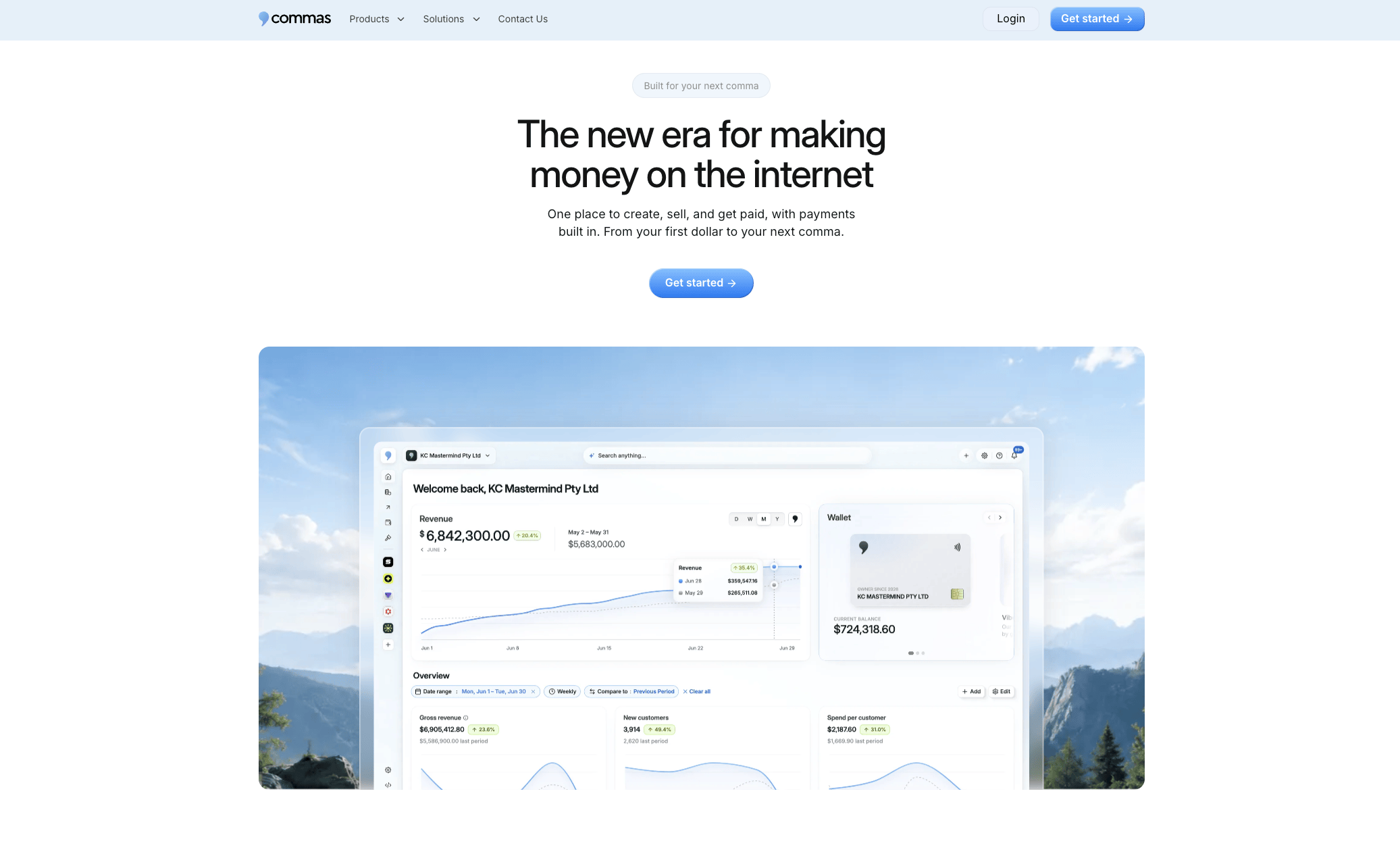
Visit commas.com to start with a free trial or a demo.
FAQ
Why are sellers leaving Patreon?
The common reasons are fees, limited funnel and checkout control, and the difficulty of selling programs rather than supporter tiers. New pages pay a 10% platform fee plus processing, and Patreon centers recurring support rather than a multi-step sales path.
Is Substack better than Patreon?
It depends on the product. Substack is built for paid publications delivered by email. Patreon suits ongoing supporter tiers. For a program, a course or a coaching offer, neither one gives you funnels, which is where Commas fits.
Which is better, Ko-fi or Patreon?
Ko-fi is lighter: tips, commissions, memberships and a small storefront, with payouts to PayPal or Stripe. Patreon has deeper membership tools. Both are aimed at supporters. Neither is designed around a $1,000+ sales funnel.
Will I lose members if I leave Patreon?
Some loss is normal, because members have to re-subscribe. One 2026 analysis estimates 30 to 50% of paid subscribers can be lost without an aggressive migration campaign. Build the new checkout first and announce the move in several waves.
What should I compare besides price?
Check what you can customize in the buying path, whether payment plans and failed-payment recovery are included, where courses and community live, and who owns the customer billing relationship.
Sources
- 10 Best Patreon alternatives for creators in 2026
- Patreon vs Substack vs Beehiiv vs Kit vs Memberful comparison
- Skool vs Patreon: Fees, Features and Take-Home
- Patreon Fees 2026 calculator
- Does Patreon allow NSFW content? The 2026 rules