

The best Payhip alternative depends on what you sell and how much you sell it for. If you sell $1,000 to $10,000 offers, you need more than a download shop: checkout with payment plans, funnels, a course or community area, webinars and affiliates. That points to an all-in-one platform like Commas. If you sell $15 ebooks and templates, Gumroad, Podia, Lemon Squeezy or Ko-fi may fit better. Below, we compare them on what matters when you are moving a working business.
TL;DR
- Payhip is built for digital downloads and small catalogs. Its fee drops as you pay more per month, which suits low-priced products.
- Lemon Squeezy is the pick if you want a merchant of record to handle sales tax and VAT filings.
- Podia and Kajabi suit course and program delivery; Ko-fi suits a light monetization layer.
- For high-ticket offers, we built Commas to put checkout, payment plans, funnels, courses, paid groups, webinars and affiliates in one account.
- Etsy and WooCommerce work for specific cases: marketplace traffic, or full control with your own hosting.
Table of Contents
- Why sellers leave Payhip
- Payhip alternatives compared
- Which alternative fits your offer
- What to do about fees
- Before you migrate from Payhip
- Perspective
- Try Commas for a high-ticket offer
- FAQ
- Sources
Why sellers leave Payhip
Payhip is a good product for what it was designed to do. It lets you sell digital products with no upfront cost. On its free plan you pay a 5% fee per sale, on the $29 monthly Plus plan 2%, and on the $99 monthly Pro plan 0%, according to a 2026 pricing breakdown. Always confirm the current numbers on Payhip's own pricing page before you decide.
The reasons established sellers outgrow it tend to be the same:
- Offer price. A $3,000 program needs payment plans, upsells and a follow-up sequence, not just a download link.
- Tax handling. Payhip's coverage of tax collection is limited to the EU and UK, while some competitors act as the legal seller. More on that below.
- Scattered tools. Once you add a funnel builder, a community app, a webinar tool and an affiliate tracker, you are paying for and syncing five products.
- Failed payments. When you sell on installments or subscriptions, recovering declined cards becomes real revenue.
If none of these describes you, staying put may be fine. If two or more do, read on.
Payhip alternatives compared
The table groups each option by the seller it fits best. Prices change, so we give fee structures only where a source states them and send you to each provider's page for current plans.
| Platform | Best for | What stands out | Watch for |
|---|---|---|---|
| Commas | Established sellers of $1,000 to $10,000 offers | Payments, funnels, courses, paid groups, webinars and affiliates in one account | Built for sellers who already make sales, not hobby shops |
| Lemon Squeezy | Software and digital products sold globally | Merchant of record model | Less funnel and community depth |
| Gumroad | Simple, quick storefront | Low setup effort | Limited funnel and program tooling |
| Podia | Courses, community and email together | Bundles courses, community, email and a site builder | Fewer advanced funnel controls |
| Kajabi | Structured programs | Strong product delivery for courses | Higher monthly cost range |
| Ko-fi | Light monetization | Low friction to start | Not built for complex programs |
| Etsy | Marketplace discovery | Large built-in buyer base | Stacked seller fees |
| WooCommerce | Full control | Free, open source | You manage hosting and upkeep |
Commas
We built Commas as one platform where online businesses sell and get paid. Vibe Funnels is our AI funnel builder, designed to apply proven funnel patterns without manual setup. Checkout supports one-click payments, buy now pay later and subscriptions. Online courses, paid groups, webinars and the affiliate center sit in the same dashboard. Commas runs payments through regulated payment partners.
This fits coaches, course creators, agencies, paid communities and service businesses that already have sales and want fewer moving parts. It is not aimed at someone testing a first $9 product.
Lemon Squeezy
Lemon Squeezy acts as a merchant of record. That means it legally sells the product on your behalf, collects and remits VAT, sales tax or GST across many jurisdictions, and takes on chargeback liability, as one 2026 comparison explains. For a seller shipping digital goods to many countries, that removes real paperwork. We cover its strengths and the trade-offs for bigger tickets in our guide to Lemon Squeezy alternatives for high-ticket sellers.
Gumroad
Gumroad is the most common name beside Payhip. It is quick to set up and works well for ebooks, presets and templates. The people who move on from it are usually the ones who need an upsell path, payment plans or a member area that matches a premium brand. Check Gumroad's current fee page before comparing, because its terms have changed over time.
Podia
Podia bundles a course platform, community tool, email provider and website builder, which can simplify operations for people selling knowledge products. It is a reasonable step up from Payhip if your main need is hosting a course and emailing students.
Kajabi
Kajabi is known for structured programs and course delivery. Plans are subscription-based and sit well above Payhip's entry tier, so it makes the most sense once your offer prices justify the cost. Verify the current tiers on Kajabi's site.
Ko-fi
SuperX describes Ko-fi as a fit for creators who want to monetize without building a whole system yet, and says Kajabi and Podia handle courses and structured programs better. That matches our view: Ko-fi is a tip jar and shop first. If your offer needs onboarding, installments and a delivery area, you will outgrow it quickly.
Etsy
Etsy gives you a marketplace audience: 86.5 million active buyers at the end of 2025. The fees stack up, though. For US digital listings that means a $0.20 listing fee, a 6.5% transaction fee and 3% + $0.25 payment processing, so a $50 sale carries $5.20 in core fees, a 10.4% effective rate before optional ads. It suits low-priced printables, not high-ticket coaching.

WooCommerce
WooCommerce is free and open source, with over 7 million active installs and no platform commission. You still pay for hosting, plugins and your own time. It is the highest-control option and the highest-maintenance one.
Which alternative fits your offer
Start with price and delivery, not the feature list.
You sell under $100, mostly downloads. Payhip, Gumroad, Lemon Squeezy and Ko-fi all serve this well. Choose by tax needs and storefront style.
You sell a course between $200 and $1,000. Podia or Kajabi give you a course area and email. Compare monthly cost to what a percentage fee would be at your volume.
You sell a $1,000 to $10,000 program, membership or service. This is where checkout design matters most. You need payment plans, upsells after the first purchase, a branded member space and a way to chase failed installments. At this level, we recommend an all-in-one setup so a customer's journey from ad to webinar to checkout to community lives in one account. Our Studios product covers courses and community together.
You want a marketplace to find buyers. Etsy is the example here, with the fee stack above.
You want full ownership. WooCommerce, with a developer or a lot of patience.

What to do about fees
A percentage fee that looks small on a $29 product looks different on a $5,000 one. Run your own numbers: take your average order value, add the platform fee, the payment processing cost and any monthly plan, then compare each platform at your real monthly volume. Our breakdown what a $2,000 sale really costs walks through the method, and our piece on payment processing fees shows where the losses hide.
Buy now pay later changes the math too. Offering installments can lift conversion on big tickets, but it comes with refund and dispute handling you should plan for. Read our guide to BNPL for $1K to $10K course sellers before you switch it on.
Before you migrate from Payhip
Moving platforms is manageable when you treat it as a checklist.
- Export customers and product files. Keep a copy of buyer emails, order history and every file or lesson.
- Map your tax setup. If you rely on a platform to collect VAT or sales tax, find out who takes that role after the move. A merchant of record covers it; most other platforms leave it with you.
- List every active subscription or installment plan. Recurring billing is the hardest thing to move. Plan the cutover so no customer is charged twice or missed.
- Rebuild checkout pages and funnels. Funnel import can save time. If your funnel is on another builder, ask the new platform whether it can import it.
- Redirect old links. Update email sequences, ads and your site so old Payhip URLs lead somewhere useful.
- Notify customers. A short note about new login steps prevents support tickets.
- Run a small test transaction. Confirm your payout and receipt emails work before you announce anything.
For a deeper look at the technology side of the choice, including setup effort, control and ongoing cost, this ecommerce rollout playbook is a useful comparison point when you plan traffic to your new store.
Perspective
We talk to sellers every week who run on four or five tools: a checkout, a funnel builder, a course host, a community app and a spreadsheet for affiliates. Each tool is fine alone. The cost shows up in the gaps, where a buyer drops out between the sales page and the welcome email.
That is why we built Commas around one account. Payments sit next to funnels, funnels next to delivery, delivery next to the community. Our AI funnel builder is designed to start from patterns that have worked for other sellers, so you spend your time on the offer instead of wiring.
If your offer is $1,000 or more, we think the question to ask any platform is simple: what happens to the buyer after they say yes, and what happens when their second installment fails? Pick the one that has an answer for both.
Commas
Try Commas for a high-ticket offer
If you are comparing platforms because your current setup is patched together, we would like you to see Commas. You can sell courses, paid groups and webinars, run funnels and affiliates, and take payments in one place.
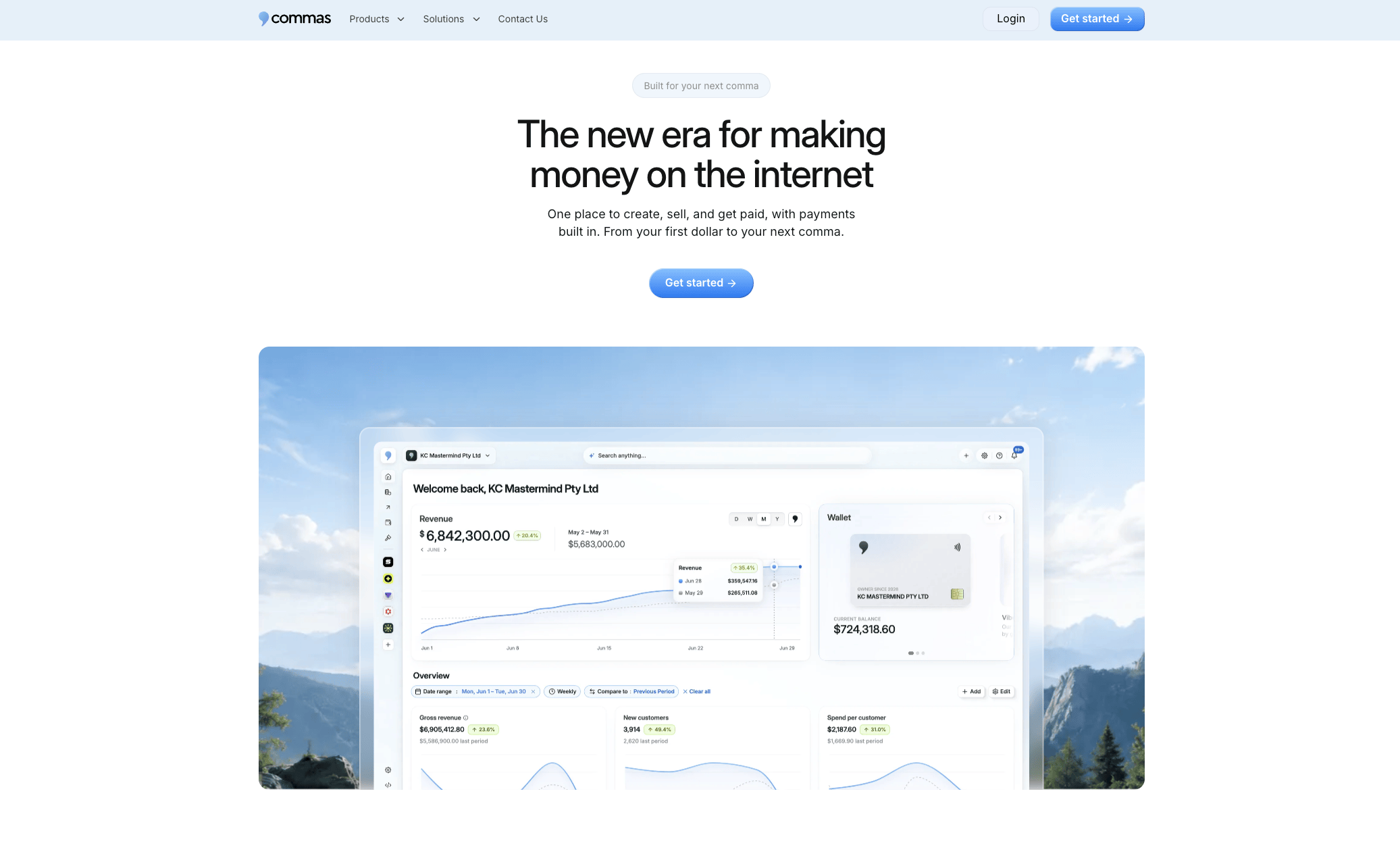
Start with Commas Payments to see how checkout, subscriptions and installments work, or visit the Commas home page for the full set of products. If community is central to your business, see our comparison of the best community platforms for sellers.
FAQ
What are some free alternatives to Payhip?
WooCommerce has no platform fee or sales commission, though you pay for hosting. Payhip itself has a free plan with a 5% per-sale fee, per the pricing breakdown above. Ko-fi is another low-cost starting point. Confirm current terms on each provider's site.
Is Gumroad better than Payhip?
It depends on your needs. Both focus on simple digital product sales. Compare fees at your monthly volume and check tax handling for your buyers' countries. For offers over $1,000, neither is built around funnels and payment plans.
Which is better for me, Payhip or Ko-fi?
Ko-fi suits a light, low-friction setup. Payhip gives you more storefront and product delivery features. If you sell programs or memberships, a course and community platform fits better than either.
Which platform is best for high-ticket coaching or courses?
Look for payment plans, upsells, a member area and failed-payment recovery in one place. We designed Commas for that case, with Vibe Funnels and built-in checkout, so a $1,000 to $10,000 sale does not depend on several connected apps.
Sources
- Payhip pricing breakdown
- Payhip vs Lemon Squeezy comparison
- Where to sell digital products: 15 platforms compared
- Top 10 creator platforms for 2026
- Etsy digital product fees