

PartnerStack is a partner relationship management (PRM) platform built mostly for B2B SaaS companies, with a partner marketplace, deal registration and co-sell tools. If you sell coaching, courses, a paid community or agency services at $1,000 to $10,000 per sale, you probably need something different: affiliates who send buyers to a checkout, tracked commissions that match your payments, and one place to see it all. That is why we recommend running affiliates inside the same platform that handles your funnels and payments, and Commas does exactly that.
TL;DR
- PartnerStack publishes no price list. Its only public figure is an SMB offer that starts at $6,000 for the first year, per its public materials as reported in 2026, so budget for a sales conversation.
- Its strengths (marketplace, MDF, deal registration, CRM sync) matter most for SaaS partner teams. A high-ticket seller mainly needs affiliate tracking tied to the sale.
- Standalone affiliate tools start around $49 per month, but they track links and leave checkout, funnels and subscription billing to other apps.
- Commas Affiliate Center sits in the same account as payments, funnels, courses and paid groups, so affiliate sales and billing live together.
- Whatever you choose, model commission cost and platform fees together and test the full refund and cancellation flow before you announce anything to affiliates.
Table of Contents
- What PartnerStack does, and who it fits
- How to choose: five criteria for high-ticket sellers
- PartnerStack alternatives compared
- What to test before you switch
- Why one account beats a tracker plus a checkout
- Which one fits you
- Run affiliates where you already sell
- Perspective
- FAQ
- Sources
What PartnerStack does, and who it fits
PartnerStack describes itself as an ecosystem platform for managing partner relationships and launching referral, affiliate, ambassador or reseller programs. It covers onboarding, training, referral links, commissions, partner groups and payouts, and it connects to CRMs such as Salesforce and HubSpot to sync pipeline and report partner performance. It also runs a marketplace where businesses can recruit partners who already have accounts.
That design suits a software company with a partnerships team, resellers who register deals, and a sales cycle that runs through a CRM. It is a different job from what a coach, course creator or agency usually needs: a few dozen to a few hundred affiliates sending buyers to a checkout page.
Three practical points come up repeatedly when sellers look at leaving it:
- Price is behind a demo. There is no rate card or free trial. Third-party estimates put annual spend in the tens of thousands of dollars for many buyers, and the one public figure is the SMB entry offer of $6,000 for year one.
- Contract terms matter. Publicly available agreement terms describe a commission-based fee, an extra fee on marketplace-sourced partners, annual renewal with 60 days' notice and a short window to download data after termination. Read your order form before you plan a move.
- Marketplace partners are not portable. Partners you found through a marketplace have to be re-invited and re-won elsewhere.
None of this makes it a bad product. It means the right comparison starts with what kind of program you run.
How to choose: five criteria for high-ticket sellers
When the average sale is $1,000 to $10,000, a few details cost real money. Use these criteria to compare any option.
- Program type. Affiliate and referral programs need link tracking and commissions. Channel and reseller programs need deal registration, conflict checks and MDF (market development funds, money a vendor gives partners for co-marketing). Buy for the one you run.
- Total cost. Add the platform fee, any percentage on partner payouts, and the commissions themselves. A model that pays 20% recurring commission for twelve months on a $100 per month plan costs $240 per customer before platform fees, as Theory Road's partner program guide works out. Do the same math with your own price.
- Payments connection. Commissions should follow what actually happened: a paid installment, a refund, a failed card. Programs that track form fills instead of completed payments overpay.
- Setup time and technical load. A tool that needs a developer is a project. One that connects in an afternoon is a tool.
- Exit and contract terms. Check revenue caps that force upgrades, payout fees, renewal windows and how you export your data.
PartnerStack alternatives compared
Prices below are each vendor's own published figures as gathered in autumn 2026. They change, so confirm them on the vendor's page before you decide.
| Option | Best for | Starting price (vendor's own) | Watch for |
|---|---|---|---|
| Commas Affiliate Center | High-ticket sellers who want affiliates, checkout, funnels and subscriptions in one account | Ask Commas for current plans | Built for selling digital products, courses and memberships, not for SaaS reseller deal registration |
| Rewardful | Stripe or Paddle subscription affiliates | $49/month, 0% transaction fee | Works only with Stripe or Paddle; revenue cap on the entry tier |
| FirstPromoter | Subscription businesses on several billing systems | $49/month | Entry tier limits monthly affiliate revenue |
| Tolt | Non-technical founders who want fast setup | $99/month, 2% fee on automated payouts | Revenue cap per tier |
| Dub Partners | Affiliate, influencer and user referral programs | From $90/month, 5% ACH or 8% card payout fee | Payout fees add up at volume |
| Partner.io | Referral, reseller and agency partners | $79 per seat per month | Priced per seat |
| Kiflo | Reseller deal registration for small teams | Core from $399/month on a 12-month contract | Partner caps on lower plans |
| impact.com | Brands with larger partner payouts | Starter $30/month plus 2.5% of revenue, Essentials $500/month, Pro $2,500/month | 12-month contract and setup fees on higher plans |
| Impartner | Mid-market and enterprise channel programs | Custom, with vendor-supplied listings starting around $25,000 per year | Built for structured channel programs |
Commas Affiliate Center
If you sell a high-ticket offer, the affiliate program is not a separate product. It is one more way a buyer reaches your checkout. Commas Affiliate Center is part of the same platform as Commas Payments, Vibe Funnels, online courses and paid groups. Commas runs payments through regulated payment partners, and its checkout supports one-click payments, buy now pay later and subscriptions.
For a seller, the practical gain is that an affiliate's sale, the payment plan the buyer chose and the course or community access that follows all sit in one dashboard. Commas also has automated tools to recover failed subscription payments, which matters when a commission depends on a payment that actually clears. Our guides on fixing recurring affiliate commissions and affiliate commission rates walk through the commission math for offers in this range.
Rewardful, FirstPromoter and Tolt
These three are affiliate trackers built around subscription billing. Rewardful connects to Stripe or Paddle and is described as live in an afternoon. FirstPromoter connects natively to Stripe, Paddle, Chargebee, Recurly and Braintree, and supports multi-tier commissions. Tolt connects to Stripe, Paddle or Chargebee and offers migration help for teams leaving PartnerStack. They fit a team that already has billing and checkout sorted and wants only a tracking layer.
The revenue caps are the thing to model. The entry tiers limit the affiliate revenue they cover each month, so a program that works well can push you into the next plan quickly.
Dub, Partner.io and Tapfiliate
Dub Partners covers affiliate, influencer and user referral programs, and publishes a PartnerStack importer. Its payout fees (5% on ACH, 8% on card at the Business tier) are worth multiplying against your expected monthly payouts. Partner.io is priced per seat and supports referral, reseller and agency partners. Tapfiliate has more than 30 prebuilt integrations, including Shopify, WooCommerce, Stripe and PayPal, and its entry plan caps affiliates and conversions.
Kiflo, Impartner and impact.com
These suit larger or more structured programs. Kiflo is aimed at small teams that need CRM-synced deal registration. Impartner targets mid-market and enterprise channel programs with MDF and learning management. impact.com is a broad partnership platform with tiered pricing tied to the revenue you run through it. If your program is a few hundred affiliates promoting a $3,000 course, this is more machinery than the job needs.
What to test before you switch
A migration goes wrong in the details, not the sales pitch. Run this routine with any tool, Commas included, before you tell affiliates anything.
- Export your current data first. Exports from some platforms arrive as split CSV files with short-lived download links, so pull partners, links, commissions and history early and check the files open.
- Start before your renewal date. Beginning after renewal can mean paying for a year of overlap.
- Run five test purchases. Theory Road recommends new monthly, annual, upgrade, partial refund and cancellation. For a high-ticket seller, add a payment plan with a failed second installment.
- Confirm the commission window in writing. Decide whether a commission is paid on the first payment only, on every installment, or for a set period, and that the tool applies the rule you chose.
- Keep affiliate links working. Tell affiliates whether their existing links carry over so campaigns in progress do not break.
- Check tax and payout handling. US programs paying individuals will need W-9 collection and 1099 reporting, and non-US affiliates need W-8 forms. Confirm who handles which, and ask your accountant what applies to you.
Why one account beats a tracker plus a checkout
When affiliate tracking, checkout and billing are separate tools, every sale crosses a gap. A buyer clicks an affiliate link, lands on a funnel in one app, pays in another, and a third tool tries to match the commission. Refunds, payment plans and failed cards each create a mismatch someone fixes by hand.
Keeping affiliates in the same account as checkout shortens that chain. Commas combines payments, funnels, product delivery and community in one platform, so the affiliate program works from the same records as the sale. That is the point of our affiliate software buyer's guide, and our affiliate program setup guide shows how to protect margin while you do it.

If you sell subscriptions or memberships, read our notes on subscription software for $1,000+ offers and the recurring subscription setup article in the knowledge base. If you also run SEO to feed the program, tools such as this recurring-commission SEO platform show how other subscription businesses structure their own affiliate offers.
Which one fits you
- You run a SaaS company with resellers, deal registration and a CRM-driven sales team. A PRM such as PartnerStack, Kiflo or Impartner matches that work.
- You sell subscriptions on Stripe or Paddle and want a tracking layer only. A dedicated affiliate tracker is the lighter fit.
- You sell coaching, courses, memberships or agency services at $1,000 to $10,000 and want affiliates, checkout, funnels and delivery together. Commas is built for that.
Run affiliates where you already sell
Commas gives established online sellers one platform for checkout, funnels, courses, paid communities, webinars and affiliates, with payments built in through regulated payment partners. If your affiliate program is the part that feels bolted on, start at Commas Affiliate Center and see how it sits next to your checkout.
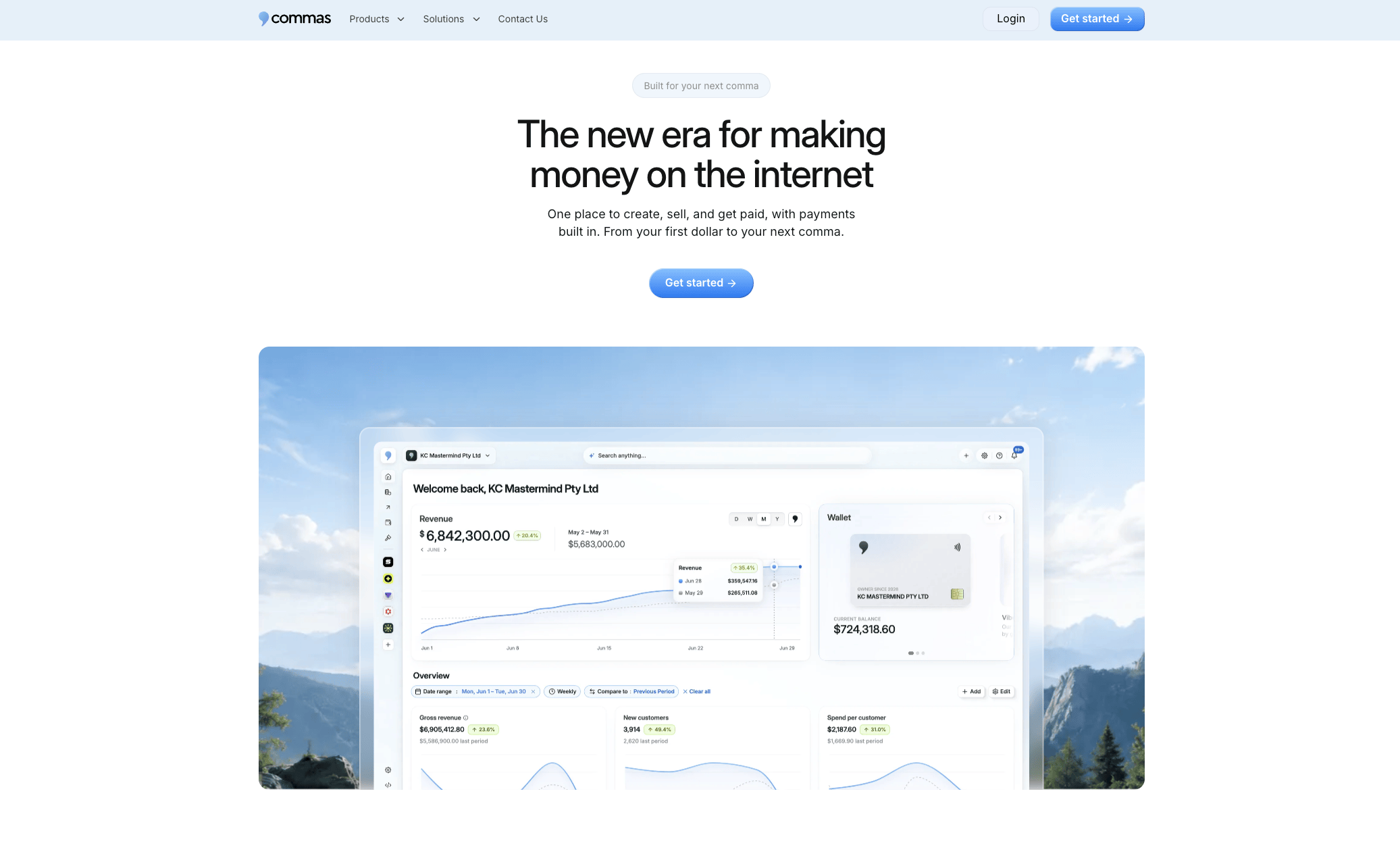
If you want to see the whole setup, including Vibe Funnels, our AI funnel builder, start from the Commas home page. Commas is a subscription product that begins with a free trial or demo.
Perspective
Most affiliate problems we see described by sellers in the $1,000 to $10,000 range are not tracking problems. They are connection problems: the link, the payment and the access all live in different tools.
That is why we built the Affiliate Center inside the same account as checkout, funnels, courses and paid groups. Our approach is that an affiliate sale should be a normal sale, with the same payment options, the same subscriptions and the same delivery, so you manage one business instead of three systems.
A PRM is the right answer for a partnerships team running channel programs. For a seller whose affiliates send buyers to a checkout, one platform with payments built in is the simpler answer, and it keeps your commission rules next to your revenue.
Commas
FAQ
How much does PartnerStack cost?
PartnerStack does not publish a rate card. Its only public figure is an SMB offer starting at $6,000 for the first year, and third-party estimates for typical contracts are much higher. Ask for the order form terms, including renewal and payout fees, before you commit.
What is the best alternative if I sell high-ticket courses or coaching?
Pick a platform that connects affiliate tracking to your checkout and payment plans. Commas Affiliate Center is built for that, alongside funnels, courses and paid groups in one account.
Can I move my affiliates from PartnerStack without losing links?
Some tools offer migration help and link preservation, but it varies by vendor. Export your data early, start before renewal and test every purchase type before announcing the change to your affiliates.
Do I need a PRM or an affiliate tool?
If you manage resellers, deal registration and CRM-synced pipeline, you need a PRM. If your partners mainly promote an offer and earn a commission on sales, an affiliate system tied to your checkout is the better fit.