
Confirm your economics before you touch software. Calculate the maximum commission you can afford per sale, then move through platform selection, commission and terms, recruiting, and tracking QA in that order. Most small businesses can get a functioning program live in 2 to 6 weeks using a platform like Commas that bundles tracking, payouts, and recruitment, and you should have your first 90-day KPI targets set before you flip the switch.
TL;DR:
- Small businesses should set a maximum commission based on their actual profit margin, typically paying affiliates $20 to $25 per sale while remaining profitable.
- Using a platform like Commas can simplify setup and management by integrating tracking, payouts, and recruitment within one system, reducing technical delays.
- Tiered commissions and cookie durations aligned with the buying cycle improve affiliate motivation and program effectiveness, with typical rates ranging from 5% to 50%.
- A comprehensive affiliate agreement should clarify prohibited methods, disclosure rules, refund policies, and termination rights to protect margins and brand reputation.
- Launch success depends on thorough tracking tests, early affiliate recruitment, and automated onboarding, prioritizing the first 90 days as a critical activation period.
Table of Contents
- How Do You Confirm Program Goals and Economics?
- Should You Build In-House, Join a Network, or Use an Integrated Platform?
- What Commission Structure and Cookie Duration Should You Use?
- What Belongs in Your Affiliate Agreement?
- How Do You Recruit and Onboard Your First Affiliates?
- How Do You Test Tracking and Monitor Early Performance?
- What's on Your Pre-Launch Checklist?
- What We've Learned Watching Small Businesses Launch Affiliate Programs
- Launch Faster With Affiliate Tracking Built Into Your Checkout
- Sources
How Do You Confirm Program Goals and Economics?
Start with the number that governs every other decision: your maximum allowable commission. Take your average order value, subtract cost of goods and payment processing fees, then subtract the margin you need to keep. What's left is your commission ceiling.
Pay affiliates $20 to $25 per sale and you're still profitable even after a refund or two eats into the math.
Before launch, pick the metrics that will tell you whether the program is working:
- EPC (earnings per click) across your top 10 affiliates
- Conversion rate on affiliate-driven traffic versus your site average
- Active publisher ratio — the percentage of signed-up affiliates who actually send a click
- Cost per sale, tracked against your commission ceiling
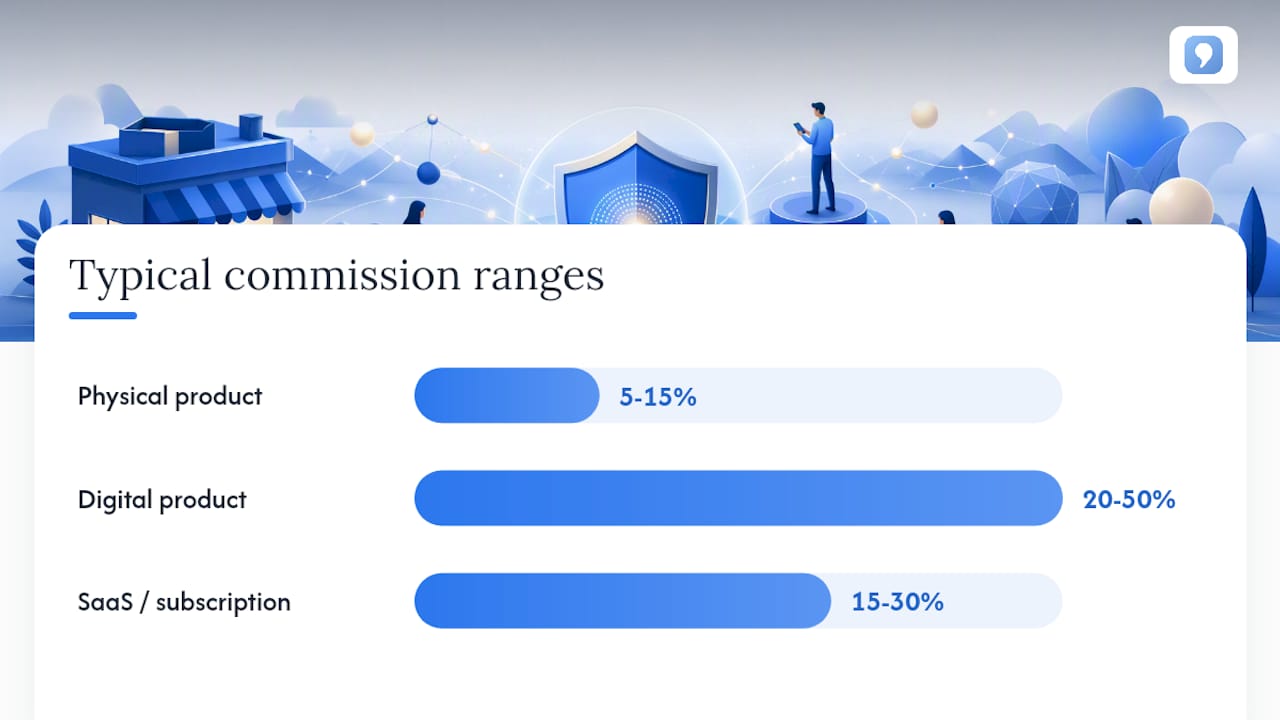
Statistic Callout: Commission ranges shift heavily by product type. Physical products typically pay 5% to 15%, digital products 20% to 50%, and SaaS or subscription products commonly land at 15% to 30% or a recurring revenue share. Digital products support the higher end because gross margins run higher, which is exactly why course creators and software sellers can afford to pay more per referral than a physical goods brand can.
Should You Build In-House, Join a Network, or Use an Integrated Platform?
Three paths exist, and each trades cost for control differently. There's no single universal price tag for setting up an affiliate program; it depends entirely on which route you pick.
- In-house SaaS tools give you full control over branding and data but require someone on your team to manage tracking, disputes, and payouts manually.
- Affiliate networks hand you a pool of pre-vetted publishers instantly, but they take a cut of every sale and you don't own the affiliate relationships.
- Integrated platforms (like Commas) fold affiliate tracking into the same dashboard as your checkout and funnels, cutting setup time because tracking is native rather than bolted on.
On the technical side, pixel-based tracking is losing accuracy fast because of browser privacy restrictions, so server-to-server (S2S) tracking is the safer bet for anything beyond a hobby program. Shopify and WooCommerce both support affiliate tracking through native apps and plugins, which speeds things up considerably compared to a custom cart.
Pro Tip: Plan for developer time when integrating S2S tracking into a custom-built cart; the duration varies but can take from a few days up to a couple of weeks depending on complexity.
What Commission Structure and Cookie Duration Should You Use?
Pick a commission model that matches how your product actually earns money. Flat CPA works for one-time digital products. Recurring revenue share fits subscriptions, since it keeps affiliates promoting renewals instead of chasing one-off sales. Percentage-based commissions suit physical goods where margins are tighter.
A tiered structure rewards your best performers without overpaying casual affiliates:
- Base tier: standard rate for 1 to 10 sales per month
- Growth tier: 3 to 5 points higher for 11 to 30 sales
- Elite tier: highest rate plus a bonus for 30+ sales or a revenue milestone
Cookie duration should match your buying cycle. A 7-day cookie fits an impulse purchase; a 30 to 60-day window suits a course or software product where people research before buying.
| Element | Typical range |
|---|---|
| Physical product commission | 5% to 15% |
| Digital product commission | 20% to 50% |
| SaaS/subscription commission | 15% to 30% or recurring share |
| Cookie duration | 7 to 60 days |
| Payout terms | Net-30 or Net-60 |
Payout terms of net-30 or net-60 give you time to process refunds before money goes out the door, which matters more than it sounds. Build a refund-reversal clause into your terms so a returned sale automatically claws back the commission.
What Belongs in Your Affiliate Agreement?
Your affiliate agreement is not boilerplate. It's the document that protects your margin and keeps your brand out of trouble. At minimum, it needs to cover:
- Prohibited promotional methods — explicitly ban brand bidding on paid search and unauthorized coupon site listings, since failing to restrict these means you'll pay commissions on sales you would have gotten for free.
- Disclosure requirements — affiliates must clearly disclose paid relationships per FTC guidance for influencers, typically with a visible statement near the affiliate link, not buried in a bio.
- Commission reversal terms — spell out exactly when a commission gets clawed back (refunds, chargebacks, fraud).
- Termination rights — reserve the right to remove an affiliate for policy violations without notice.
An affiliate program without a written agreement is a liability waiting to surface. The moment a top affiliate starts bidding on your brand name in paid search, you'll wish you'd banned it in writing on day one.
Set up a simple monitoring routine: spot-check top traffic sources monthly, flag suspicious conversion patterns, and escalate repeat violations to a warning, then removal.
How Do You Recruit and Onboard Your First Affiliates?
Aim for 10 to 20 committed affiliates before you flip the program live publicly. Fewer than that and you won't have enough signal to know what's working.
- Reach out proactively to bloggers, YouTubers, and newsletter writers already covering your category. A personal email outperforms a generic application form every time.
- Open a passive application channel on your site's footer or resource page for affiliates who find you organically.
- Vet applicants on audience fit and content quality before approving. Skip auto-approving coupon-only sites unless your policy explicitly allows them.
- Build an onboarding kit: swipe copy, banner creative, and pre-built deep links so affiliates can start promoting within minutes of approval.
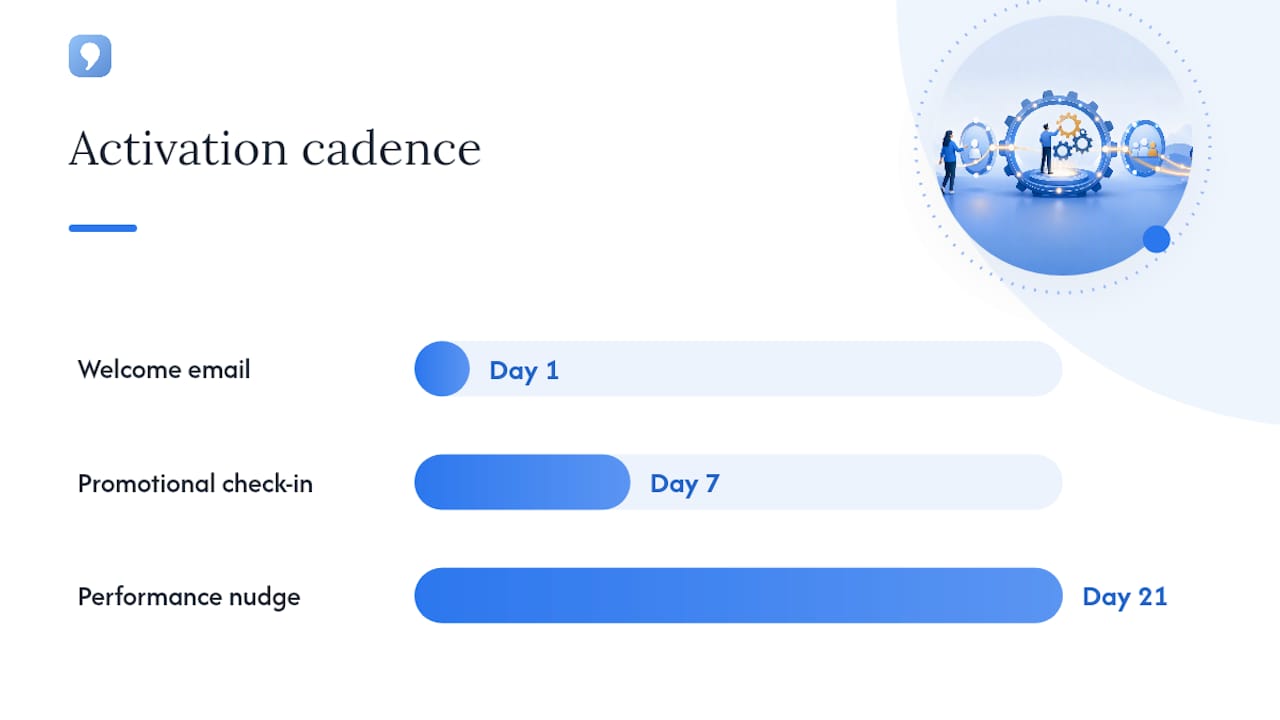
- Follow a 30-day activation cadence: welcome email on day 1, a check-in with promotional ideas on day 7, and a performance nudge on day 21.
Pro Tip: Affiliates judge programs primarily on EPC, not headline commission rate. A program paying $15 per sale with a high conversion rate often beats one paying $25 with weak creative and a confusing checkout.
Partner platforms focused on traffic generation, like BabyLoveGrowth, can also widen your recruitment pipeline if you're short on inbound applicants.
How Do You Test Tracking and Monitor Early Performance?
Run a full QA pass before any affiliate sends real traffic. Place a test order through an affiliate link and confirm the commission fires correctly in your dashboard. Then test refund handling, since a refunded order that still pays a commission will quietly bleed margin for months before anyone notices.
Your QA checklist should include:
- Cross-device tracking (click on mobile, purchase on desktop)
- Commission accuracy on discounted or bundled orders
- Product feed validation if you're running a catalog with multiple SKUs
- Cookie persistence across sessions
Statistic Callout: Four operational pillars drive programs that actually produce revenue: reliable tracking, a commission model matched to your unit economics, a repeatable recruitment process, and consistent activation follow-through.
Once live, run a simple incrementality check: pause one affiliate segment for a week and watch whether total revenue drops. If it doesn't move, that segment may be capturing sales you'd have gotten anyway.
What's on Your Pre-Launch Checklist?
Before you announce the program publicly, confirm every item on this list is done, not "almost done":
- Tracking tested end-to-end, including refunds and cross-device behavior
- Affiliate agreement finalized and requires signature before approval
- Resource center live with creative assets and swipe copy
- Welcome email sequence written and automated
- Payout method configured and tested with a real transaction
- Affiliate program link added to your site footer or navigation
Give yourself 2 to 6 weeks total for this list, and treat your first 30 days as an activation sprint focused entirely on getting signed affiliates to send their first click. In the following 60 days, shift attention to your top 3 to 5 performers. Fixing a tracking gap or a confused onboarding step for your best affiliate matters more than chasing new sign-ups.
What We've Learned Watching Small Businesses Launch Affiliate Programs
Most first-time program owners underestimate how much time goes into tracking QA and overestimate how fast recruitment happens. The businesses that succeed treat the first 90 days as a tracking and activation project, not a marketing campaign. Integrated tooling removes a real point of failure: when checkout, funnels, and affiliate tracking live in one system, you stop reconciling three dashboards to find out why a commission didn't fire.
— FanBasis
Launch Faster With Affiliate Tracking Built Into Your Checkout
Every step in this checklist, tracking, terms, payouts, resource center, are separate tools to manage unless your checkout already has affiliate tracking built in. That's the gap Commas closes: the Affiliate Center sits inside the same dashboard as your funnels and checkout, so a sale and its commission are recorded in one motion instead of synced across two systems.

A few specifics that map directly to the checklist above:
- Native S2S-style tracking tied to your checkout, no separate pixel setup
- Built-in link generation and a resource center for affiliate creative
- Payouts processed from the same account handling your customer payments
If you sell subscriptions, the SaaS commission tools handle recurring revenue shares automatically instead of requiring manual recalculation each renewal cycle. Set up your program inside the Commas Affiliate Center and get your first affiliate link live today.
Sources
- How to Create a Successful Affiliate Marketing Program | CO
- Disclosures 101 for Social Media Influencers | FTC
- How to Setup an Affiliate Program: Full Guide (2025) - Advertise Purple