
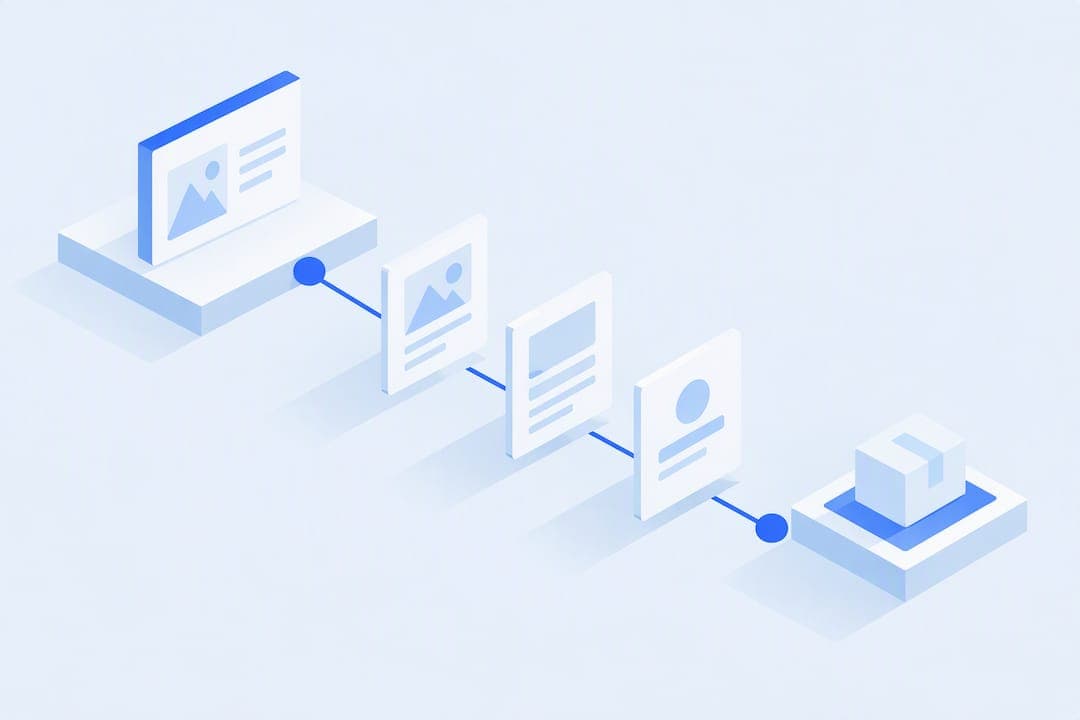
A high-converting webinar funnel strategy moves a stranger from cold lead to paying customer through one connected sequence: promote, register, attend, convert, follow up, then automate. For marketers and entrepreneurs selling offers priced between $1,000 and $10,000, the sequence only works when each stage is built around a measurable target, not just activity. Get the sequence right and the webinar becomes a repeatable sales engine instead of a one-time event.
TL;DR:
- Setting clear goals and KPIs based on revenue, booked calls, or list growth ensures the webinar campaign is measurable and focused on outcomes.
- Audience segmentation and validating your angle through tests improve targeting and increase the relevance of your webinar, boosting conversions.
- Multi-channel promotion, especially email sequences combined with partner emails and retargeting ads, effectively scales registration numbers.
- A streamlined registration process with minimal friction, clear messaging, and automation tools like calendar integration reduce no-shows and improve attribution.
- Turning a live webinar into an evergreen funnel requires recording, gated access, and automated follow-up, supported by AI tools for ongoing optimization.
Table of Contents
- Set goals and KPIs for your webinar funnel
- Audience, topic angle, and registration segmentation
- Promotion tactics that scale registrations
- Landing page, registration flow, and friction reduction
- Webinar content and live engagement techniques that move attendees toward buying
- The conversion moment and checkout: offers, scarcity, and seamless payments
- Follow-up, nurture sequences and measurement to turn attendees and no-shows into revenue
- Evergreen and automation: turning live webinars into always-on funnel engines
- Practitioner perspective: common mistakes and week-of event checklist
- How Commas supports webinar funnel execution and monetization
- Sources
- FAQ
Set goals and KPIs for your webinar funnel
Before you touch a slide deck, pick one primary goal. A direct-sales webinar for a $1,000 to $10,000 offer should be judged on revenue per registrant, not attendance rate alone. A lead-generation webinar cares more about qualified booked calls. A brand-awareness webinar cares about reach and email list growth, which matters less to sellers of high-ticket offers.
Translate your offer price into a target: if you are selling a $3,000 program, decide how many registrants you need at a realistic close rate to hit a revenue floor worth the promotion spend.
Before planning content or promotion, confirm these:
- Primary goal: revenue, booked calls, or list growth, chosen before anything else.
- Target KPI: revenue per registrant, cost per registration, or show-up rate.
- Break-even math: minimum registrants and close rate needed to justify the campaign.
Audience, topic angle, and registration segmentation
The topic decides who shows up, and who shows up decides whether the offer lands. Build role-based hooks: a webinar titled for "founders" pulls a different room than one titled for "marketing directors," even if the content is identical.
Validate the angle before you build the full funnel:
- Email tests: send a two-line pitch to a segment and see what gets replies.
- Micro-surveys: ask your list what problem they want solved next.
- Agenda scans: check which webinar titles in your space get shared or commented on.
Segment registrants at signup so follow-up isn't generic. A short qualifying question ("What's your current monthly revenue?") lets you split qualifiers from general attendees and send each group a different post-webinar sequence.
Pro Tip: Add one qualifying field to your registration form. It costs you a few registrations but buys you a much sharper follow-up sequence.
Promotion tactics that scale registrations
Registrations don't happen by accident. A six-step promotion checklist built around topic validation, email, partnerships, ads, and landing page work still holds up as a practical playbook for filling seats. Prioritize in this order:
- Email first: build a multi-touch invite sequence of at least three to five emails, since email-first promotion outperforms other channels for most established lists.
- Co-marketing partners: ask non-competitive partners with a similar audience to send one dedicated email and one social post, and track their contribution with a unique registration link.
- Paid ads: run a short teaser video (30 to 60 seconds) on social, then retarget site visitors and video viewers who didn't register.
- Retargeting: layer a reminder ad sequence in the final 48 hours before the event for anyone who visited the registration page but didn't sign up.
If your list is small, co-marketing and paid social video can scale registrations quickly when email alone won't fill the room. Space your promotional cadence so the bulk of invites land in the ten days before the event, with reminder emails intensifying in the final 24 hours.
Landing page, registration flow, and friction reduction
A dedicated landing page beats a third-party registration widget because it gives you full control over messaging and tracking. Optimized landing pages with a clear title, visible benefits, a short form, and social proof convert better than generic sign-up forms.
Keep the registration flow lean:
- Minimal form: name, email, and one qualifying question, nothing more.
- Confirmation page: immediate calendar add and a clear next step, not just a thank-you message.
- Calendar integration: one-click add to Google Calendar or Outlook to reduce no-shows.
- UTM tagging: tag every promotional link so you can attribute registrations to email, partner, or paid source.
Attribution matters here because it tells you which channel from the promotion stage actually earned its budget.
Webinar content and live engagement techniques that move attendees toward buying

The room's structure should build toward the offer, not surprise attendees with it. A reliable run order: hook the audience with the problem, teach one core insight, prove it with a demo or example, collect small agreements along the way, then present the offer and close.
Micro-commitments matter more than most presenters realize. Asking attendees to answer a poll or type "yes" in chat gets them physically participating before you ask for a purchase decision.
- Polls: use two or three throughout to keep attention and gather quick data on pain points.
- Live demo: show the product or process working in real time rather than describing it.
- Chat moderation: have a second person answer objections live so the presenter can stay focused.
- Social proof: drop in a specific result or example at the moment right before the offer, not earlier.
Pro Tip: Rehearse the transition from teaching to selling out loud at least once. That handoff is where most webinars lose momentum.
The conversion moment and checkout: offers, scarcity, and seamless payments

The offer should feel like a natural next step, not a pivot. For $1,000 to $10,000 offers, a fast-action bonus (a bonus session, extended support, or an add-on) rewards people who decide during the live event rather than after.
In-room checkout removes the gap between decision and payment: attendees pay without leaving the webinar window, which cuts the drop-off that happens when someone is redirected to a separate page. A webinar product with checkout built into the room reflects this approach. Post-webinar landing pages still work for offers that need more consideration time, but they give buyers a chance to hesitate.
- Offer clarity: state price, what's included, and the fast-action bonus in one slide.
- Checkout speed: fewer form fields and fewer redirects mean fewer abandoned purchases.
- Payment options: support for card and flexible payment plans widens who can say yes to a higher-ticket offer.
Follow-up, nurture sequences and measurement to turn attendees and no-shows into revenue
The webinar doesn't end when the room closes. Attendees and no-shows need different sequences on different timelines.
- Attendee sequence: send a replay link and offer reminder within an hour, followed by objection-handling emails over the next three to five days.
- No-show sequence: send the replay immediately with a shortened version of the offer pitch, since role-specific post-event follow-up improves conversion even for people who missed the live session.
- Iteration loop: A/B test subject lines, offer timing, and CTA placement across each send, tracking show-up rate, offer click rate, and revenue per registrant as your core metrics.
Segment nurture messaging by buyer readiness. Someone who asked a pricing question in chat needs a different email than someone who watched silently, and personalized lead nurturing sequences built around buyer signals tend to hold attention longer than one generic drip.
Evergreen and automation: turning live webinars into always-on funnel engines
Once a live webinar has been run enough times to show a stable close rate, it's ready to become evergreen. Record it, gate the replay behind registration, and drip the content on a timed schedule so new leads experience it as if it were live.
Designing events as content engines that power demand generation over months rather than as one-off campaigns is the mindset shift that makes evergreen funnels work. The video asset from a single recording can fuel registration ads, nurture emails, and social clips for months.
- Gated recordings: require registration even for the replay to keep list growth attached to the funnel.
- Timed drips: release the recording and follow-up emails on a fixed delay so the sequence feels live.
- Evergreen cart: keep the offer and bonus consistent so testing stays clean over time.
AI-assisted funnel building, like the pattern-based optimization in Vibe Funnels, can apply proven funnel structures automatically, which matters for evergreen funnels that run unattended for weeks at a time.
Practitioner perspective: common mistakes and week-of event checklist
Most webinar funnels fail on three things: promotion starts too late, the offer pitch feels bolted on, and sales never gets the qualifier data marketing collected. Fix the third by sharing registration answers with sales before the call, not after. On event day: confirm tech an hour early, brief your chat moderator, and rehearse the sales transition once more.
— FanBasis
How Commas supports webinar funnel execution and monetization
Running a webinar funnel for a $1,000 to $10,000 offer means every stage, from registration to checkout to follow-up, has to work together without a stack of disconnected tools. Commas brings funnel building, webinar delivery, and payments into one account, which matters most at the exact moment a viewer decides to buy.

- In-room checkout: attendees pay without leaving the webinar, reducing the drop-off common with external checkout links.
- Vibe Funnels: AI-assisted funnel building applies proven patterns to registration and offer pages without manual rebuilding.
- Payments: Commas runs payments through regulated payment partners, supporting flexible options for higher-ticket offers.
- Analytics: track registration source, show-up rate, and revenue per registrant in one dashboard.
Sellers running coaching programs, cohort courses, or paid communities in the $1,000 to $10,000 range can use these pieces together instead of stitching together a webinar tool, a checkout page, and a separate funnel builder. Explore Commas Payments or the Vibe Funnels builder to see how a webinar funnel comes together in one dashboard.
Sources
FAQ
What is a webinar funnel?
A webinar funnel is the sequence that moves someone from first hearing about your webinar to registering, attending, and buying an offer presented during or after the event. It typically includes promotion, registration, the live or evergreen session, and post-event follow-up.
What are the five stages of a sales funnel?
The common stages are awareness, interest, decision, action, and retention, though webinar-specific funnels often map this as promotion, registration, attendance, conversion, and follow-up. Definitions vary slightly by source, but the underlying logic of moving a stranger toward a repeat customer stays consistent.
Is funnel marketing outdated?
Funnel marketing isn't outdated, but the static, one-way funnel is being replaced by connected sequences that use behavior data and automation to personalize each stage. Webinar funnels remain effective because they combine education, live engagement, and a direct offer in one experience, which flat email campaigns can't replicate.
What are some effective strategies for promoting a webinar?
An email-first promotion sequence supported by co-marketing partners and paid social ads tends to fill more seats than any single channel alone. Landing page clarity and a reminder cadence that intensifies in the final 24 hours before the event also has an outsized effect on actual attendance.