
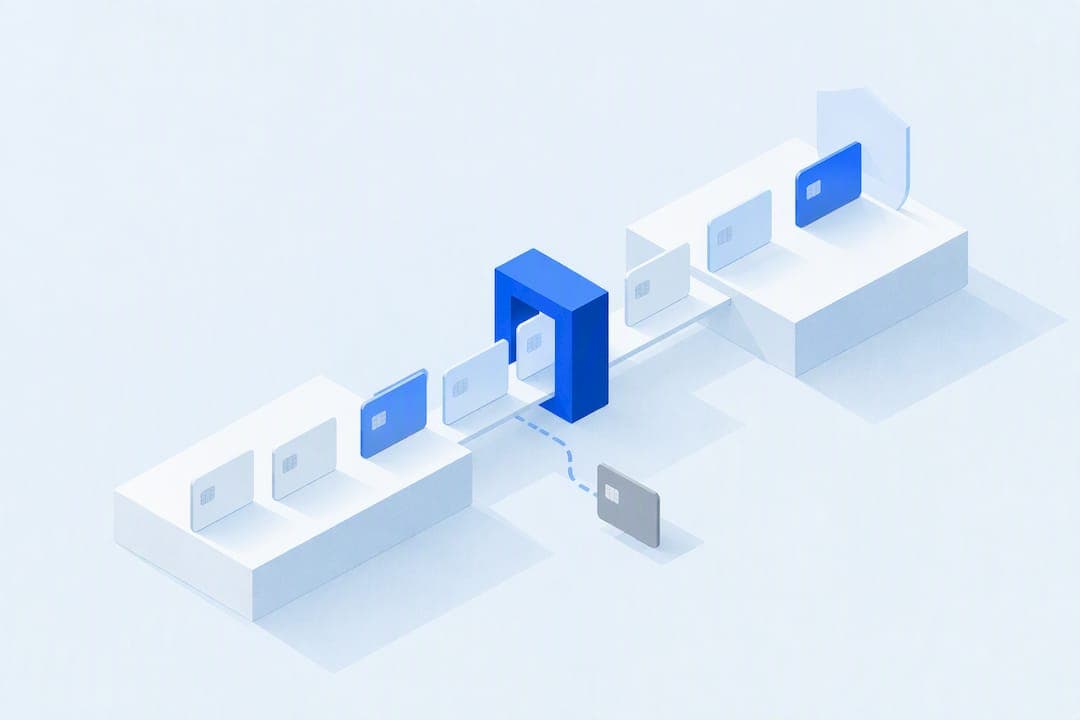
The fastest way to reduce involuntary churn is to prevent failures before they happen and recover the rest with smarter systems. Enroll in account updater programs to refresh expired or replaced cards automatically, pair that with pre-dunning reminders sent 30 to 45 days before a card expires, and build an intelligent dunning sequence that uses alternative payment methods for anything that still fails.
TL;DR:
- Enrolling in account updater programs can recover a significant portion of failed payments caused by expired or replaced cards, especially when combined with expiry reminders sent 30 to 45 days beforehand.
- Diagnosing failure modes such as soft declines, hard declines, outdated billing info, or tokenization gaps ensures targeted fixes, increasing recovery success without unnecessary retries.
- Implementing intelligent retry logic that accounts for decline codes and spacing attempts prevents retry storms and improves payment authorization rates over time.
- Maintaining operational hygiene, segmenting high-value accounts, and refining dunning sequences with multi-channel recovery steps boost overall recovery rates and reduce revenue loss.
- A focused 90-day plan, starting with quick wins like account updater enrollment and expanding to full automation, can substantially decrease involuntary churn within a short timeframe.
Table of Contents
- What Involuntary Churn Means for Your Subscription Business
- How Involuntary Churn Happens: The Technical Failure Modes
- Why Involuntary Churn Quietly Wrecks Your Unit Economics
- The Playbook: Prevention and Recovery Tactics That Work
- A 90-Day Roadmap to Shrink Involuntary Churn
- Tracking Involuntary Churn: Formulas and Dashboards That Matter
- How an Integrated Platform Cuts Down on Payment Friction
- Why Prevention Beats Reaction Every Time
- Commas: Built-In Prevention and Recovery for High-Ticket Sellers
- FAQ
- Sources
What Involuntary Churn Means for Your Subscription Business
Involuntary churn happens when a paying customer wants to stay, but their payment fails anyway. An expired card, a soft decline from a fraud filter, or outdated billing information cancels the subscription even though the customer never asked to leave. Voluntary churn, by contrast, is a customer actively cancelling because they no longer want the product.
The distinction matters because the two problems need different fixes entirely. You cannot win back a voluntary cancellation with a payment retry, and you cannot fix involuntary churn with a better onboarding flow or a discount offer.
Common triggers include:
- A card expires or gets replaced after a bank-flagged fraud incident.
- A fraud-screening tool issues a soft decline on a legitimate charge.
- Billing details go stale because the customer switched banks without updating their account.
Academic and policy research tied to the FTC's review of subscription billing documents a sharp drop in retention during the months customers receive replacement cards, driven largely by inattention rather than intent to cancel. That gap between what customers want and what their payment method allows is exactly where recoverable revenue gets lost.
How Involuntary Churn Happens: The Technical Failure Modes
Diagnosing involuntary churn starts with knowing which failure mode you are actually dealing with. Each one calls for a different fix, and treating them all the same way wastes both engineering time and recovery opportunity.
- Expired or replaced cards. Card networks reissue millions of cards every year after routine expiration cycles or fraud-related replacements, and the months following mass reissuance show measurable spikes in cancellations tied directly to customer inattention during card replacement.
- Hard declines. These come from closed accounts, insufficient funds, or cards reported lost or stolen. A hard decline will not succeed on retry; it needs updated payment information, not another charge attempt.
- Soft declines. Issuer systems sometimes reject a transaction temporarily, often from a fraud-screening rule, a temporary hold, or a network timeout. These often succeed on a well-timed retry.
- Outdated billing information. A customer who changed banks, got a new card number, or moved to a new country can leave stale data in your system indefinitely if nothing prompts an update.
- Tokenization gaps. When a card token is not refreshed or mapped correctly across processors, even an active card can fail silently.
- International issuer coverage gaps. Account-updater services and retry logic are not uniformly supported across every country and issuer, which means a tactic that works reliably in one market can underperform in another.
- Naive retry logic. Charging the same card repeatedly within a short window regardless of decline code triggers what practitioners call a retry storm, which can get the merchant flagged or throttled by the issuer rather than recovering the payment.
Knowing which of these is actually driving your failed payments determines whether you need an account-updater integration, a smarter retry engine, or a better reminder system, and most subscription businesses need all three working together.
Why Involuntary Churn Quietly Wrecks Your Unit Economics
Every subscription lost to a failed payment is lost revenue you already paid to acquire. That changes your CAC payback timeline and depresses lifetime value even when your product and pricing are both working fine. A customer who would have stayed for 18 months but gets involuntarily canceled in month 4 shows up in your churn dashboard identically to someone who hated the product, except you never had the chance to save the account.
The cost compounds past the lost subscription itself. Support teams field tickets from confused customers who did not realize their card failed, billing teams spend hours manually chasing payments, and win-back campaigns cost money whether or not they succeed.
Academic research tied to the FTC's subscription billing review models the revenue effects of consumer inattention around card replacement, showing that failed-payment cancellations cluster predictably around reissuance cycles rather than spreading evenly across the year. That clustering means the revenue leak is both measurable and preventable with the right timing on reminders and updater enrollment.
The Playbook: Prevention and Recovery Tactics That Work
Most involuntary churn gets treated as a single problem with a single fix, usually "add a dunning email." In practice it is two separate problems: stopping failures before they start, and recovering the ones that still slip through. Here is the order that produces the biggest return for the least operational lift.

Prevent failures before they happen
Account Updater programs from the major networks are the highest-leverage prevention tactic available, because they fix the problem at its source instead of reacting after a decline. Visa Account Updater refreshes stored card credentials on file, returning replacement account numbers, new expiration dates, and closed-account advices so you can update your billing records before the next charge attempt. Bank of America's merchant documentation describes the same mechanism: merchants submit the account numbers on file, and the service returns updates that improve authorization success rates for recurring billing programs. Mastercard and American Express run comparable programs under their own names.
Coverage is not universal. Enrollment and participation vary by issuer and country, and older customer bases or less common card types sometimes fall outside the update window. Account updaters work best as the first layer of defense, not the only one.
Pre-dunning and expiry reminders catch what account updaters miss. Sending a reminder 30 to 45 days before a stored card expires gives customers enough time to update their payment method without feeling rushed, and it catches cases where the updater has no replacement data to offer. The UX matters here: a one-line email buried in a newsletter gets ignored, while a dedicated prompt inside the product, timed to when the customer is actually using the account, gets acted on.

Recover what still fails
Intelligent retry logic separates a recoverable soft decline from a dead-end hard decline and treats each differently. A soft decline from a temporary issuer hold might succeed on a retry spaced several hours later; a hard decline from a closed account never will, no matter how many times you retry it. Decline-code-aware retry logic avoids the retry storm problem entirely by spacing attempts and backing off on codes that signal a firm rejection rather than hammering the same card repeatedly.
Dunning and recovery pipelines should escalate in intensity and personalization over roughly one to two weeks:
- Day 0: automated in-app nudge the moment a payment fails, with a one-click update link.
- Day 2 to 3: email plus SMS reminder with the specific reason the payment failed.
- Day 5 to 7: second reminder with urgency copy about losing access.
- Day 10+: for high-value accounts only, a human outreach from a success or billing team member.
Fallback payment options matter more for global subscriber bases than most teams assume. Offering a second payment method, supporting off-session authentication where card networks require it, and keeping tokenized backups on file all reduce the odds that one failed card ends the relationship entirely.
Operational hygiene ties the whole system together: reconcile updater responses against your billing files regularly, report on decline codes by frequency so you know where the next leak is, and segment customers by card age and lifetime value so your highest-value accounts get the most attentive recovery path rather than the same generic email everyone else gets.
Pro Tip: Segment your dunning sequence by customer value before you build it. A $200/month account and a $29/month account should never get the identical recovery flow.
One partner resource on retention strategy covers broader tactics worth layering on top of payment recovery once the technical fixes are in place.
A 90-Day Roadmap to Shrink Involuntary Churn
You do not need a year-long project to see results. A focused 90-day push, broken into three stages, gets the highest-impact fixes live first and leaves the harder automation work for later.
- Days 1 to 30: quick wins. Enroll in an account-updater program through your payment processor or acquirer, add expiry reminder emails timed 30 to 45 days ahead of card expiration, and instrument basic metrics so you have a before-and-after baseline.
- Days 31 to 60: build the system. Implement decline-code-aware retry rules instead of blanket retries, stand up a full dunning sequence across email, SMS, and in-app prompts, and test at least one alternative payment method for customers whose cards keep failing.
- Days 61 to 90: scale and refine. Automate the full recovery pipeline end to end, write a standard operating procedure for human outreach on high-value accounts, and run A/B tests on dunning copy and timing against the baseline you captured in the first month.
Prioritize by impact versus effort: account-updater enrollment and expiry reminders take days to implement and typically recover the most revenue relative to the work involved, while full retry-logic automation takes longer but compounds over time.
Pro Tip: Run your first A/B test on subject lines and send timing before touching retry logic. Recovery copy is faster to test and often moves the needle just as much as backend changes.
Tracking Involuntary Churn: Formulas and Dashboards That Matter
Involuntary churn rate is calculated as the number of subscriptions lost to payment failure divided by total active subscriptions at the start of the period, measured monthly and again on a cohort basis to catch card-replacement clustering that a single monthly snapshot can hide.
Beyond the headline rate, a few signals tell you whether your fixes are working: authorization success rate on first attempt, recovery rate after a dunning sequence completes, decline rate broken out by decline code, and both monthly recurring revenue at risk and monthly recurring revenue actually recovered.
| Metric | What it tells you | Where it belongs |
|---|---|---|
| Involuntary churn rate | Overall revenue leakage from failed payments | Executive dashboard |
| Authorization success rate | How well prevention tactics are working | Operations dashboard |
| Recovery rate after dunning | Whether your recovery sequence is effective | Operations dashboard |
| MRR recovered | Dollar impact of your fixes | Executive dashboard |
| Decline rate by code | Where the next technical fix should focus | Operations dashboard |
Keep the executive view focused on revenue dollars and the overall rate, and push the decline-code-level detail to the operations team that actually acts on it.
How an Integrated Platform Cuts Down on Payment Friction
Payment friction often starts upstream of the decline itself, in a checkout flow that was never built to handle recurring billing well. We built Commas to integrate payments and sales funnels into a single account so billing data, checkout, and funnel logic all live in one place instead of scattered across disconnected tools.
- We use AI to optimize sales funnels based on proven patterns, adjusting conversion paths without manual rebuilding.
- Keeping payments and funnel data in one account removes the handoff gaps between tools where billing information tends to go stale.
Why Prevention Beats Reaction Every Time
Most teams treat involuntary churn as a billing problem to patch after the fact. Treat it as a revenue initiative instead, with the same planning rigor you give to acquisition. Automate the prevention layer first: account updaters and pre-dunning reminders catch the bulk of failures with no ongoing effort once they are built. Save human attention for the accounts where it actually changes the outcome, your highest-value subscribers, not every failed charge.
— FanBasis
Commas: Built-In Prevention and Recovery for High-Ticket Sellers

If you sell a high-ticket course, a paid community, or a coaching program priced in the thousands, every involuntary cancellation costs more than a $29/month subscriber ever would. We built Commas Payments to combine checkout, recurring billing, and funnel logic in one account instead of stitching together separate tools for payments and sales pages.
- Billing and funnel data live together, so there is no handoff gap where payment details go stale between systems.
- Our checkout and funnel tools are built for sellers running $1,000 to $10,000 offers, not low-ticket impulse purchases.
- Commas runs payments through regulated payment partners, giving you integrated billing without managing a separate processor relationship.
Check out Commas Payments to see how an integrated setup handles recurring billing for high-ticket offers.
FAQ
What does "involuntary churn" mean?
Involuntary churn is a canceled subscription caused by a failed payment, such as an expired card or a declined transaction, rather than a deliberate decision by the customer to leave. It differs from voluntary churn, where the customer actively chooses to cancel.
What are some strategies for minimizing churn?
The most effective combination is prevention plus recovery: enroll in account-updater services to refresh expired cards automatically, send expiry reminders before cards lapse, and run a dunning sequence with decline-code-aware retries for payments that still fail. Layering in alternative payment methods and human outreach for high-value accounts rounds out the approach.
What does "reduced churn" mean?
Reduced churn means fewer subscribers leave over a given period, whether through fewer voluntary cancellations, fewer involuntary payment failures, or both. Tracking the two separately matters because the fixes for each are different.
What does a high churn rate mean for a subscription business?
A high churn rate signals that a large share of subscribers are leaving relative to your total subscriber base, which drags down lifetime value and slows net revenue growth even when new sign-ups stay steady. When a meaningful portion of that churn is involuntary, the fix often lies in payment recovery systems rather than product or pricing changes.
Sources
- Protect recurring revenue with Visa Account Updater | Visa
- Account Updater FAQ - Bank of America Merchant Help
- Selling subscriptions: evidence and policy considerations (FTC / academic paper)