

The fastest way to cut churn on a paid membership is to optimize three things at once: how quickly a new member reaches a real outcome, how strongly they feel part of a community, and how reliably their payment goes through. Start narrower than that sounds. Pick two retention moments inside the first 30 days and run a focused test on those before touching anything else.
TL;DR:
- Focusing on quick activation within the first 72 hours and rewarding completion instead of attendance significantly increases member retention.
- Addressing payment friction issues like expired cards and limited payment methods can reduce silent churn caused by declined transactions.
- Building a community around a clear motivator and maintaining consistent rituals enhance members' sense of belonging and long-term engagement.
- Segmenting members by behavior and intent allows for targeted outreach, improving recovery rates and reducing unnecessary automation.
- Integrating software tools to eliminate seams in the onboarding and payment process decreases involuntary churn and speeds up member activation.
Table of Contents
- What Are the Best Membership Retention Strategies?
- How Do You Build a 30-Day Activation Playbook?
- Why Does Billing Friction Quietly Kill Retention?
- How Do You Turn Community Into a Retention Asset?
- How Should You Segment Members for Retention?
- How Do You Measure Retention and Run Win-Back Campaigns?
- Why Removing Software Seams Reduces Churn
- How Commas Maps to Your Retention Experiments
- Sources
What Are the Best Membership Retention Strategies?
Six tactics consistently outperform the rest for creators and small teams running paid memberships, and they rank in a specific order for a reason: the first three affect whether someone stays past month one, and the last three affect whether they stay past month six.
- Front-load activation, not content. Get new members to one meaningful outcome inside 72 hours. This suits course-based and coaching memberships especially well. Action: build a single automated welcome sequence tied to one milestone, not a content library dump.
- Design a reward for finishing, not for showing up. Immediate, earned, choice-based rewards beat discounts for keeping perceived value intact. Works for any price point. Action: swap your "10% off renewal" email for a small bonus unlocked by completing step one.
- Fix payment friction before you fix content. Involuntary churn is often the largest silent leak. Suits subscriptions above $20/month. Action: audit your last 90 days of failed payments.
- Build one weekly ritual. A live call or recurring thread gives members a reason to return on a schedule. Best for community-first memberships. Action: pick one day and time and never move it.
- Segment your outreach by risk, not by tier. Watch behavior, not billing history. Action: flag anyone with zero logins in 14 days for a human check-in.
- Run win-backs on a real cadence. Lapsed members convert at meaningful rates when the outreach is timed right. Action: schedule a 3-touch win-back sequence 30 days after cancellation.
How Do You Build a 30-Day Activation Playbook?
Retention work does the most good in the first 30 days, and the goal is narrow: get members through two or three behaviors that correlate with day-90 survival, not a long list of "nice to have" touchpoints. Pull six months of cohort data if you have it and look for the specific actions your longest-staying members all took early. Usually it is something like "completed the kickoff call" or "posted a third time," not "read the welcome PDF."
Milestones should be small enough to hit in a day, not a week:
- Day 0 to 1: intro post or welcome message sent
- Day 1 to 3: kickoff session or first micro-lesson completed
- Day 3 to 7: third visit or first comment on someone else's post
- Day 14: first completed win, however small
Activation sequences that stay micro and measurable tend to build momentum faster than sequences packed with information. Reward structure matters just as much as timing: immediate, choice-based rewards for completed behaviors outperform discounts because a discount trains members to wait for the next one, while an earned reward trains them to finish things.
Pro Tip: Automate the trigger, not the relationship. Send the milestone email automatically, but have a real person check in by day 10 if the milestone hasn't fired. That single manual touchpoint often saves more accounts than another automated nudge.
Why Does Billing Friction Quietly Kill Retention?
Involuntary churn, the kind caused by a declined card rather than a member choosing to leave, is one of the most fixable and most ignored leaks in a membership business. Most failures trace back to a short list of causes:
- Expired cards with no update reminder before the renewal date
- A single payment method offered when a member's preferred method isn't supported
- Confusing or missing receipts that trigger chargebacks out of confusion
- No pause or downgrade option, so a member cancels outright instead of stepping down
The fix on all four is procedural, not creative. Send a card-expiration warning five to seven days before renewal. Offer at least two payment methods, including buy-now-pay-later where it fits your price point. Build a dunning sequence with three retry attempts spaced across a week, paired with plain-language emails ("Your payment didn't go through, update it here"). Win-back and recovery sequences that combine timing with clear messaging recover a meaningful share of failed payments that would otherwise silently churn. Track recovery rate as its own metric, separate from voluntary cancellation, so you know which problem you're actually solving.
How Do You Turn Community Into a Retention Asset?
A community only retains members when it's built around one dominant motivator, whether that's an outcome, a skill, belonging, or access to resources, because a clear identity is what makes leaving feel like losing something. Decide which one your membership actually delivers before you design anything else. A fitness membership organized around "mastery" needs different rituals than one organized around "accountability."
Once you know the motivator, seed the rituals that reinforce it:
- A pinned welcome post that sets tone on day one
- A weekly live session at a fixed time, no exceptions
- Founder replies on early posts, visible and fast
- A small moderator team recruited from your most active members by week 60
Consistent founder presence and a steady weekly cadence in the first 90 days build the momentum that later carries the community without you. Moderators should have a defined, narrow job (welcoming new members, answering FAQs) rather than a vague "help out" mandate, or the role burns them out fast.
Pro Tip: Track your community's 90-day health with three numbers: percent of new members who post in week one, percent of posts that get a reply within 24 hours, and number of member-started (not founder-started) threads per week.
How Should You Segment Members for Retention?
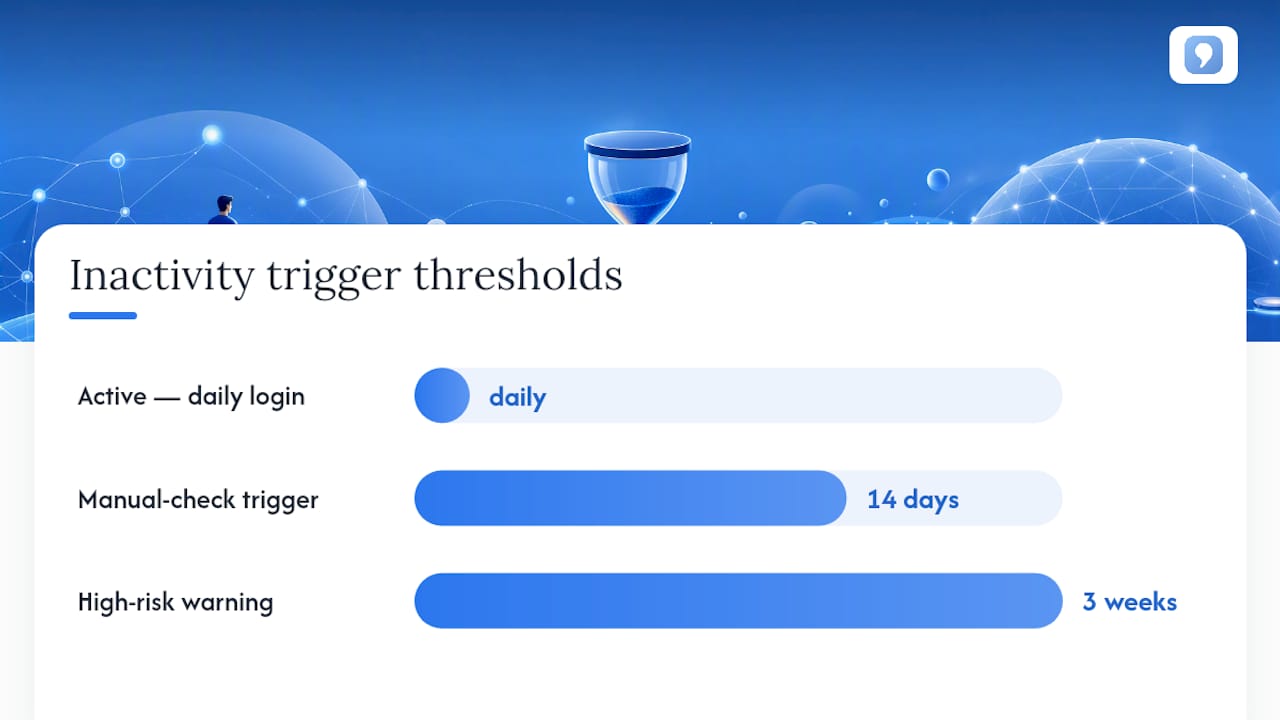
Segment by intent and behavior, not just by plan tier. Someone on your entry plan who logs in daily is a different retention risk than someone on your premium plan who hasn't logged in for three weeks, and treating them the same wastes effort in both directions.
Reserve automation for routine, low-stakes nudges: renewal reminders, milestone celebrations, content recommendations based on what a member already engaged with. Save manual outreach for the moments that actually predict cancellation, because personal outreach on high-value warning signs consistently outperforms automated-only re-engagement. A member who paid for a year and hasn't logged in for two weeks deserves a real message, not another automated tip.
- Behavior-based: zero logins in 14 days triggers a human check
- Intent-based: members who viewed your cancellation page get a targeted downgrade offer instead of losing them outright
- Cohort-based: members who joined during a launch promo get different onboarding than organic signups
How Do You Measure Retention and Run Win-Back Campaigns?
Four numbers tell you almost everything: activation rate, survival at day 7/30/90, weekly active participation, and churn broken out by cohort rather than blended across your whole member base. Operators who track cohort data and adjust weekly outperform those who wait for a revenue drop to notice a problem.
- Check activation and early-survival signals weekly. This is fast enough to catch a broken onboarding step before it costs you a full cohort.
- Review pricing, cadence, and community health quarterly, not monthly. Quarterly billing itself can work as a middle ground between monthly churn risk and annual sticker shock for many knowledge-based memberships.
- Run a structured win-back sequence starting 30 days after cancellation: one email reminding them what they built, one offer tied to a specific outcome, one human message if they engaged with either.
Win-back campaigns convert at meaningful rates when timed and messaged well, which makes them one of the more underused levers in most membership businesses. Pair that data discipline with the growth-marketing view that product signals and human outreach work best combined, not as substitutes for each other.
Why Removing Software Seams Reduces Churn
Most churn analyses focus on tactics and skip the plumbing. Every extra tool in a membership stack, a separate checkout, a separate community app, a separate email platform, adds a seam where a member can drop off or a payment can silently fail. An onboarding funnel that hands off to a different login for community access loses people at exactly the moment retention work matters most.
An integrated stack removes that friction by design: an onboarding funnel feeds directly into a kickoff session, checkout lives inside the webinar room instead of a separate tab, and the community sits next to the course instead of behind another sign-in. That's the workflow worth testing first: build the funnel, run the kickoff with checkout built in, then use the community's first live event to make an in-room offer. Fewer seams, faster activation, less involuntary churn.
— FanBasis
How Commas Maps to Your Retention Experiments
Every tactic above needs a place to actually run. That's where an integrated stack earns its keep. Payments built for reliable billing handle the dunning, retry timing, and receipt clarity that stop involuntary churn before it starts. Vibe Funnels, the AI funnel builder, speeds up the early activation sequence so a new member reaches their first milestone without three separate tools stitched together. And Studios puts courses and community in the same place, so the rituals that build identity don't live behind a second login.

A practical way to start: pick your two retention moments from the checklist above, build them inside a single 30-day funnel, and track activation against your own cohort data for one full cycle. If community is your core motivator, pair that funnel with paid groups so onboarding and belonging happen in the same flow instead of two disconnected ones. Set up your first experiment on Commas and see how many of these seams disappear on day one.
Sources
- How can membership businesses increase retention? A 30-day playbook — Promotion Vault
- Membership retention in 2026: what owners get wrong — Memberfix
- Can AI make membership feel more human? — Membership World