
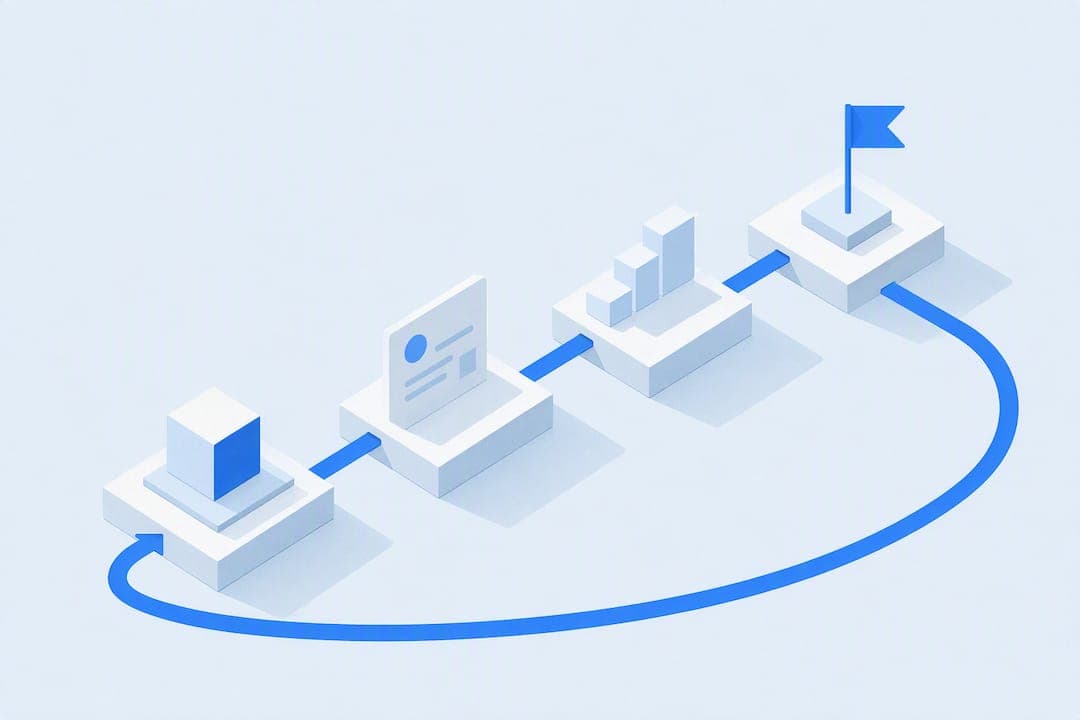
The smartest way to monetize a following is to build owned recurring revenue first, then layer complementary streams on top. That means memberships, paid communities, or digital products as your foundation, with sponsorships, affiliate income, and ad revenue supplementing rather than carrying the business. Creators who run three or more income streams earn far more than those who lean on a single platform check, and the creator economy's own numbers back that up. What follows is the specific menu, the order to build it in, and a 90-day plan to get your first dollar in the door.
TL;DR:
- Building owned recurring revenue streams such as memberships and digital products provides a stable foundation before adding sponsorships, affiliate income, or ad revenue.
- Validating monetization ideas through pre-sale landing pages, direct surveys, or short paid consultations minimizes risk and confirms demand before full development.
- Tiered pricing structures and early-bird discounts enhance conversion rates, with manageable tiers typically ranging from $5 to over $100 per month.
- Prioritizing owned infrastructure like email lists and direct payment systems protects income from platform changes and enhances long-term sustainability.
- The first 90 days should focus on list building, validation, and launching minimum viable products, avoiding spreading efforts across too many monetization streams simultaneously.
Table of Contents
- Creator Monetization Ideas Worth Building First
- How to Combine Revenue Streams Without Spreading Yourself Thin
- How Do You Validate a Monetization Idea Before Building It?
- Pricing and Tiering: What to Actually Charge
- What Platform Should You Build Your Monetization On?
- Your First 90 Days: A Practical Launch Plan
- Why Monetization Deserves a System, Not a Grab Bag of Experiments
- Where Commas Fits Once You're Ready to Consolidate
- Sources
- FAQ
Creator Monetization Ideas Worth Building First
Not every tactic on this list deserves equal attention. Some belong at the center of your business; others are seasoning. Here's the practical menu, grouped by how directly they connect you to your audience's wallet.
Direct supporter payments are the closest thing to owned revenue you can build. Memberships and paid groups let fans pay you monthly for access, community, or early content, and you keep the relationship instead of renting it from an algorithm. Tips and wishlists work as a lower-commitment entry point. A one-time tip button or an Amazon-style wishlist costs a viewer nothing to consider and often converts casual fans who aren't ready for a subscription.
Digital products turn what you already know into something sellable at scale. Courses, ebooks, templates, and resource packs have no per-unit cost once built, which makes margins far better than merchandise or services. The trick is not building blind: the strongest digital products are lifted directly from questions your audience already asks you for free.
Services monetize expertise directly, and they're often the fastest route to your first dollar. Coaching calls, consulting sessions, and paid Q&A slots require zero inventory and can launch in a day. Retainers, where a client pays monthly for ongoing access or deliverables, turn one-off services into predictable income, though they cap your growth at the number of hours you have.
Sponsorships and brand partnerships pay for your reach, not your product. The packaging matters more than most creators realize. Instead of quoting a flat rate, break your audience into deliverables, a dedicated video segment, three Stories, a newsletter mention, and price each piece separately. Brands increasingly want performance data alongside reach, so track click-through and conversion on past sponsored content to negotiate from strength next time.
Affiliate and commerce monetize the recommendations you're already making. Product tags in videos, affiliate links in a newsletter, and native shopping features on YouTube and TikTok let viewers buy without leaving the platform. YouTube has been expanding its commerce and brand partnership tools specifically so creators can monetize recommendations more directly, which lowers the friction between "I like this product" and an actual sale.
Platform-native monetization includes ad revenue and creator funds, useful but rarely sufficient alone. YouTube's Partner Program updates have expanded revenue-sharing splits and added new incentive programs for Shorts and shopping, which is good news if you already qualify. But ad revenue moves with algorithm changes and advertiser demand, neither of which you control. Treat it as a bonus stream, not a business plan.
Merchandise and physical products can work with almost no upfront investment if you use print-on-demand fulfillment. Skip bulk inventory unless you have proven, repeat demand. A simple hoodie or mug run through a fulfillment partner costs you nothing until someone orders, which keeps your risk near zero while you test whether your audience actually buys physical goods.
Here's how these map to effort and payoff:
- Lowest effort, fastest cash: tips, paid consulting calls, affiliate links in existing content
- Medium effort, compounding return: memberships, paid groups, digital products built from validated demand
- Higher effort, higher ceiling: courses with structured curricula, retainer-based consulting, branded merchandise lines
- Variable, dependent on others: sponsorships, platform ad revenue, creator fund payouts
Pro Tip: Before building anything new, audit the questions your audience already asks in comments and DMs. That's a free market research report sitting in your inbox, and it usually points straight at your first paid product.
How to Combine Revenue Streams Without Spreading Yourself Thin
The order you build in matters more than how many streams you eventually run. Creators who chase five income sources at once usually end up with five mediocre ones instead of two strong ones.
- Validate before you build. If you don't already have an engaged list or community, start with consulting, paid calls, or a small services offer. This gets cash flowing immediately and tells you exactly what people will pay for, before you sink weeks into a course nobody wants.
- Turn validated services into products. Once you've run the same consulting conversation five times, that's your course outline. Digital products scale what services can't, and they cost you nothing extra to sell to the hundredth customer.
- Layer membership on top. With a product or service audience established, a membership or paid group gives your most engaged fans a reason to pay monthly instead of once. This is where recurring, predictable revenue actually starts.
- Add sponsorships and affiliate income as multipliers. These work best once you have real audience data and content history to show brands, not before. Trying to land sponsorships before you have traction wastes pitches and underprices your rate.
A useful way to think about the mix once you're running multiple streams: foundation revenue from memberships and direct products should sit around 40 to 70 percent of total income. Affiliate marketing acts as a multiplier layer, typically 15 to 30 percent. Sponsorships work as a boost layer, ideally 10 to 30 percent, since they're the least predictable of the three. If sponsorships are carrying more than half your income, you're running a media business, not a creator business, and one lost brand deal can gut your month.
This sequencing echoes what a creator income stack model recommends: start with services to validate demand, then build a newsletter and affiliate layer, then digital products, then memberships. Each stage feeds the next instead of competing with it.
Pro Tip: Track what percentage of your monthly income comes from each stream every quarter. If one source drops below 10 percent for two quarters running, either double down or cut it. Dead streams quietly eat your time without paying rent.
How Do You Validate a Monetization Idea Before Building It?
Building a full course or membership before confirming anyone will pay for it is the single most expensive mistake creators make. A few low-cost tests can save you months.
- Run a pre-sale landing page. Describe the product, set a price, and open a waitlist or actual checkout before you build anything. A conversion rate in the low single digits from a warm, engaged list is a reasonable signal to proceed; near-zero interest means rework the offer, not the marketing.
- Survey your audience directly. Ask specific questions: "Would you pay $30 for X?" beats "Would you be interested in X?" every time, because vague interest doesn't predict actual purchases.
- Sell a short consulting engagement first. A handful of paid 30-minute calls validates demand and pays you while you learn. If people won't pay $50 for your time, they won't pay $300 for a packaged course either.
- Run a simple A/B test on pricing or format. Offer two price points to different segments of your list, or test a live cohort against a self-paced version, and let actual purchase behavior settle the question instead of guessing.
Consulting-first validation isn't just a testing tactic. It's also real revenue while you build, which is why the income stack sequencing puts it first.
Pricing and Tiering: What to Actually Charge
Most creators underprice their first offer, then wonder why margins feel thin. A tiered structure fixes that by giving different segments of your audience a reason to pay more.

A workable three-tier membership might look like this: a low tier around $5 to $10 monthly for community access and early posts, a middle tier around $25 to $50 for exclusive content plus some direct interaction, and a top tier at $100 or more for group coaching, priority access, or physical perks. Physical rewards, stickers, signed items, small merchandise, work well at the top tier but add real logistics: shipping costs, fulfillment time, and inventory tracking that a purely digital tier avoids.
Anchoring and early-bird pricing both work because they give hesitant buyers a reason to act now instead of later. Launching a course at a limited-time discount, then raising the price after the first cohort, creates urgency without discounting your long-term value.
Creator case studies on channel memberships show that pairing paid tiers with genuine community perks tends to improve both retention and willingness to pay, more than price alone.
Quick pricing rules worth keeping on a sticky note:
- Price the middle tier first, then build the low and high tiers around it.
- Never launch with more than three tiers. More options usually reduce conversions, not increase them.
- Raise prices for new members before you discount for existing ones. Loyalty should never cost your longtime supporters more.
What Platform Should You Build Your Monetization On?
Owning your email list and payment relationship is the difference between a business and a rental. If a platform changes its algorithm, adjusts a revenue split, or suspends your account, an owned list and direct payment processor keep you earning. A following you don't own can disappear overnight; a list you host yourself cannot.
The essential features to prioritize when choosing infrastructure:
- Integrated payment processing, including subscriptions and one-click checkout, so you're not stitching together three separate tools to collect money.
- Affiliate system support, so partners and referrers can drive sales without manual tracking.
- Basic analytics, covering conversion rates, churn, and revenue by product, not just traffic numbers.
- Subscription and membership management that handles renewals, failed payments, and tier changes automatically.
If you're building toward YouTube specifically, know the eligibility baseline before you plan around it: the YouTube Partner Program requires 1,000 subscribers plus watch-hour or Shorts view thresholds, and specific features carry their own additional requirements. Confirm current thresholds directly with YouTube's policy pages, since they shift.
The broader lesson holds across platforms: every extra tool you juggle for payments, funnels, and community is friction that costs you sales. Consolidating onto fewer platforms, ideally one that handles payments, product delivery, and community together, reduces both overhead and the number of places a transaction can quietly fail.
Your First 90 Days: A Practical Launch Plan
Treat the first 90 days as three distinct phases, not one long sprint toward a launch date.
- Weeks 1 to 3: Build your list and pick a validation method. Grow your email list through lead magnets or content upgrades, since proven list-growth tactics compound faster than most creators expect. Decide whether you're validating through consulting calls or a pre-sale page.
- Weeks 4 to 8: Run the validation test and build the minimum offer. Launch the pre-sale or book the first consulting calls. Track email signups, pre-sale conversion rate, and consult bookings as your primary metrics.
- Weeks 9 to 12: Launch and stabilize. Open the actual product or membership with a working checkout, basic fulfillment process, and a simple support channel, even if that's just you answering emails.
If pre-sale conversions or consult bookings come in well under your target by week 8, don't push through blindly. Adjust the price, narrow the offer, or revisit the pitch before spending more weeks building.
Why Monetization Deserves a System, Not a Grab Bag of Experiments
Chasing every monetization trend at once is the fastest way to burn out with nothing to show for it. Platform-dependent income feels safe because it requires no setup, but it hands your revenue to an algorithm you don't control and can't negotiate with. Creators who treat monetization as a system, validate first, build owned revenue second, add multipliers third, end up with businesses that survive a bad month on one platform.
Owned infrastructure compounds in a way platform payouts never do. An email list grows in value every month you nurture it. A membership base becomes more predictable as churn stabilizes. None of that happens with ad revenue, which resets every time the algorithm shifts.
Measure what actually sustains you, not what feels exciting to launch. Sustainability beats novelty every time revenue is on the line.
— FanBasis
Where Commas Fits Once You're Ready to Consolidate
Commas is the alternative to running five separate apps for payments, funnels, courses, and community, one dashboard instead of a patchwork of logins, and AI-assisted funnel optimization built on patterns that already convert, so you're not guessing at what to fix. That matters most exactly when you hit the stage this article describes: multiple validated streams that now need to run without you manually stitching them together.

Two examples of where it maps directly to what you just read: use Vibe Funnels to build and launch the pre-sale pages and product funnels covered in the validation section above, and use Paid Groups to run the membership tiers and community perks discussed in the pricing section. If you're building a course from validated services, Commas Studios handles course delivery and community in the same place.
Start by connecting your first product or membership tier through Commas Payments and see how much friction disappears when checkout, delivery, and analytics live under one login.
Sources
- Made on YouTube: creator monetization & brand partnerships
- Creator Economy Statistics 2026: Market Size, Earnings & Trends
- The Complete Creator Monetisation Playbook for 2026 | Spenny Piggy
- The Creator Income Stack: 5 Streams That Compound
FAQ
How many YouTube views do I need to make $10,000 a month?
There's no fixed view count because YouTube ad revenue depends on niche, audience location, and ad rates, not views alone. Creators typically need diversified income, memberships, sponsorships, affiliate sales, alongside ad revenue to consistently hit that figure, since ad revenue rarely carries a full-time income on its own.
What are some good content ideas for creators to monetize?
Behind-the-scenes tutorials, answering audience questions in depth, and repurposing your most-asked questions into paid guides all tend to convert well. The strongest monetizable content usually already exists in your comment section as unanswered requests.
How can I earn steady daily income from Facebook or similar platforms?
Consistent daily earnings almost always come from stacking direct supporter payments, tips, paid groups, or product sales, rather than relying on any single platform payout. Building an owned list you can email directly protects that income if the platform changes its rules.
What are the top passive income ideas for creators?
Digital products like templates, ebooks, and pre-recorded courses generate the most genuinely passive income since they sell without your ongoing time. Affiliate links embedded in evergreen content and a membership with automated billing, such as one run through Commas Paid Groups, also keep earning with minimal upkeep once set up.
Do I need to register a business or worry about taxes as a creator?
Most jurisdictions require you to report creator income regardless of platform, and many require formal business registration once you cross certain revenue thresholds. Rules vary significantly by country and region, so confirm requirements with a local tax professional or your country's business registration authority before your first major sale.