
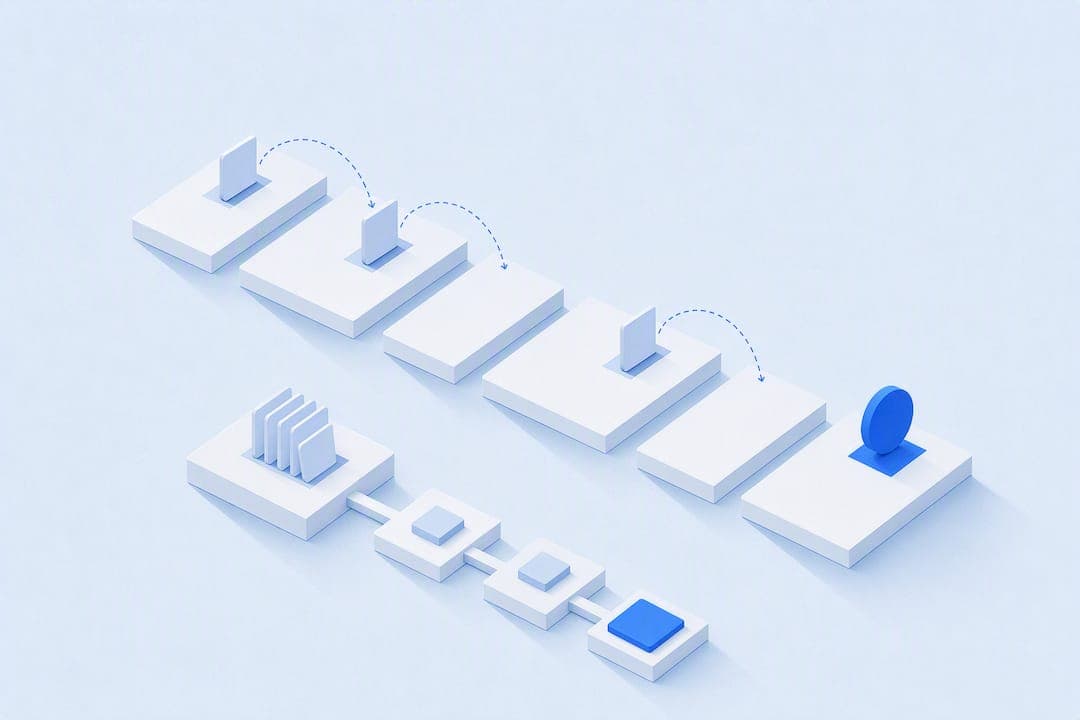
The single most effective approach to affiliate onboarding is instant provisioning paired with a structured Day 0 to 7 activation sequence built around one goal: a fast first tracked conversion. The metric that matters more than sign-up volume is activation rate, measured against time-to-first-conversion (TTFC). Every affiliate needs three things the moment they're approved: a unique tracking link, live portal access, and one clear first action to take.
TL;DR:
- Automating instant provisioning and delivering a clear first action within minutes of approval significantly increases early activation and reduces time-to-first-conversion.
- A structured onboarding sequence that includes content kits, quick-win guides, and manual check-ins during the first week boosts affiliate engagement and drives initial sales.
- Ensuring reliable tracking with deep links and server-to-server postbacks minimizes lost conversions and reduces disputes, fostering trust and retention.
- Monitoring key metrics like activation rate, time-to-first-conversion, and 30-day retention helps identify bottlenecks and optimize the onboarding process continuously.
- Automating approval, link delivery, and follow-up communications cuts onboarding time drastically and prevents inactivity before affiliates place their first link.
Table of Contents
- What Do You Need Before You Start Onboarding Affiliates?
- The Day-by-Day Onboarding Sequence That Gets a First Conversion Fast
- How Do You Set Up Tracking Links and Creative Assets?
- How Should You Handle Tracking and Payouts?
- What Metrics Should You Track for Onboarding Success?
- How Do You Fix the Most Common Onboarding Problems?
- Integrating Affiliate Onboarding With Third-Party Networks and Tools
- Where Onboarding Programs Waste the Most Time
- Where Commas Fits Into Your Affiliate Onboarding
- Sources
- FAQ
What Do You Need Before You Start Onboarding Affiliates?
Approving affiliates before your own house is in order wastes the goodwill of your best recruits. Get these five things locked before you open the gate:
- Program terms are finalized and visible, covering commission rates, refund/reversal rules, and prohibited traffic sources, so no one signs up under the wrong assumptions.
- Payout method and test transaction capability work end to end, from checkout to commission ledger.
- Your conversion test path is validated — a test order actually shows up in tracking, not just in your sales dashboard.
- A starter asset library exists: banners, sample copy, and FTC-compliant disclosure language affiliates can copy and paste.
- You've picked an onboarding model (self-serve, hybrid, or high-touch) and assigned someone to own it.
Skipping any of these doesn't just slow things down. It creates the exact support tickets and commission disputes that make affiliates quit before their first payout.
The Day-by-Day Onboarding Sequence That Gets a First Conversion Fast
Most programs treat "welcome, you're approved" as onboarding. It isn't. Real affiliate onboarding is a sequence with a beginning, middle, and measurable end point: a tracked sale. Here's the framework, built around the activation window most practitioners treat as the first 30 days.
- Approval and instant provisioning. The moment someone is approved, your system should auto-generate their unique tracking link and activate portal login without a human touching it. Delay here is the single biggest silent killer of activation, since every hour between approval and access is an hour a motivated affiliate cools off.
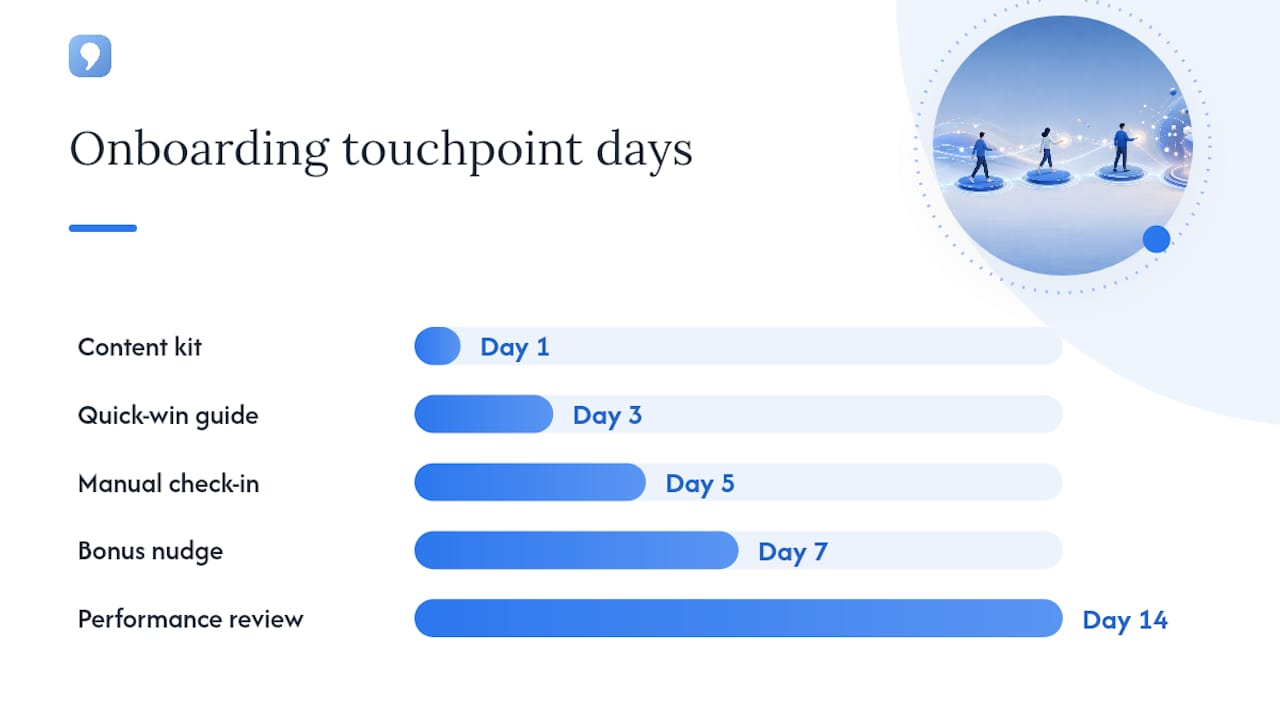
- Day 0, welcome and first action. Send a welcome email confirming approval, delivering the tracking link, and naming exactly one thing to do next, such as "post this link in your next newsletter" or "add this banner to your top blog post."
- Day 1, content kit delivery. Hand over pre-built creatives, disclosure copy, and deep links pointed at your highest-converting pages, not just your homepage.
- Day 3, quick-win guide. Show affiliates precisely where to place the link and give them a tested content angle they can copy, not a blank-page challenge.
- Day 5, manual check-in. For anyone who hasn't posted yet, a short personal message (not another automated email) often unsticks them.
- Day 7, bonus nudge. A small time-limited incentive for that first conversion creates urgency without cheapening your commission structure.
- Day 14 and Day 30, performance and relationship review. Check who converted, who didn't, and who deserves a tier upgrade or a direct escalation call.
This isn't guesswork. Programs that run a structured seven-day sequence combining automated messages with a handful of manual touches see meaningfully better activation and faster first sales than those relying on a single welcome email and hope. Without that structure, many programs lose a significant share of new signups to inactivity before they ever place a link.
Pro Tip: Don't wait until Day 5 to check who's stalled. Pull a Day 2 report of everyone who received their link but hasn't clicked into the portal since. That's your highest-leverage outreach list, not the affiliates who already posted.
The reason this works is straightforward: activation-focused onboarding that automates provisioning and delivers a quick win drives real gains in retention and time-to-first-conversion, because affiliates who convert once are dramatically more likely to convert again.
How Do You Set Up Tracking Links and Creative Assets?
Auto-generated affiliate links remove the single most common point of early abandonment: an affiliate who signs up, gets excited, then has to email support asking "where's my link?" Deep links, meaning links that drop a referred visitor onto a specific product or offer page instead of your generic homepage, lift conversion further because they shorten the path between click and purchase.
Your creative kit should include:
- Banner ads in standard IAB sizes so affiliates can drop them into existing ad slots without resizing.
- Pre-written captions and comparison copy affiliates can adapt for email or social.
- FTC-compliant disclosure language, since regulators require clear, conspicuous disclosure of affiliate relationships, and giving affiliates the wording removes their excuse for skipping it.
- Deep links into your best-converting destinations, such as a webinar page with checkout built in or a funnel built with AI-assisted layout tools.
Inside the portal itself, affiliates should find their link, their real-time stats, and a support contact within two clicks of logging in. Behind the scenes, sync approvals to your email automation and CRM so the Day 0 through Day 30 sequence fires without anyone manually triggering it, and set calendar reminders for the human touches at Day 5 and Day 14.
How Should You Handle Tracking and Payouts?
Trust breaks fastest when an affiliate sees clicks but no commissions. Server-to-server (S2S) postbacks are more reliable than cookie-only tracking because they don't depend on a visitor's browser settings or ad blockers, which means fewer conversions silently vanish between click and sale.
Before launch, run through this verification list:
- Place a real test conversion and confirm it lands correctly in the affiliate's dashboard.
- Check commission math against your stated rate, not just that a number appeared.
- Test across at least one mobile and one desktop device, since cross-device tracking gaps are a common silent leak.
- Confirm refund and reversal behavior actually reverses the commission rather than leaving a phantom balance.
This kind of end-to-end testing, including refund reversal behavior, catches the errors that cause commission disputes before they ever reach a real affiliate. On the payout side, a predictable cadence with a visible "pending commissions" balance in the portal does more for retention than a slightly higher commission rate. Affiliates who can watch their balance grow in real time trust the program enough to keep posting.
What Metrics Should You Track for Onboarding Success?
Four numbers tell you whether onboarding is working: activation rate (the share of approved affiliates who generate at least one tracked conversion), time-to-first-conversion (days from approval to that first sale), time-to-first-sale for the program overall, and 30-day retention (affiliates still active a month in).
- Instrument your funnel in five stages: approved, link placed, first click, first conversion, first payout, so you can see exactly where affiliates drop off.
- A healthy activation rate and TTFC target vary by vertical and offer complexity, so benchmark against your own program's history rather than a borrowed number from a different niche.
- Set automated alerts for any stage where drop-off spikes week over week, not just a monthly report nobody opens.
- If drop-off happens between "approved" and "link placed," the fix is almost always provisioning speed. If it happens between "first click" and "first conversion," the fix is usually the destination page, not the affiliate.
Programs that instrument onboarding into these discrete stages catch problems while they're still cheap to fix, instead of discovering six months later that half of last year's approved affiliates never made a sale.
How Do You Fix the Most Common Onboarding Problems?
Five issues account for most onboarding failures, and each has a fast fix.
- Link delivery is missing or late. Check your auto-provisioning trigger first, then check email deliverability. Half the time the link generated fine and just landed in spam.
- Clicks show up but conversions don't. Run an S2S postback test and a fresh destination-page test. Broken redirects and outdated deep links are the usual culprits.
- An affiliate disputes a commission. Pull the audit trail and walk them through the refund/reversal rule you set in your terms. Most disputes end the moment someone sees the actual data.
- An affiliate never posts anything. Send a re-engagement message with a specific content idea attached, and consider a small milestone bonus for that first post.
- Onboarding volume outpaces your team. Automate approval, provisioning, and the Day 0 through Day 7 emails first. Save human time for your highest-potential partners and for disputes automation can't resolve.
Integrating Affiliate Onboarding With Third-Party Networks and Tools
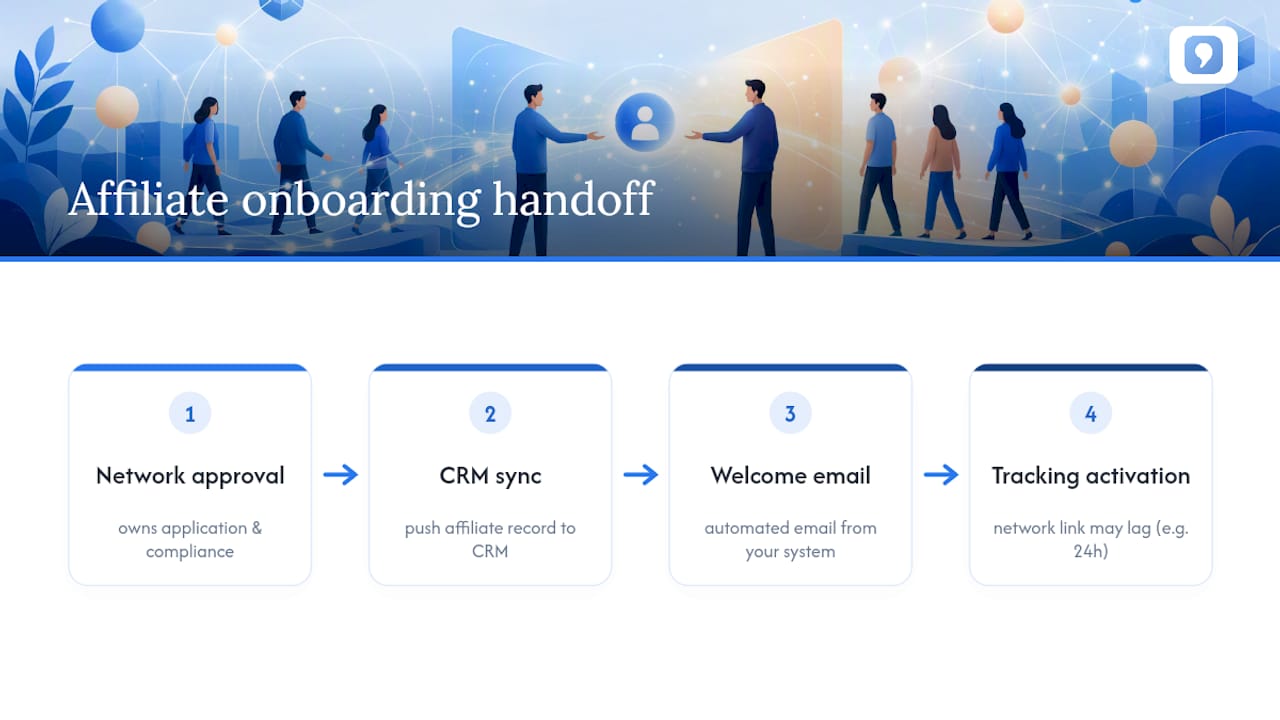
Most programs don't run in a vacuum. If you're managing affiliates through a network like ShareASale, Impact, or PartnerStack, your onboarding sequence needs to sync with that network's own approval and payout mechanics, not fight against them. The network usually owns the initial application and compliance check; your job is to layer your own activation sequence on top the moment that approval clears.
The biggest integration risk is data lag. If your welcome email fires from your own system but the network's tracking link takes 24 hours to activate, you've built a broken first impression into your own process. Test the full handoff, from network approval to your CRM to your first automated email, before you turn on approvals at scale.
For programs running their own tracking rather than a third-party network, reporting and link-tracking tools matter just as much. Solutions like BabyLoveGrowth focus on the reporting and traffic side of affiliate relationships, which pairs well with a provisioning system that already handles the technical link generation. The goal either way is the same: no affiliate should ever wonder which system owns their link, their stats, or their payout, whether that system is a network, a dedicated affiliate platform, or a combination of both.
Where Onboarding Programs Waste the Most Time
Most teams under-automate the parts that matter and over-manage the parts that don't. They'll spend an hour manually approving each affiliate and writing a personal welcome note, then leave link provisioning and portal access to a slow, semi-manual process that takes days.
The single highest-leverage fix is cutting time-to-first-conversion by automating provisioning and pointing every new affiliate at one proven deep link on Day 0, not Day 5. Automate everything else.
— FanBasis
Where Commas Fits Into Your Affiliate Onboarding
The platform solves common friction points that stall many affiliate programs: instant link and portal provisioning, integrated payments so commissions and payouts run through one ledger instead of three disconnected tools, and a built-in creative and asset library affiliates can pull from without emailing support. The Affiliate Center handles the technical side of onboarding automatically, so your Day 0 welcome sequence can fire the moment someone's approved instead of waiting on manual link generation.

It is built for users who are tired of stitching together a funnel tool, a payment processor, and a separate affiliate platform just to launch a program. Commissions, payouts, and affiliate tracking live in the same dashboard as the payments that actually process the sale, which is where most third-party integrations start losing accuracy. If instant provisioning and a first-conversion sequence are the priority you took away from this guide, the fastest way to see it in action is to explore an affiliate center platform and set up a first affiliate link.
Sources
- Affiliate Onboarding & Activation Flow (2026 Guide)
- How to Onboard New Affiliates: The 7-Day Framework
- 7-Step Affiliate Onboarding Process to Boost Activation Rates
- FTC rules (disclosure guidance)
FAQ
How Many Followers Do You Need to Become an Affiliate?
Follower requirements vary entirely by program. Some accept anyone with an active channel or audience, while others set specific minimums, so check each program's individual application terms rather than assuming a universal number.
Do Affiliates Really Make Money?
Yes, but activation is the gatekeeper. Programs with a structured Day 0 to 7 onboarding sequence see meaningfully higher activation rates than programs that just send a welcome email, and affiliates who never place a link never earn a commission.
How Can I Start Affiliate Marketing as a Beginner?
Apply to a program in your niche, read the commission and disclosure terms closely, and use the first deep link and creative assets you're given rather than building your own from scratch. A quick-win approach beats overthinking your first post.
What's a Good Time-to-First-Conversion Benchmark?
There's no single universal number since it varies by vertical and offer complexity, but the goal is to instrument your funnel stages, from approval to first conversion, so you can benchmark against your own program's history and spot slowdowns fast.
What Should a New Affiliate Receive Immediately After Approval?
A unique tracking link, live portal access, and one clear first action, such as a specific page to promote. Delivering all three within minutes of approval, rather than days, is the single biggest driver of early activation.